August RBA cash rate speculation heats up; a cut is the prevailing call

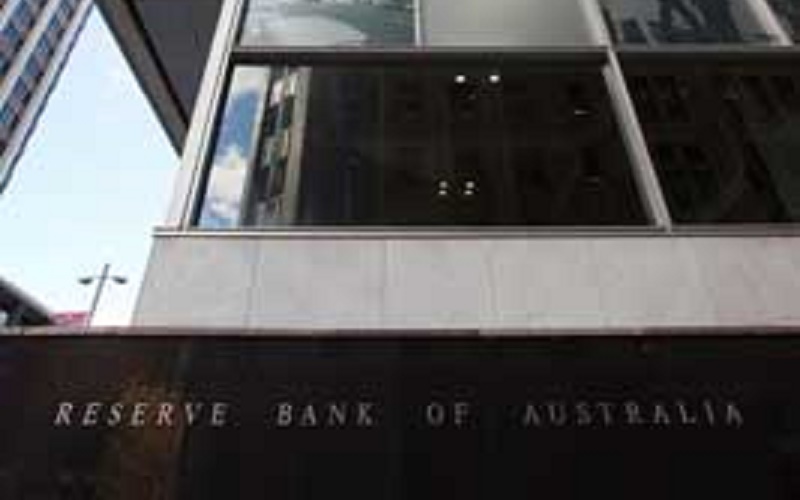
- The RBA are widely expected to deliver a third 0.25% cut of the year at next week's meeting.
- This would take the cash rate to 3.60%.
- Markets are pricing in a double sized 50 basis point cut, but economists feel this would not be in keeping with the RBA's strategy.
That would be the third cut of 2025, and would take the cash rate to 3.60%.
All of the big four banks are officially predicting a 0.25% cut as inflation continues to moderate, particularly with the uptick in unemployment in June, and further inflation moderation.
According to the RBA rate tracker, 51% of the market is expecting a double sized 50 basis point cut, but many economists feel this would be at odds with the "cautious" approach Michele Bullock and the Board have taken so far.
"We anticipate the RBA to act cautiously as they approach their estimate of neutral and uncertainty rises about how restrictive, if at all, policy is" Senior CommBank economist Belinda Allen said.
"Certain members of the board clearly still view the labour market as 'tight' and therefore an inflation risk."
Many mortgage holders across Australia will just be hoping for no repeat of the July decision, when despite more than 90% of the market expecting a cut, the RBA voted six to three to keep rates at 3.85%.
The expectation is that the voting bloc will be more united next week.
The case for a 25 bps cut
After the July hold, Michele Bullock told media the decision was more about timing rather than a difference of opinion on direction among dissenting board members.
"The Board's decision [to hold in July] was recognising that...by the next meeting we will know what the June quarter CPI is and if it comes in as we think it will...that validates our easing path," she said.
The CPI ended up showing 2.7% trimmed mean inflation over the year to June, in line with the most recent RBA forecasts.
With headline inflation just 2.1%, most economists feel this was basically the result the RBA was looking for.
Chief Westpac Economist Luci Ellis (ex-RBA Assistant Governor) expects the decision to be unanimous.
"With the internal members members likely switching their votes from hold to cut, we expect the external members who voted to hold in July will also switch to a vote to cut," Ms Ellis said.
The case for a 50 bps cut
While inflation is exactly as forecast in the most recent Statement on Monetary Policy (SOMP), 4.3% unemployment is slightly above what the RBA were predicting in May.
The Board has been expecting the labour market to loosen for a while, so this is unlikely to raise too many alarm bells, but it was suggested earlier in the year by some economists that the Non-Accelerating Inflation Rate of Unemployment (the NAIRU) may now be around 4.1%.
Bendigo Bank Chief Economist David Robertson believes a cut is all but certain, but it remains to be seen whether it will be larger than usual.
"Underlying inflation was only 0.6% for the latest quarter," he said.
"This should assure an RBA rate cut in August and potentially opens the door for a larger cut than the normal 25 basis point cut.
"The uptick in unemployment to 4.3% and the monthly indicator for June seeing CPI down to 1.9% and trimmed mean down to 2.4% are also indicators for a downward move."
At the same time, he went on to say a 50 basis point cut remains unlikely in light of Michele Bullock's stated commitment to consistency.
"A 35 basis point cut would take it down to 3.5% which would be a sensible compromise," Mr Robertson said.
The case for a hold
If the July hold was a shock, a follow up hold in August could be one of the biggest upsets in RBA history.
Unemployment and inflation both point to a cut, while Michele Bullock has suggested that the July hold was simply a matter of waiting for the Q2 CPI data.
The one piece of data that doesn't yet support loosening monetary policy is labour productivity, measured in GDP per hour worked.
Through the year to March, GDP per hour worked in Australia declined 1%, which implies businesses are producing less for what they pay their workers.
This can potentially increase prices, particularly if wages are rising at the same time - consumers have more money but the amount of goods and services they can buy isn't increasing commensurately.
However, this isn't just the RBA's responsibility - Treasurer Jim Chalmers is in the middle of a "productivity roundtable" seeking to find solutions to the problem, fielding opinions from various industry leaders.