Brisbane Suburbs to Watch in 2027: Five Markets I Would Put Under the Microscope

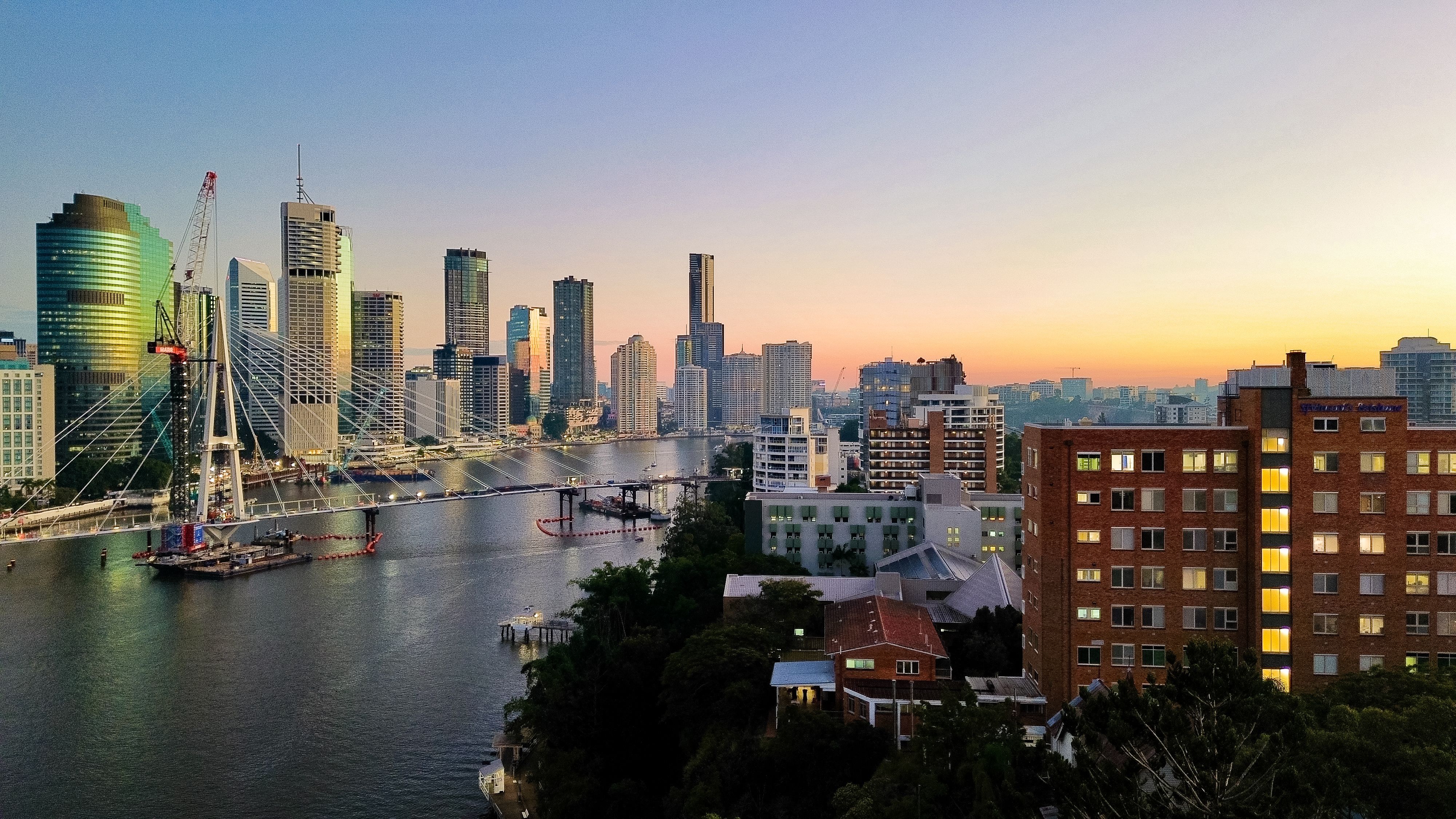
- Brisbane's rapid growth story remains intact, but a softer market is creating more opportunities for disciplined buyers.
- Five suburbs across Ipswich, Moreton Bay and Brisbane's inner north stand out for closer research, each with different risks and rewards.
- Read on for a closer look at the opportunities, risks, and numbers behind these five Brisbane suburbs.
OPINION
Brisbane has been an easy city to talk up over the past few years. Property prices climbed, interstate buyers piled in and almost every discussion turned to population growth or the 2032 Olympics.
But the market heading into 2027 looks rather different. A growing city can still contain overpriced properties, weak rental returns and suburbs with too much competing supply. That's why these five areas are on my research list, not on a list of automatic buys.
The latest figures give buyers a reason to slow down and look properly. Cotality recorded a 4.7% fall in Brisbane dwelling values over the September 2026 quarter, even though values remained 5.9% higher than a year earlier.
More homes are being advertised and they're taking longer to sell: the October Housing Chart Pack puts Brisbane's annual rise in total advertised listings at 60.4%, with median selling times moving from 17 to 38 days. For an investor who knows what a property is worth, a less frantic market can create room to negotiate. It can also mean a seller's expectations are still stuck in last year's conditions.
The population story hasn't disappeared. Greater Brisbane grew 2.1% in 2024–25, compared with 1.4% in Greater Sydney, according to the ABS. More residents need places to live, but that doesn't tell us whether a particular house will rent quickly, whether a new estate will create competition, or whether the asking price makes sense.
I look at those questions before I spend time on growth forecasts. A suburb can be popular and still deliver an ordinary result for someone who buys badly.
The areas below deliberately span different budgets and property types. I've included both houses and units in every table so readers can see those differences rather than compare unlike properties.
Bundamba (4304)
| Property type | Median price | Price change / year | Median rent / week | Rent change / year |
|---|---|---|---|---|
| Houses | $825,000 | +19.9% | $595 | +8.2% |
| Units | $657,500 | +25.8% | $490 | +12.6% |
Data source: realestate.com.au, September 2026
Bundamba is the sort of suburb where I would start with the block and the floor plan, not the photos. It has established houses, access to rail and employment across the Ipswich corridor, and a mix of older stock that can be quite different from house to house.
That variation can create an opportunity for an investor willing to inspect carefully. An ordinary-looking home with a sensible layout and usable land may be more interesting than a freshly renovated property that has already been priced to perfection. But 'potential' has to mean something you can legally and affordably deliver.
The suburb's median house price is $825,000, against a median rent of $595 a week. That works out to an indicative gross yield of about 3.8% before a single ownership expense, so nobody should assume the typical house will be strongly cash-flow positive.
I would compare recent settled sales, get a written rental appraisal and check whether any proposed room conversion or secondary accommodation is actually permissible.
Flood and overland-flow searches are essential in Bundamba. An attractive purchase price quickly loses its appeal if insurance is difficult or expensive. The map needs to be checked for the actual lot, not the suburb in general.
Brasall (4305)
| Property type | Median price | Price change / year | Median rent / week | Rent change / year |
|---|---|---|---|---|
| Houses | $850,000 | +15.7% | $610 | +8.9% |
| Units | $630,000 | +15.6% | $470 | +4.4% |
Data source: realestate.com.au, September 2026
Brassall is worth looking at for established family housing and access to schools, shops and Ipswich services. It isn't one uniform market. Street position, renovation quality and whether the land is genuinely usable can make a big difference.
I would be particularly wary of paying extra for a large block just because a listing mentions development potential. Unless the planning controls, setbacks, services and costs have been checked, that is marketing language rather than an investment strategy.
At an $850,000 house median and $610 in weekly rent, the broad gross-yield picture is again modest. That doesn't rule Brassall out, but it changes the conversation.
The important numbers are the rent the actual property will achieve, the repairs it needs in its first few years and the loan repayments the investor can live with.
For a family house, I'd favour a functional four-bedroom layout and manageable outdoor areas over features that look impressive at an open home but add ongoing maintenance.
Units should be assessed separately: a townhouse with substantial body corporate costs can behave very differently from a detached house even when the entry price looks attractive.
Redbank Plains (4301)
| Property type | Median price | Price change / year | Median rent / week | Rent change / year |
|---|---|---|---|---|
| Houses | $855,000 | +17.1% | $620 | +6.9% |
| Units | $706,000 | +25.0% | $510 | +7.8% |
Data source: realestate.com.au, September 2026
Redbank Plains attracts attention because of its size, population and range of housing. The challenge is making sure the property you buy stands out for the right reasons.
There are established pockets as well as newer stock, and a large number of broadly similar family homes competing for tenants. I would look at the likely renter first: where are they working, how close are the schools and shops, and what else can they lease for the same weekly amount? Those answers matter more than the suburb's annual price-change figure.
The published house median has reached $855,000, while median house rent is $620 a week. For someone who still thinks of Redbank Plains as a bargain-basement market, those figures should reset expectations.
A property may still be a good acquisition, especially if its layout, condition or land offer a genuine advantage, but I'd check current listings and the pipeline of similar housing before accepting an optimistic rental estimate.
I'd also want to know exactly what will need replacing in the next five years. A tight purchase budget and a surprise roof or drainage bill are an uncomfortable combination.
Kallangur (5403)
| Property type | Median price | Price change / year | Median rent / week | Rent change / year |
|---|---|---|---|---|
| Houses | $935,500 | +16.9% | $630 | +5.0% |
| Units | $741,000 | +25.6% | $540 | +3.9% |
Data source: realestate.com.au, September 2026
Kallangur gives investors access to established Moreton Bay housing without paying inner-Brisbane prices. Its appeal is practical rather than glamorous: residential streets, shopping, schools and transport connections along the northern corridor.
I like markets where there is demand from ordinary households, but you still have to choose the right asset. A renovated house on a difficult block can be a worse proposition than an older, well-positioned home that is straightforward to maintain and lease.
At $935,500 for houses and $741,000 for units, Kallangur also shows why a single suburb recommendation isn't enough. The published 25.6% annual movement in the unit median sounds spectacular, yet it's a change in the mix and median of properties sold, not proof that every owner received that return.
I would want building-specific comparable sales, strata records and an understanding of upcoming maintenance before paying that sort of price.
For houses, I'd look more closely at the functional details: drainage, parking, floor plan, street noise and tenant demand. Those aren't exciting headings, but they affect returns every year.
Nundah (4012)
| Property type | Median price | Price change / year | Median rent / week | Rent change / year |
|---|---|---|---|---|
| Houses | $1,580,000 | +15.3% | $750 | +0.0% |
| Units | $820,350 | +17.2% | $650 | +8.3% |
Data source: realestate.com.au, September 2026
Nundah is the outlier in this list, and that's precisely why it belongs here. It has rail access, established shopping and services, and proximity to employment around the airport and Brisbane's inner north.
For an investor with a larger budget, the question is not whether Nundah is 'better' than Ipswich. It's whether the additional purchase cost buys something useful: easier access to employment, a broader pool of tenants or an asset that will remain appealing over time. Houses and units need very different assessments here.
With a house median of $1.58 million and house rent around $750 a week, I would struggle to make a conventional house stack up for an income-focused investor using a substantial mortgage.
Units are a different discussion: the $820,350 median and $650 weekly rent suggest a better gross income relationship, but they bring building-specific risk. Body corporate fees, special levies, defects, insurance and the quality of the owners corporation are not small-print items.
If I were inspecting units in Nundah, I'd start by reading the records and studying comparable sales in that building, not by chasing the cheapest asking price on a property portal.
What would make me walk away?
First, a seller who won't recognise the current market. With Brisbane listings up and homes taking longer to sell, there's little reason to rely on peak-market asking prices.
I would ask for recent settled sales of truly comparable homes, inspect the competing listings and set a walk-away figure before negotiating. It sounds simple, but that discipline is often where investors protect the most money.
Second, a deal that only works if everything goes right. If the numbers need a five-bedroom conversion, a granny flat or premium room-by-room rents to break even, I want the relevant approvals, costs, rental evidence and insurance position checked before counting a dollar of that income.
I am interested in manufactured upside, but not imaginary upside. The rent a normal tenant would pay today is the starting point; an improvement strategy comes after that.
Third, physical and location risks that can't be priced confidently. In parts of Ipswich, flood and overland-flow information can change the investment case completely. I would also inspect building condition, retaining walls, drainage and likely capital works.
Get the council searches, insurance quote, building and pest report and conveyancer's contract advice. The fact that another property in the same suburb has no issue tells you very little about the one you're buying.
Where I see the opportunity in 2027
For investors who want an established house and may look to buy again in a few years, my starting point would be the Ipswich and Moreton Bay options, provided the property's cash flow and condition survive a proper assessment.
I would put Nundah in a separate category, particularly for buyers considering units and prepared to examine the building's finances as closely as the suburb. These aren't interchangeable strategies and shouldn't be compared only on past capital growth.
What appeals to me about the current market is not a guarantee of a rebound. It's the possibility of making decisions with less pressure, more inspections and stronger negotiating evidence.
Brisbane is still a large and growing market, but growth is no substitute for buying well.
I'd rather miss a property than make a second-best purchase that ties up an investor's borrowing capacity for years.
Advertisement
Buying a home or looking to refinance? The table below features home loans with some of the lowest interest rates on the market for owner occupiers.
| Lender | Home Loan | Interest Rate | Comparison Rate* | Monthly Repayment | Repayment type | Rate Type | Offset | Redraw | Ongoing Fees | Upfront Fees | Max LVR | Lump Sum Repayment | Extra Repayments | Split Loan Option | Tags | Features | Link | Compare | Promoted Product | Disclosure |
|---|---|---|---|---|---|---|---|---|---|---|---|---|---|---|---|---|---|---|---|---|
6.19% p.a. | 6.23% p.a. | $3,059 | Principal & Interest | Variable | $0 | $530 | 90% |
| Promoted | Disclosure | ||||||||||
6.14% p.a. | 6.05% p.a. | $3,043 | Principal & Interest | Variable | $0 | $0 | 80% |
| Promoted | Disclosure | ||||||||||
6.38% p.a. | 6.56% p.a. | $3,121 | Principal & Interest | Variable | $199 | $0 | 70% | |||||||||||||
6.23% p.a. | 6.23% p.a. | $3,072 | Principal & Interest | Variable | $0 | $395 | 70% | Disclosure |