
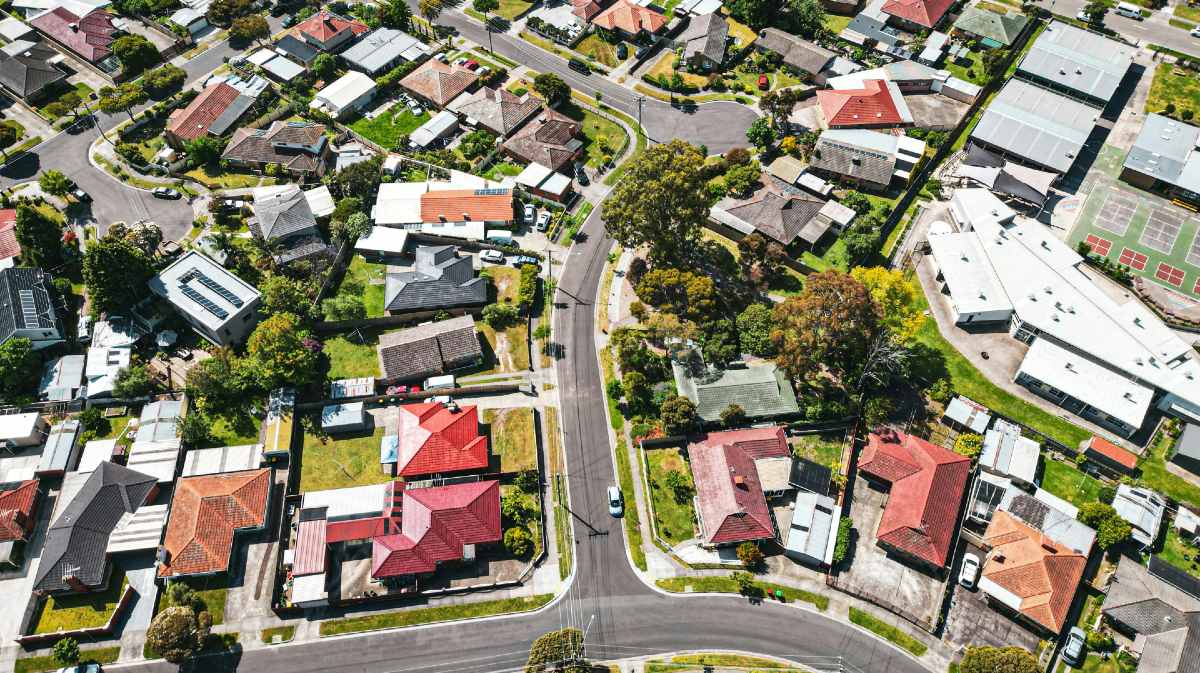
- Australia's home values increased 0.8% in January
- It's up on the 0.6% increase in December although the Sydney and Melbourne markets weighed on overall growth
- Every capital city and broad rest of state region saw an increase in home values
Although home prices climbed in every capital city and on a broad regional scale, Cotality data shows both the Sydney and Melbourne markets recorded only modest increases at 0.2% and 0.1% respectively.
Both markets are below their peaks while the fast-growing mid-sized capitals of Perth, Brisbane, and Adelaide also recorded a slow down in their runaway growth rates.
Perth values were still 2.0% higher in January - the biggest jump across the capitals, although below Perth's cyclical high of 2.9% monthly growth in November.
Similarly, Brisbane's monthly gain slowed from 2.0% in October to 1.6% in January.
Adelaide's also dropped back to 1.2% from a 1.8% rise in December.
| Month | Annual | Total return | Median value | |
| Sydney | 0.2% | 6.4% | 9.5% | $1,290,537 |
| Melbourne | 0.1% | 5.4% | 9.0% | $830,371 |
| Brisbane | 1.6% | 15.7% | 19.5% | $1,054,555 |
| Adelaide | 1.2% | 9.7% | 13.6% | $914,2023 |
| Perth | 2.0% | 18.5% | 23.5% | $961,898 |
| Hobart | 0.5% | 7.0% | 11.5% | $722,339 |
| Darwin | 1.5% | 19.7% | 27.6% | $602,870 |
| Canberra | 0.3% | 5.5% | 9.8% | $884,844 |
| Combined capitals | 0.7% | 9.2% | 12.7% | $1,002,520 |
| Combined regional | 1.0% | 10.3% | 15.2% | $743,672 |
| National | 0.8% | 9.4% | 13.3% | $912,465 |
(Source: Cotality Home Value Index, January 2026)
Regional growth has again come in stronger than capital city figures, up 1.0% in January compared to 0.7% across the combined capitals.
Prices keep rising regardless
Cotality's research director Tim Lawless said further momentum is unlikely to leave the market.
"Despite the most unaffordable conditions on record in many cities along with a rebound in cost-of-living pressures and the prospect of a rate hike as early as this Tuesday, we are still seeing a broad-based rise in housing values," he said.
He attributed this to persistently low levels of housing stock compared to higher-than-average demand, although he said this may be set to ease.
"Affordability and [home loan] serviceabiliity constraints are likely to naturally dampen demand, but also renewed cost-of-living pressures and a strong chance that interest rates will rise ," he said.
"There is also slowing population growth to consider."
Housing stock still low
Cotality estimates the number of homes advertised for sale was 19% below levels for the same time last year, and 25% lower than the five-year average for this time of year.
At the same time, the rolling quarterly number of home sales is about 1% higher than a year ago and just 3% below the five-year average.
Those sales continue to see homes at the lower end of the market driving growth, especially for houses.
"The trend of stronger growth conditions at lower price points is supported by intense competition for more affordable houses," Mr Lawless said.
"This were homebuyers, investors, and progressively, mainstream demand is most concentrated."
Rental vacancies ease
The national rental vacancy rate came in at 1.7% in January, up from the recent record low of 1.5% in September.
Adelaide had the tightest rental market with a vacancy rate of 1.0%.
Darwin and Hobart recorded the highest rental growth.
Darwin rents are up 7.1% for houses and 8.2% for units over the past year while Hobart house and unit rents were 6.8% and 7.6% higher in a year.
However, with national home values increasing at a faster pace than rents, there's been downward pressure on rental yields.
The national gross rental yield at 3.56% is at its lowest point since September 2022.
But lower yields are yet to be a deterrant to investors, with 41% of new mortgages coming from investors based on ABS lending data to September.
"Investors have their eye on opportunities for capital gain so it will be interesting to see if investor demand tapers if value growth continues to ease."
December quarter lending data is due out next week.
How will a cash rate hike affect property prices?
The other big variable for the property market in 2026 is the movement of the RBA cash rate.
Markets are pricing in a 72% chance of a cash rate hike from the first monetary policy board meeting of the year, with a decision announced on Tuesday afternoon.
An interest rate increase may dampen demand in the market which could ease property price growth rates in the shorter term.
All big four banks are expecting a February hike to the 3.6% cash rate, taking it 25 basis points higher to 3.85%.
Advertisement
Buying a home or looking to refinance? The table below features home loans with some of the lowest interest rates on the market for owner occupiers.
| Lender | Home Loan | Interest Rate | Comparison Rate* | Monthly Repayment | Repayment type | Rate Type | Offset | Redraw | Ongoing Fees | Upfront Fees | Max LVR | Lump Sum Repayment | Extra Repayments | Split Loan Option | Tags | Features | Link | Compare | Promoted Product | Disclosure |
|---|---|---|---|---|---|---|---|---|---|---|---|---|---|---|---|---|---|---|---|---|
5.94% p.a. | 5.98% p.a. | $2,978 | Principal & Interest | Variable | $0 | $530 | 90% |
| Promoted | Disclosure | ||||||||||
5.89% p.a. | 5.80% p.a. | $2,962 | Principal & Interest | Variable | $0 | $0 | 80% |
| Promoted | Disclosure | ||||||||||
5.99% p.a. | 5.95% p.a. | $2,995 | Principal & Interest | Fixed | $0 | $0 | 60% |
| Promoted | Disclosure | ||||||||||
5.93% p.a. | 5.93% p.a. | $2,975 | Principal & Interest | Variable | $0 | $395 | 70% | Disclosure |