
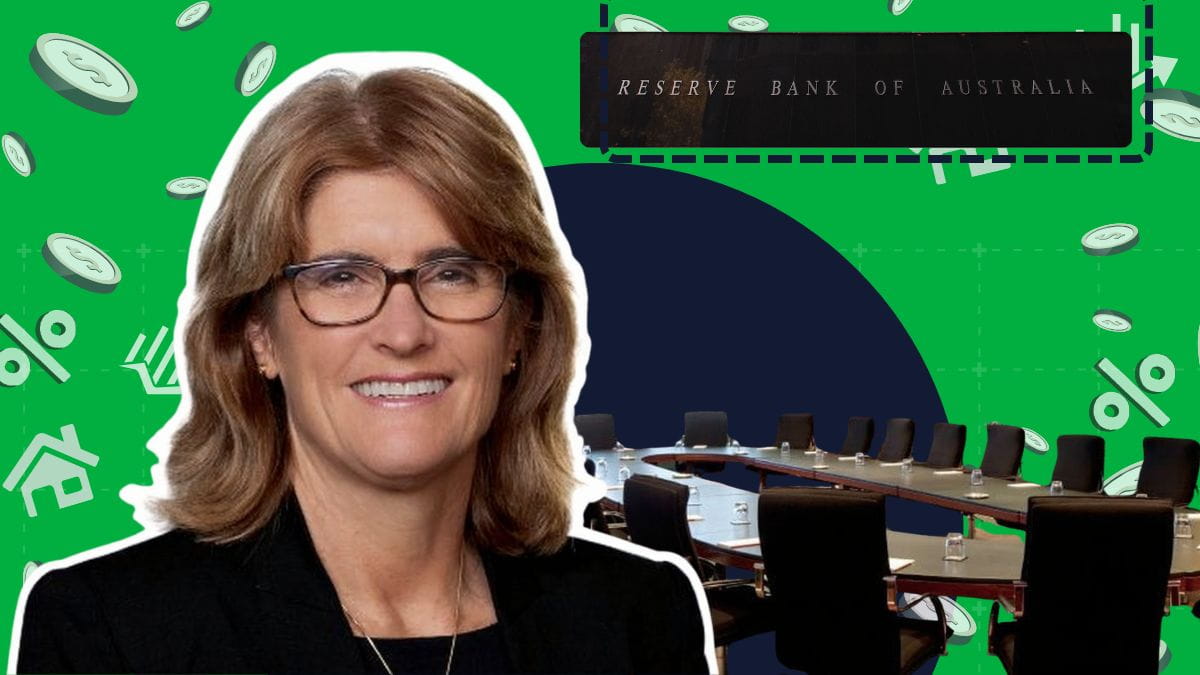
- The RBA, in a unanimous decision, voted to hold the cash rate at 3.60% in November after hotter-than-expected inflation.
- The RBA Board adjusts inflation forecasts in November Statement on Monetary Policy.
- Inflation is expected to be above 3% for much of next year before declining to the mid-point of RBA's target band by late 2027.
The Board's unanimous Tuesday decision was hardly a surprise following last week's shock quarterly Consumer Price Index (CPI) data that revealed prices are rising at a pace faster than anticipated.
"The recent data on inflation suggest that some inflationary pressure may remain in the economy," the RBA Board said in its post-meeting statement.
"Inflation has fallen substantially since the peak in 2022, as higher interest rates have been working to bring aggregate demand and potential supply closer towards balance.
"More recently, however, inflation has picked up."
September quarter CPI rose 3.2% annually, driven by a two-year-high jump in electricity prices as government rebates tapered off, in line with the RBA's earlier warning of a temporary inflation uptick.
Even excluding volatile items like electricity, the trimmed mean inflation, the Reserve Bank's preferred measure, was likewise well above the midpoint of its target band - at 3% - and "materially higher than expected" as stated in the August Statement on Monetary Policy.
Quarterly, the RBA had forecast trimmed mean inflation to land at 0.6%, with Governor Michele Bullock saying a 0.9% result would be a "material miss."
However, ABS data showed it rose 1% in the quarter, dousing any hopes of a Cup Day cut and even casting doubt on any monetary policy easing materialising any time soon.
"The result was a material surprise, meaning the RBA will need clear evidence that inflation pressures are easing before cutting rates again," said Eleanor Creagh, senior economist at REA Group.
The Board's Cup Day decision to hold came in the backdrop of Australia's tight jobs market and increasing household spending.
The unemployment rate rose to 4.5% in September, the highest (in seasonally adjusted terms) since November 2021, though this increase came off the back of more Australians looking for work rather than employees losing their jobs.
Household spending, on the other hand, recorded a 0.2% month-on-month uptick in September, per the ABS Household Spending Indicator.
It's worth noting, however, that the rise was driven by spending on non-discretionary items like food. Non-essential spending remained flat.
In its post-meeting statement, the Board acknowledged "uncertainties" in the assessment that monetary policy remains a little restrictive.
"The lags in the effect of recent monetary easing, the balance between aggregate demand and potential supply, conditions in the labour market, and the outlook for productivity growth... present risks in both directions to the inflation and employment outlook," the Board said.
RBA revises forecasts
In its latest Statement on Monetary Policy, the RBA updated its forecast on inflation, predicting core figures to be 3.3% in December, up from 3% in the August projections.
The central bank also now expects trimmed mean to be at at 3.2% instead of 2.6%.
Similar to the previous statement, the RBA forecasts both core and underlying inflation to rise in June 2026, 3.7% (previously 3.1%) and 3.2% (previously 2.6%), respectively, before they gradually ease in December 2026 and reach the mid-point in June 2027.
What it means for the housing market
Economists maintain that the RBA's decision to hold rates will do little to dent confidence in the Australian housing market.
"Interest rates have moved lower this year, easing pressure on households and lifting confidence throughout spring," Ms Creagh said.
"That has helped extend the national upswing to a tenth straight month, with home prices now 7.5% higher than a year ago, the fastest annual pace since May 2024."
Since this year's easing cycle in February, Australia's official cash rate has been reduced by a cumulative 75 basis points.
"Earlier cuts and stronger confidence continue to support buyer demand, aided by population growth and the expansion of the Home Guarantee Scheme," Ms Creagh noted.
And as new supply remains constrained, house prices are expected to rise, albeit at a slower pace than in previous cutting cycles.
If no rate cut this year, then when?
All four major banks have already ruled out any cash rate cut happening this year.
Westpac chief economist Luci Ellis said the next rate cut is unlikely before May, with a February move only possible if the labour market weakens sharply.
NAB expects monetary policy will be eased in June quarter, whilst CommBank said the cash rate will remain unchanged for a "prolonged period".
ANZ is the only major bank forecasting a rate cut to be delivered in February 2026, and even earlier noted the RBA could consider easing in December once the labour force print and the September quarter national accounts are released prior to their next meeting.
With inflation hotter than expected, ANZ's Adam Boyton posits RBA will likely delay its final rate cut to May - or scrap it altogether.
Price stability and employment remain a priority
In light of recent datasets available, the Board elected that remaining cautious was the "appropriate" move this time.
"With private demand recovering and labour market conditions still appearing a little tight, the Board decided that it was appropriate to maintain the cash rate at its current level at this meeting," the Board said.
As per previous statements, the policy-setting committee reiterated their aim to pay close attention to data and the evolving assessments of the outlook and risks to guide its decision.