Build-to-rent: What it is, how it works, and what renters need to know
Build-to-rent is a housing model wherein a single institutional owner leases out an entire development, typically offering renters long-term stability and high-quality amenities.

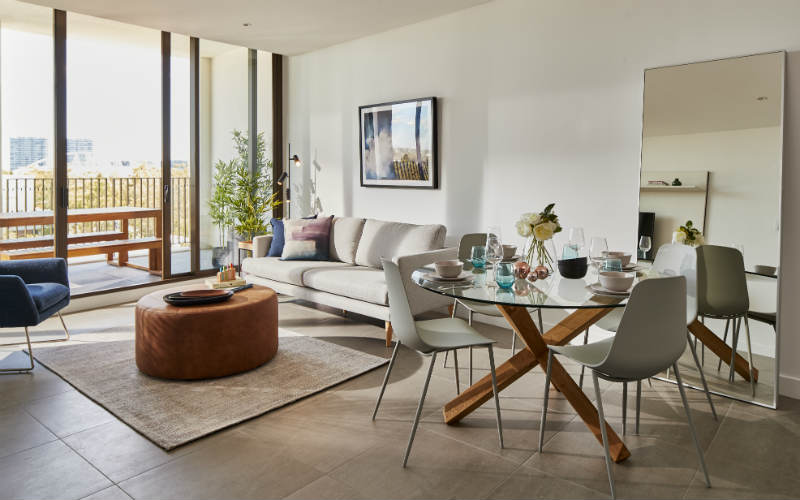
- Build-to-rent is a housing model where a developer typically retains an entire apartment complex and leases out the homes long-term.
- These developments can offer renters greater stability and flexibility than typical private rentals.
- Developments often feature high-quality amenities and flexible leasing options, though usually at a higher price point.
At its core, build-to-rent flips the traditional development model: instead of selling apartments to individual owners, a developer or institutional investor retains the building and rents out the homes long-term. This approach can offer renters greater stability and flexibility, with many build-to-rent developments providing high-quality amenities and lifestyle-focused facilities. However, these features often come at a higher price point than traditional rentals.
What is build-to-rent?
Build-to-rent properties are designed and constructed for the sole purpose of being leased out. A build-to-rent developer typically builds an entire apartment complex and then manages tenancies on the homes over the long term.
That contrasts with the typical housing model in Australia, where developers sell individual units to owner-occupiers or investors, who may in turn rent out the property.
In Australia, build-to-rent is generally the domain of major developers like Mirvac and Lendlease and the model is becoming increasingly common in larger cities such as Sydney, Melbourne, and Brisbane.
Savings.com.au's two cents
Australia's build-to-rent sector is still small, but demand for the few schemes already online in the nation's larger cities has been strong.
For those who prefer renting, are rentvesting, or are working to save a house deposit, the build-to-rent model may offer the best of both worlds: security and flexibility without the onerous conditions that typically come with renting. Not to mention the luxury features many build-to-rent developments offer those who live within. But be warned, such benefits will likely come at a cost, with rents often significantly higher.
Advantages of build-to-rent
For renters, the benefits of the build-to-rent housing model can be enormous. Many renters have a long list of gripes when it comes to traditional tenancies, many of which might be alleviated in a build-to-rent model. For instance, it's common for build-to-rent homes to offer:
- Caps on rent increases
- Lower (or even non-existent) bonds
- Furnished and unfurnished options
- Pet friendly homes and facilities
- Speedy responses to maintenance and repair requests
- The ability for tenants to paint walls and hang pictures
- Community spaces and high-class amenities
(Some even offer free yoga classes and doggy daycare)
But perhaps the biggest benefit of the build-to-rent housing model is the security of tenure. Because build-to-rent properties are built only to rent out, tenants can generally stay for as long as they like - all they have to do is keep renewing the lease.
Another major benefit of the build-to-rent model is that, since the developer retains ownership, they have reason to ensure the building is professionally managed and well maintained.
Australian Housing and Urban Research Institute (AHURI) executive director Michael Fotheringham said the quality of the development may depend on a few factors.
"Developers may be more inclined to factor in long-term asset maintenance costs if the properties are intended for build-to-rent. However, the quality of the development will depend more on the target market and potential rental yield," Mr Fotheringham told Savings.com.au.
"For premium markets this may mean focusing on high quality with resulting low maintenance costs. For affordable markets, this may be dependent on the structure of any subsidy - for example whether subsidy comes in the form of up-front capital grants or ongoing subsidies."
Disadvantages of build-to-rent
One argument that can be made against the build-to-rent model is that it could push Australians further away from home ownership by making it more attractive to continue renting. Managing director of Penfold Property Group Marc Wilkinson fears the build-to-rent model encourages over-development of investment stock and pushes people into a lifetime of renting.
"More availability of housing of any sort keeps the cost of housing down, however given that renting a two-bed apartment over 30 years will cost $1.5 million versus home ownership, where you will end up with an asset worth $1.5 million, the government should be doing anything they can to increase the ability for Australians to own their own homes," Mr Wilkinson told Savings.com.au.
"Continuing to open up the urban footprint allows Australians to live the way they want and then purchase their own house. Build-to-rent just captures people in a rental trap."
Of course, many renters choose to rent for the flexibility it offers, while others might rentvest - arguably getting the best of both worlds. Build-to-rent may fill a hole in the market for such residents.
Will build-to-rent make housing more affordable?
Some commentators have claimed that build-to-rent could make housing more affordable, but perhaps not in the way many may assume.
Research shows that existing build-to-rent developments are actually more expensive than traditional renting arrangements. For example, a UK study by real estate firm JLL found that rental premiums on build-to-rent schemes were 11% higher than local rents. Some of that premium could be due to the range of amenities build-to-rent developments often offer.
Instead, build-to-rent developments could improve affordability by adding to the pool of rental properties available. More supply of rental properties can mean less demand, and a reduction in demand could help improve affordability for the market as a whole.
"Build-to-rent alone can't solve Australia's housing affordability problems. However build-to-rent can contribute to more affordable housing if the dwellings are offered at below market prices," Mr Fotheringham said.
"Where build-to-rent is supported by subsidies to generate affordable rental housing, there is real potential to increase the available supply of affordable housing - this is sorely needed in Australian housing markets."
That's the theory that lead the Federal Government to offer tax benefits to developers constructing build-to-rent complexes in early 2025. The changes were expected to add 80,000 homes to the rental pool and help the government reach its Housing Accord target.
Developers must meet certain conditions to be eligible for the beneficial tax treatment, including offering at least 10% of homes up as affordable housing, with rents capped at 74.9% of market rates.
Governments in NSW, Victoria, Queensland, Western Australia, South Australia, and the ACT have also offered significant land tax discounts for build-to-rent developers in an effort to bolster supply.
How popular is build-to-rent in Australia?
Build-to-rent took awhile to get off the ground in Australia, but it has begun to become a viable option in many of the nation's largest cities. Around 9,000 build-to-rent units have been completed as of 2025, according to Lendlease, with another 9,000 under construction and 17,000 more already approved.
That could be considered a drop in the ocean of Australia's rental market, which contained close to 2.9 million dwellings as of the 2021 Census.
Still, the build-to-rent developments currently operational are said to be in high demand, and a pipeline of new developments are expected to come online in the coming years. This may encourage more build-to-rent developers to consider Australia, according to Knight Frank's Build to Rent Update, for the third quarter of 2025. Though, construction industry woes is expected to slow the rate of growth in the space.
Buying a home or looking to refinance? The table below features home loans with some of the lowest variable interest rates on the market for owner-occupiers.
| Lender | Home Loan | Interest Rate | Comparison Rate* | Monthly Repayment | Repayment type | Rate Type | Offset | Redraw | Ongoing Fees | Upfront Fees | Max LVR | Lump Sum Repayment | Extra Repayments | Split Loan Option | Tags | Features | Link | Compare | Promoted Product | Disclosure |
|---|---|---|---|---|---|---|---|---|---|---|---|---|---|---|---|---|---|---|---|---|
6.19% p.a. | 6.23% p.a. | $3,059 | Principal & Interest | Variable | $0 | $530 | 90% |
| Promoted | Disclosure | ||||||||||
5.89% p.a. | 5.80% p.a. | $2,962 | Principal & Interest | Variable | $0 | $0 | 80% |
| Promoted | Disclosure | ||||||||||
6.38% p.a. | 6.66% p.a. | $3,121 | Principal & Interest | Variable | $299 | $0 | 85% | |||||||||||||
6.23% p.a. | 6.23% p.a. | $3,072 | Principal & Interest | Variable | $0 | $395 | 70% | Disclosure |