RBA set to lift rates again, but May decision a ‘line-ball’

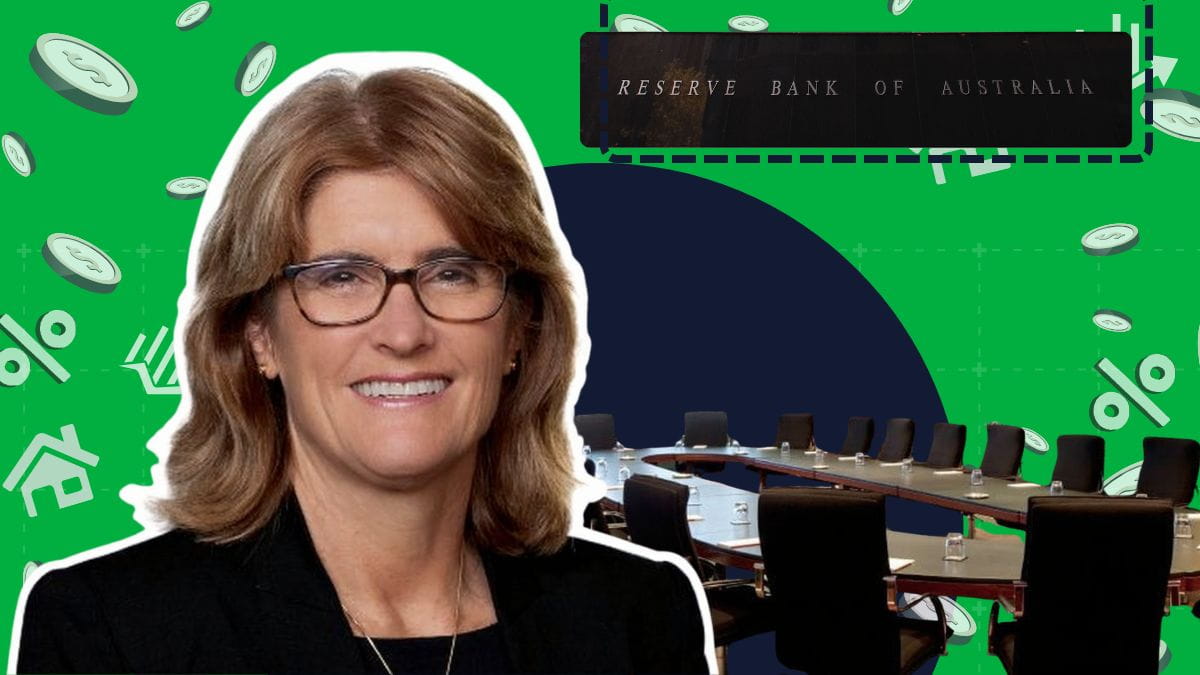
- Economists from each of the big four banks expect the RBA to lift the cash rate by 25 basis points at its May meeting.
- A rate hike in May, third this year, will bring the official cash rate to 4.35%.
- The decision is expected to be finely balanced, with analysts expecting a split vote.
A hike on Tuesday would take the cash rate back to 4.35%, effectively wiping out all interest rate cuts in 2025.
Markets and economists from the big four banks are tipping a third consecutive 25bps rate hike, following increases in February and March, on the back of the latest inflation data.
Despite a softer‑than‑expected 0.8% q‑o‑q trimmed‑mean print, analysts warn inflation risks remain as the economy runs above capacity and price pass‑through from the Middle East conflict expected to build.
Westpac chief economist and former assistant RBA governor Luci Ellis noted inflation was already uncomfortably high even before global tensions intensified.
The softer trimmed mean is seen as unlikely to materially shift the May decision, with NAB noting the February SOMP pre-dated the Middle East escalation, limiting how much new geopolitical risk is reflected in RBA’s outlook.
ANZ added the combination of what the Reserve Bank considers to be a tight labour market and underlying inflation still above target will support the case for another hike.
While all are in agreement a cash rate hike will be delivered on Tuesday, big banks expect the decision would be finely balanced.
Another split Board decision
Commonwealth Bank’s Belinda Allen describes the May decision as another “line-ball hike”, reflecting competing signals between still-elevated inflation and a cooling growth outlook.
“Since the outbreak of the war, we have seen three key impacts in Australia beyond the bowser: sharp falls in business and consumer sentiment, businesses announcing higher costs and fuel surcharges, and some evidence of rising inflation expectations,” Ms Allen said.
One of the signs of cooling momentum is emerging in the housing market, particularly in Sydney and Melbourne.
Analysts say momentum has slowed sharply after back‑to‑back rate rises and rising cost‑of‑living pressures.
However, major bank economists say resilience in the labour market underscores capacity pressures in the economy and reduces confidence that inflation will ease sufficiently without further policy restraint.
The previous RBA decision was split between five members voting to hike and four electing to hold.
The May meeting is anticipated to be another close call.
“We expect several members to vote in favour of keeping rates on hold,” ANZ’s Adam Boyton said.
Ultimately, however, enough votes are expected to lift the cash rate.
“If anything, the dissenters from March could be more strident in their views with the slightly softer CPI print adding to the case,” Ms Allen said.
Fuel prices down, but pass-through to other prices looms
Despite recent petrol prices reversing much of the 33% increase in March, economists warn the flow-through to other costs is just beginning, reinforced by the resilience of core inflation.
“The RBA could look through higher fuel prices if that was all that was happening, but it is not,” Ms Ellis said.
“Pass-through to other (non-fuel) prices is clearly starting, touching everything from building products to takeaway food if the reports we are receiving are any guide.”
Ms Ellis added the March print is yet to fully reflect the pass-through of prices due to higher energy costs.
“For example, many of the price increases for building products we are aware of did not take effect until 1 April,” she said.
According to Tradelink data, construction costs are expected to see an average increase of 16% in April, and 17% in May.
While the expected price spike in most grocery items is yet to be felt by consumers, a finance expert warned it is yet to come.
“I think there’s just a lag, unfortunately,” Zyft consumer finance expert Joel Gibson told the Savings Tip Jar podcast.
“Milk prices went up last week, that’s usually the canary in the coal mine…the first thing that goes [up] is dairy,” Mr Gibson said.
“And then you’ll see other refrigerated products like fruit and vegetables, and meat probably will be the next to go up, and then it’ll flow through to pantry goods and the non-perishable stuff.”
“So unfortunately, I think that is coming, we just haven’t seen it yet.”
What another cash rate hike means for mortgage holders
For Australian mortgage holders, a 25‑basis‑point hike would mean a monthly repayment increase of around $120 on an average $736,000 variable home loan.
CBA says the cumulative effect is likely to further restrain household spending in 2026.
CBA, NAB, and ANZ expect the cash rate will stay at 4.35% throughout the year.
Westpac, on the other hand, is tipping further tightening in 2026, with two more cash rate hikes in June and August.
RBA will announce its cash rate decision on Tuesday at 2:30pm (AEDT) with RBA governor Michele Bullock scheduled to hold a media conference an hour later.
Follow Savings.com.au’s live blog on the May cash rate decision on Tuesday, 5 May 2026.