Opposition pledges to index tax brackets, reverse investor taxes

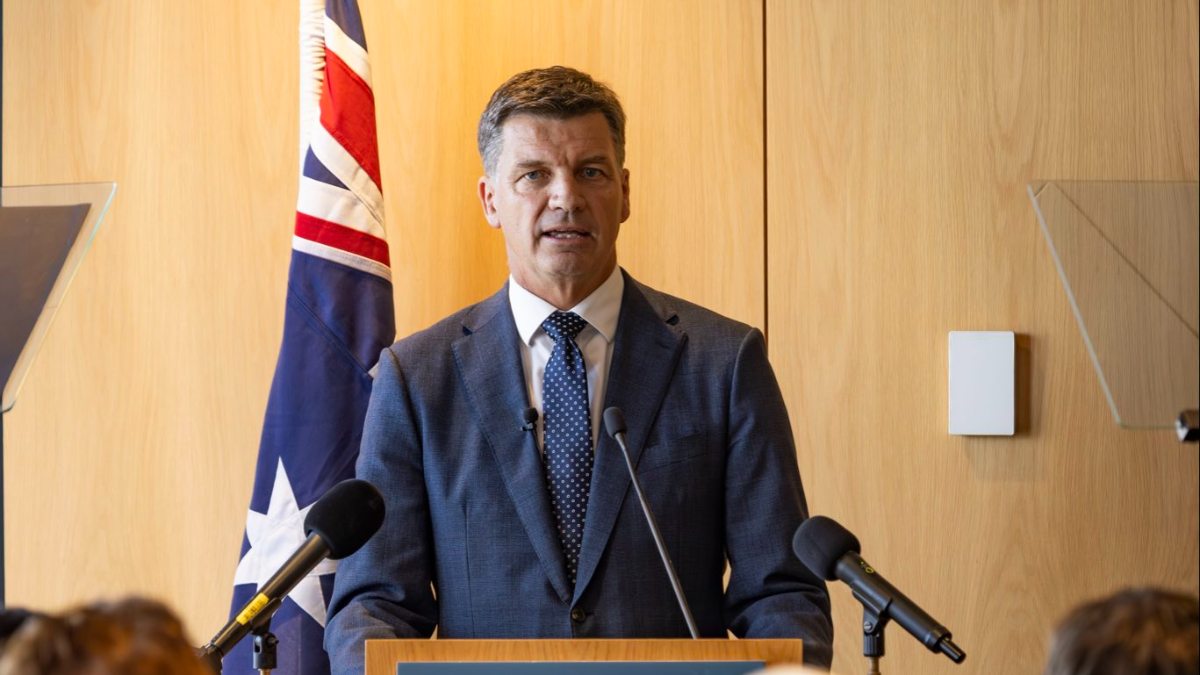
- The Coalition has pledged to index income tax brackets to inflation
- The promise was part of Opposition leader Angus Taylor's budget-in-reply speech on Thursday night
- Ending so-called 'bracket creep' could be considered a bold political move, given its ongoing role in keep government revenue flowing
It was to be expected Opposition leader Angus Taylor would promise to reverse the government's changes to investor taxes, announced in Tuesday's night's federal Budget.
Mr Taylor used his budget-in-reply speech to pledge to repeal the winding back of negative gearing for investors buying existing residential properties and to scrap Labor's new capital gains tax regime.
See also:
But the promise to index income tax brackets to inflation, effectively ending 'bracket creep', could be seen as a bold move.
This is because governments of all political colours have been raking in billions from bracket creep over many decades.
What is bracket creep?
In short, bracket creep occurs when pay rises linked to inflation or cost-of-living increases push more of taxpayers' incomes in higher tax brackets.
As the dollar amount of their earnings increases and tax brackets stay the same, more of workers' income is taxed at higher rates, meaning the government earns more in tax without too much effort.
Bracket creep example
Australia's individual marginal tax rates for 2025-26 appear below.
Annual earnings Tax rate on portion of income in this bracket $0 - $18,2000 Nil $18,201 - $45,000 16% (dropping to 15% from 1 July) $45,001 - $135,000 30% $135,001 - $190,000 37% $190,001 plus 45% (Don't forget, an additional 2% Medicare levy typically applies on top of these rates.)
Because Australia has a progressive tax system, your income is essentially divided into brackets so you pay tax rates based on the amounts that fall within each bracket.
In this case, without deductions and the Medicare levy, you will pay $14,188 in tax. (You can check your own figures on the federal government's Australian income tax calculator.)
If, the next year, your income was to increase by 5% to keep place with inflation (although Australian wages currently aren't keeping pace with inflation), you would earn $81,900.
When the tax brackets stay the same, it means all of that wage increase will be automatically taxed at the higher rate.
Some may see their extra earnings tip over into a higher tax bracket, meaning they effectively see even less of their increased income.
This escalation can continue for years with the goalposts of marginal tax brackets remaining static while wages continue to climb - and tax takings along with them.
Why don't tax brackets move with inflation too?
Put simply, it's because governments rely on bracket creep to provide a proven, unlegislated income stream that will continue to grow each year.
In that sense, higher inflation actually benefits government coffers and cynics might claim this also discourages governments from truly tackling inflation by curbing their own spending.
See also: 'Inflation is taxation by stealth': Broader push for income reform
So, in any era of politics, it's extremely rare for anyone to pledge to tie all income tax rates to inflation - except perhaps if you're in Opposition.
What is the Coalition promising on bracket creep?
Mr Taylor said the Coalition plan starts with indexing the two lowest tax brackets in 2028-29 with the top two tax brackets to follow in 2031-32.
He said this would see the typical taxpayer keep an extra $250 in their pocket in the first year and up to $1,000 annually by the fourth - not to mention the government foregoing around $22.5 billion in tax.
This makes the current government's working Australian tax offset (WATO), kicking in from mid-2028, look a little insipid.
Clearly, addressing bracket creep also provides longer term tax relief than one-off Budget sweeteners.
But, of course, the Coalition would have to win government first which, at this stage, is certainly no sure thing.
Has any government tried to stop bracket creep in the past?
The last time a federal government implemented automatic indexing of tax brackets to inflation was in 1976, under the Fraser government.
The system stayed in place until 1982 when it was abandoned as high inflation (around 11%) gripped the economy amid a recession and, well, the government needed more revenue.
The thinking was that keeping tax dollars flowing in by default reduces the risk of Budget deficits and gives governments more control over their finances.
In more recent times, governments have preferred to announce discretionary 'tax cuts' or 'tax relief' every few years, curiously coinciding with the lead up to elections.
These can be spun as 'giving money back' to voters (though often not all of them) rather than compensating taxpayers for their generous, ongoing contributions to government revenue.
Advertisement
Need somewhere to store cash and earn interest? The table below features savings accounts with some of the highest interest rates on the market.
| Bank | Savings Account | Base Interest Rate | Max Interest Rate | Total Interest Earned | Introductory Term | Minimum Amount | Maximum Amount | Linked Account Required | Minimum Monthly Deposit | Minimum Opening Deposit | Account Keeping Fee | ATM Access | Joint Application | Tags | Features | Link | Compare | Promoted Product | Disclosure |
|---|---|---|---|---|---|---|---|---|---|---|---|---|---|---|---|---|---|---|---|
3.00% p.a. | 6.25% p.a. Intro rate for 3 months then 3.00% p.a. | $769 | 3 months | $0 | $49,999 | $0 | $0 | $0 |
| Promoted | Disclosure | ||||||||
0.05% p.a. Bonus rate of 5.30% Rate varies on savings amount. | 5.35% p.a. | $1,097 | – | $0 | $249,999 | $0 | $0 | $0 |
| Promoted | Disclosure | ||||||||
5.05% p.a. | 5.05% p.a. | $1,034 | – | $0 | $99,999,999 | $0 | $0 | $0 |
| Promoted | Disclosure | ||||||||
4.00% p.a. | 5.90% p.a. Intro rate for 4 months then 4.00% p.a. | $936 | 4 months | $0 | $249,999 | $0 | $1 | $0 | Disclosure |