How the housing crisis is reshaping happiness for young Aussies


Photo by Matilde Zoccatelli on Unsplash. Modified in Canva
- Young Australians are reporting lower happiness levels than older generations.
- Housing affordability has worsened dramatically, making home ownership harder to achieve.
- Rising living costs and weak wage growth are leaving many young people feeling financially squeezed.
A recent report from AMP shows that Australians are earning more, travelling more and living longer than ever before - but they’re also becoming less happy.
At the centre of the growing disconnect is one issue that has slipped further out of reach for a generation: housing.
Young Aussies feeling the squeeze
Speaking on the Savings Tip Jar Podcast, AMP Chief Economist Dr Shane Oliver said measures of happiness only date back to the 2000s, but show Australians were significantly happier than they are today.
“Happiness levels were quite a lot higher than they are today and interestingly, it’s young people who are less happy,” he said.
“It used to be this sort of classic U-shaped thing that happiness was high when you’re youngish, then it dips when you become middle-aged, and then it goes up when you get older… these days it’s actually lower now for young people.”
The shift comes as broader sentiment deteriorates. According to a recent AMP report on long-term economic conditions, consumer confidence has fallen to persistently low levels while measures of happiness have been trending down for years.
Housing is the tipping point
Housing affordability has worsened dramatically over time and is increasingly seen as the key pressure point.
AMP analysis shows the ratio of house prices to incomes has surged from about 5.5 in the 1970s to more than 14 today, while the time needed to save a deposit has blown out from less than four years to around 11 years.
“The big thing on that front is just housing. Housing affordability has collapsed,” Dr Oliver said.
“The average house price to income ratio is about three times what it was in the 1970s.”
While home ownership rates have only edged down, from around the mid-60% range to about 63%, the path to getting there has become significantly harder, particularly for younger Australians.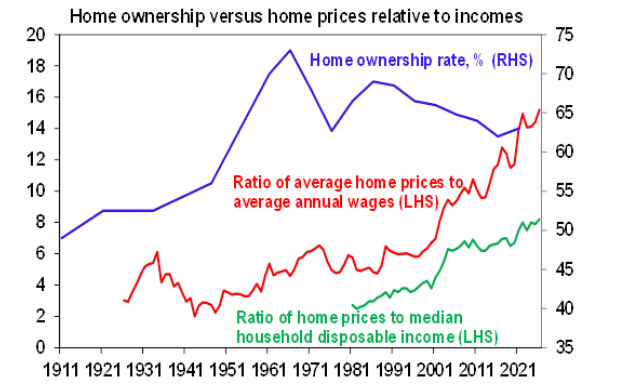
Source: ABS, Cotality, AMP
Cost-of-living pressures have added to the strain. In recent years, wages have failed to keep pace with inflation, leaving real incomes effectively going backwards.
“Bottom line is people feel they’re not getting ahead, that the cost of living is too much, that they’re struggling,” Dr Oliver said.
The report points to weak productivity growth as a key driver of these pressures, with no quick fixes in sight.
Better off on paper, but not in reality
Despite the pessimism, most long-term indicators show Australians are materially better off than previous generations.
AMP's report shows real household disposable income per person has roughly doubled over the past 50 years, while unemployment is lower and a larger share of the population is in work.
Living standards have improved alongside these gains. Overseas travel, once rare, is now common.
“In rough terms, an average Australian would go on an overseas holiday once every 15 years 50 years ago, whereas nowadays it’s almost once every two years,” Dr Oliver said.
But those gains have not translated into stronger sentiment.
Part of the disconnect reflects rising expectations, as well as more recent setbacks. Real wages have lagged inflation since 2021, with some services like healthcare becoming less accessible due to rising costs.
“I think beyond that, things aren’t too bad,” Dr Oliver said. “But we’ve sort of forgotten the way things were back then, forgotten the improvements that have occurred.”
“Social media is all about clickbait and rage… and so this sense of grievance tends to take over.”
For younger Australians, the pressure is less about overall living standards and more about access, particularly to housing, which remains increasingly out of reach.