Pros and cons of solar panels for your home


Dominic Beattie
- Group Editor
- Experienced finance editor
- Writer
- Commentator and researcher
Do you like & trust our expert, human-written content?
Simply click this button to tell Google you want to see more of us in your Google Search Results, AI Overviews and AI Mode answers.
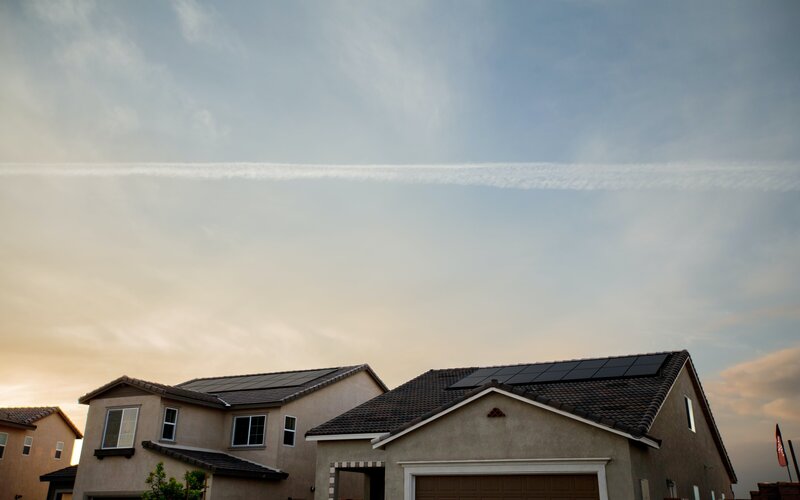
- Solar panels are increasingly popular in Australia, with over 4 million installations by late 2025.
- Key benefits include long-term savings, government rebates, low maintenance, and the ability to sell excess power back to the grid through feed-in tariffs.
- Main drawbacks are high upfront costs, reliance on sunlight and roof suitability, and limited financial return if you plan to move soon.
As the world moves away from archaic fossil fuels and towards sustainable energy sources like solar and wind, it’s unsurprising that solar panels have become increasingly common and popular home additions.
Recent data from the Department of Climate Change, Energy, the Environment and Water (DCCEEW) showed that Australia has over 4 million rooftop solar installations in late 2025 - that's 1 in 3 Aussie homes!
Solar energy can lower energy bills and reduce environmental impact, but high upfront costs and differing opinions on appearance remain concerns. Do the benefits outweigh the drawbacks? Here are a few pros and cons to consider before going solar.
Pros of solar panels
There are a few undeniable benefits of solar panels that might be enough to outweigh any ‘drawbacks’. Other than saving you money on your power bill, you’re saving the planet by reducing your carbon footprint. Plus, despite being an expensive outright cost, there are federal and state government incentives available to take the edge off.
Save money on energy bills
Solar panels are specifically designed to save you money on your power bill. Without solar panels, all of the energy you use to turn your lights on and run your fridge comes directly from the grid. But with solar, sunlight is absorbed through the panels and used to generate energy, which is used to power any of the appliances you have on at the time.
At the end of the day, energy can either be stored to be used at night time/when the sun isn’t out or sold back to the grid (if you have a battery).
You can sell energy back to the grid
As we just mentioned, any power that you don’t use can actually be sold back to the grid. This is called a ‘feed-in-tariff’ - a credit consumers receive if they decide to sell unused solar to the grid.
While state governments used to fund feed-in-tariff schemes, now private retailers like EnergyAustralia provide them to households with solar systems of a certain size. According to EnergyAustralia, the following feed-in-tariffs are available to people in the following states:
State | Feed-in-tariff price from January 2026 |
|---|---|
Victoria | 1.5 cents per kWh^ |
New South Wales | 4 cents per kWh^ |
Australian Capital Territory | 4 cents per kWh^ |
South Australia | 3 cents per kWh^ |
Queensland | 4 cents per kWh^ |
Solar panels create renewable energy
Unlike sources like fossil fuels and coal, solar power is a renewable energy. This is because it comes from the sun; energy that doesn’t run out or need to be sourced by the National Electricity Market.
Reduce carbon emissions
Using renewable energy like solar reduces Australia’s emissions. This is because you are reducing the demand for non-renewable energy sources, such as coal, by creating your own. This - combined with general energy-efficient practices like switching off lights/other appliances when you’re not using them - will help you reduce your carbon footprint.
Government incentives
There are federal and state government incentives designed to take the edge off the pretty hefty upfront cost of installing solar panels. Depending on the size, location, and installation date of your solar system, you could be entitled to a rebate.
To receive said rebate, you’ll need to create Small-scale Technology Certificates (STCs) within 12 months of installation. Additionally, many governments offer no-interest loans to help cover the initial costs of solar installation.
Low maintenance
Other than the initial installation, having solar panels is pretty low maintenance in terms of care and cost. Other than the occasional cleaning once in a while, there isn’t much you need to do to care for your solar system.
Most solar providers offer pretty long warranties on their solar systems too, which means that if anything goes wrong, you might not need to fork out any money to fix it. While the system might need professional maintenance every once in a while (maybe once every few years), the day-to-day maintenance is breezy.
Cons of solar panels
As with anything in life, there are also cons to getting solar panels installed. Most of which revolve around the price of solar panels and a few environmental factors that are out of your control.
Upfront cost
As we’ve alluded to quite a bit, the cost of installing solar panels can get pretty expensive. Again, depending on the size, location, and installation date, the cost of installing solar can vary. A typical 6.6kW system costs around $5,500 - $9,000, according to SolarQuotes, but you can get it for less with rebates.
Might not fit your roof
Depending on the size of your roof, you might be restricted in the size and type of solar system you can install. Typically, solar panels are pretty big, so they’re going to take up a big space on your roof. If you live in a small home, you might even need to rethink whether getting solar is currently a viable option for you.
While solar panels might fit your roof, they might not suit your roof (in your opinion). As we’ve mentioned, solar panels are pretty big. So, if you’ve just spent $20,000 getting your roof redone, chucking some solar panels right over it might seem like a waste.
Dependent on the weather
Solar panels are only really effective when the sun’s out. Thankfully in Australia, sunshine isn’t a huge issue. But if there’s a week of nonstop clouds and rain, your solar panels aren’t going to be much use to you and your home. While they will generate some power, it won’t be anywhere near the energy generated on a sunny day.
Being dependent on sunlight means that at night time, solar panels don’t generate any power. In both of these situations, any excess power stored can come in handy. Otherwise, you’ll just have to rely on the grid.
You can’t take them with you if you move
Installing solar panels might only be a good option if you’re planning on being in your home for a while. Once solar panels have been installed, there isn’t really any moving them. So if you’re planning on moving in a year or two, the power bill savings might not outweigh the big upfront cost to have them installed.
Don’t forget about the battery
There’s another cost that needs to come into the equation if you want to store any energy: the battery. Solar batteries can be pretty expensive, ranging from $2,000 to $20,000 depending on how much energy you want to store.
Is it essential? No, it’s not. If you’re also connected to the grid, you don’t really need to install a battery. But if you want to take advantage of the perks of saving up energy/selling it back to the grid, a battery is necessary.
Is installing solar panels worth it for you and your home?
Ultimately, the choice of whether or not to install solar panels will be highly dependent on your home and your situation. Living in a tiny house and planning to move? You might want to have a think about whether installing solar is worth it. But if you’re in your forever home, you’re passionate about going green, and/or you want to save money on your energy bills in the long run - solar panels might be for you.
There are a number of solar providers out there in the market, so if you’re thinking about installing solar panels, be sure to do your research and get a few quotes before signing the dotted line.