What is a commercial construction loan?
Getting a loan to build new commercial premises is not the same as for building a home, entailing different lending requirements and fewer borrower protections.


Dominic Beattie
- Group Editor
- Experienced finance editor
- Writer
- Commentator and researcher
Do you like & trust our expert, human-written content?
Simply click this button to tell Google you want to see more of us in your Google Search Results, AI Overviews and AI Mode answers.
- Commercial property construction loans specifically provide finance to build a property used for business purposes
- Funds are not provided in a lump sum, but are released in stages as the building project progresses
- Unlike residential loans, lenders generally need to be convinced of the business case behind the project, rather than assess an owner's individual financial circumstances
With renewed interest in commercial property investment in the wake of recent tax and rule changes affecting residential investors, some investors may be weighing up the option of constructing a commercial building.
This option needs to be carefully considered as part of a wider investment strategy and is not without inherent risks. That said, commercial property can also be a successful investment, with the potential to provide high yields and long-term stable rental income.
But obtaining finance to build a commercial property is not the same as taking out a standard residential construction loan.
What is a commercial construction loan?
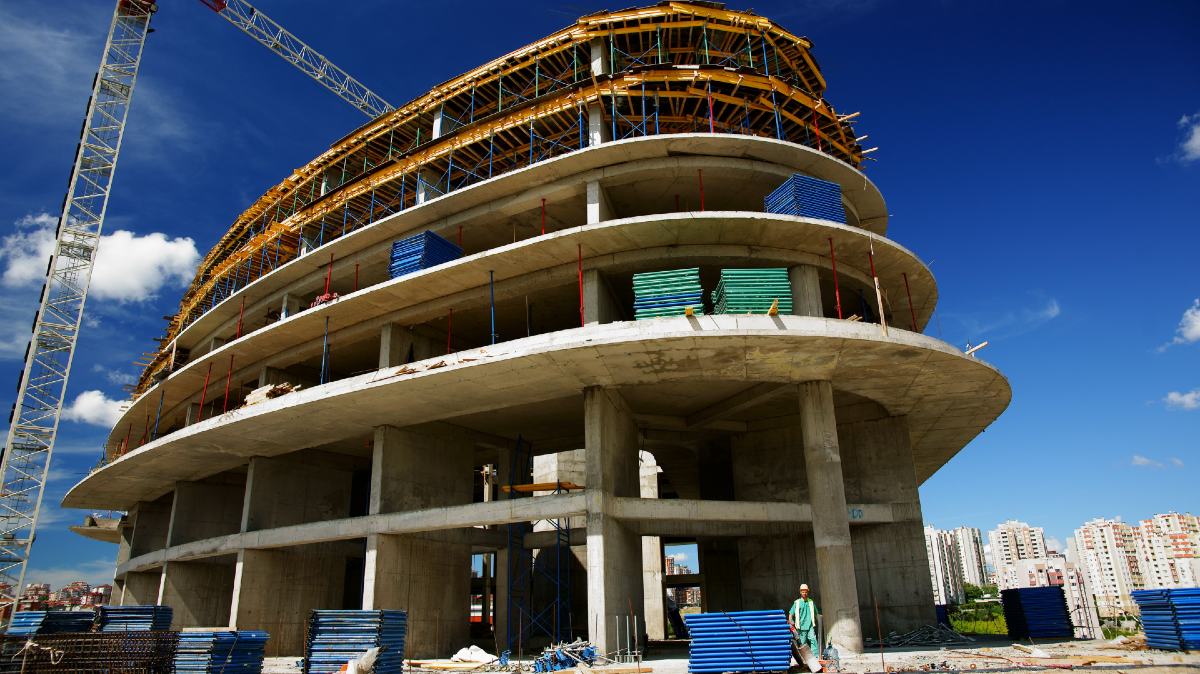
A commercial construction loan provides finance to build - or renovate - a property that will be used for business purposes.
Like a residential construction loan, funds are not provided as a lump sum. Instead, money is released in stages as the building progresses, generally over a period of between six months and two years.
During that time, borrowers make interest-only repayments on the funds that have been drawn down. Once the building is complete, the loan can be paid off or converted to a longer-term commercial property mortgage.
How does a commercial construction loan differ from a residential construction loan?
Loan eligibility
Residential: Eligibility for a residential construction loan is assessed on the applicant’s personal income, living expenses, borrowing capacity, and credit score. Approval of the loan depends on the borrower’s individual financial circumstances.
Commercial: Approval for a commercial construction loan is assessed on the project itself. This includes the projected cash flow of the premises when it’s complete, the broader economic feasibility of the project, and other commercial considerations. Commercial lenders generally need to understand the business case behind the project.
Deposits and loan terms
Residential: Lenders allow higher loan-to-value ratios (LVRs) , sometimes up to 90%. During the building phase, the drawdown period typically lasts 12 to 24 months when the borrower makes interest-only repayments on the funds released. After that, the loan rolls over to a standard principal and interest (P&I) mortgage with a loan term up to 30 years.
Commercial: Commercial construction loans demand much higher cash deposits, typically 25-35% of the total project cost, although some property proposals may require higher deposits depending on the lender’s risk assessment. Loan terms are generally between five to 15 years, requiring the loan be fully paid or refinanced by the end of the loan period.
Interest rates
Residential: Home construction loan rates are considerably lower than those financing commercial construction projects. While they are higher than standard variable home loan rates, they tend to be more standardised and reflect the perceived lower risk associated with home construction over commercial construction ventures.
Commercial: Commercial construction loan rates start significantly higher than residential construction rates and can extend well into the double digits depending on the lender’s risk assessment. Lenders typically view commercial builds as higher-risk projects given the variables of uncertain tenant demand, unforeseeable economic conditions, and market swings.
Requirements for a commercial construction loan
As well as a substantial deposit, those applying for a commercial construction loan must provide detailed project plans and a building contract with a licensed builder.
Lenders will generally require:
Approved plans: Complete architectural designs, engineering approvals, and local council permits allowing the project to proceed
Fixed-price building contract: Lenders look for a signed contract with a licensed builder, making clear what the total building cost will be
Feasibility study: A full budget covering the entirety of the project, cost estimates at each stage of the construction with firm timelines for each phase, as well as a completion date and plans for the building when constructed
Proof of insurance: Lenders will need to see the project has comprehensive public liability and builder’s risk insurance
Borrower details: Lenders will generally ask for a statement of the borrower’s assets and liabilities, as well as recent financial statements
Lenders are also likely to ask for:
documents demonstrating the borrower’s business structure and experience with previous or similar projects
any tenancy or lease arrangements that may have been finalised
evidence that the builder and/or consultancy team is suitable for the proposed project
any contingency plans if costs rise or construction does not proceed as expected
how projected costs stack up against the project’s final value
a demonstrated exit strategy, such as sale of future commercial units, refinancing to a longer-term commercial loan, or loan repayment from other business operations
evidence of demand for completed property and expected income
independent reports from valuers, quantity surveyors, or other consultants in the case of more substantial builds
How a commercial construction loan works
Progress payments for commercial builds are generally more formalised than for a standard home construction. Progress payments typically include five to six stages, depending on the project type:
slab
framing stage
lock-up stage (when building is weatherproof)
fixing stage (when internal fit-out commences)
practical completion
Each drawdown is generally triggered by the builder but will require an independent progress inspection by the lender’s valuer or quantity surveyor before funds for the next stage are released. The work completed must match the builder’s claim and meet the lender’s requirements.
Who uses commercial construction loans?
Commercial construction loans are essentially business loans available to business owners, property developers, or commercial landlords looking to build, expand, or renovate commercial premises. Commercial SMSF loans are also the only option available to self-managed superannuation funds following the banning of new lending to SMSFs for residential property purchases.
Developers of larger-scale residential unit projects also must apply for commercial construction finance. Developers of smaller multi-unit projects (two to four units on a single title) can generally apply for residential construction loans.
Commercial construction loans: Pros & Cons
Pros
- Strict lending criteria: The heavy paperwork and strict lending rules can provide inbuilt scrutiny the project will be economically viable and is likely to be financially sustainable when completed
- Staged funding release: Ensures repayments are only being made on the funds required at the time, not the whole loan amount. It also means the project will be independently monitored to ensure some quality control and adherence to promised timelines
- Interest-only repayments: Like all construction loans, interest-only repayments during the building phase preserve cash flow while the building is going up
Cons
- Strict lending criteria: This can be a doubled-edged sword with extensive documents, approvals, permits, detailed costings, and financial plans required before a loan is approved. It can also see the application fail if the lender is dissatisfied with any aspect
- Higher interest rates: Interest rates (and loan fees) can be significantly higher than standard home construction loans as lenders regard commercial builds as much higher-risk projects than residential builds
- Large deposits: Commercial construction loans typically require large deposits or equity, sometimes up to 40% of the total project cost, for finance to be approved
- Shorter loan terms: Some commercial construction loan terms can be as little as six months for the build phase (depending on the project) after which borrowers can either switch to a commercial mortgage and/or make the finished project pay for itself
- Loan approvals can be withdrawn: Despite best efforts to line up council approvals, builders, consultants, and finance, any delay or change to the project can risk loan approval lapsing or being cancelled. This can mean beginning the application process again
Risks of commercial construction loans
Commercial constructions carry with them the risks associated with any construction project, arguably with more significant repercussions given their relative scale and loan amounts. These include:
Cost overruns: Increases in material and labour costs, extended poor weather, or unexpected site issues can cause original estimates to be overshot
Rising interest rates: While borrowers make interest-only payments during the construction phase, these are generally at variable rates which can see unexpected increases
Stall in drawdowns: Unexpected delays or issues raised during inspections can cause gaps in funding which not only halt work but can put the project as a whole under increased cost pressure
Builder issues: If the builder faces insolvency or a major contractor goes out of business during the project, the construction can be put in jeopardy until replacements are found or legal issues are worked through
Valuation inaccuracies: Lenders will often base their loan amounts on a predicted future value which can be affected by local property markets and other factors while the build is underway
Changed economic circumstances: Commercial projects can be more susceptible to general economic downturns that can affect demand for the finished product and projected income returns
How to find the best lender for a commercial construction loan
Finding the best lender for a commercial construction project is much the same for any loan. Key factors to compare include:
interest rates (these can vary widely according to risk assessments of the project)
loan-to-value-ratio requirements
requirements to demonstrate pre-sales of commercial units, future tenancy agreements, or detailed loan exit plans
approval process and speed
Some commercial construction projects that major banks may deem too high risk may be considered by specialised non-bank lenders or other private or commercial finance advisory services. Bear in mind, while these lenders may be more flexible, their interest rates and application fees can also be higher.
It pays to remember all lenders will generally need to be convinced of the project’s business case and the borrower’s entrepreneurial credentials, particularly if it’s the borrower’s first construction venture.
