
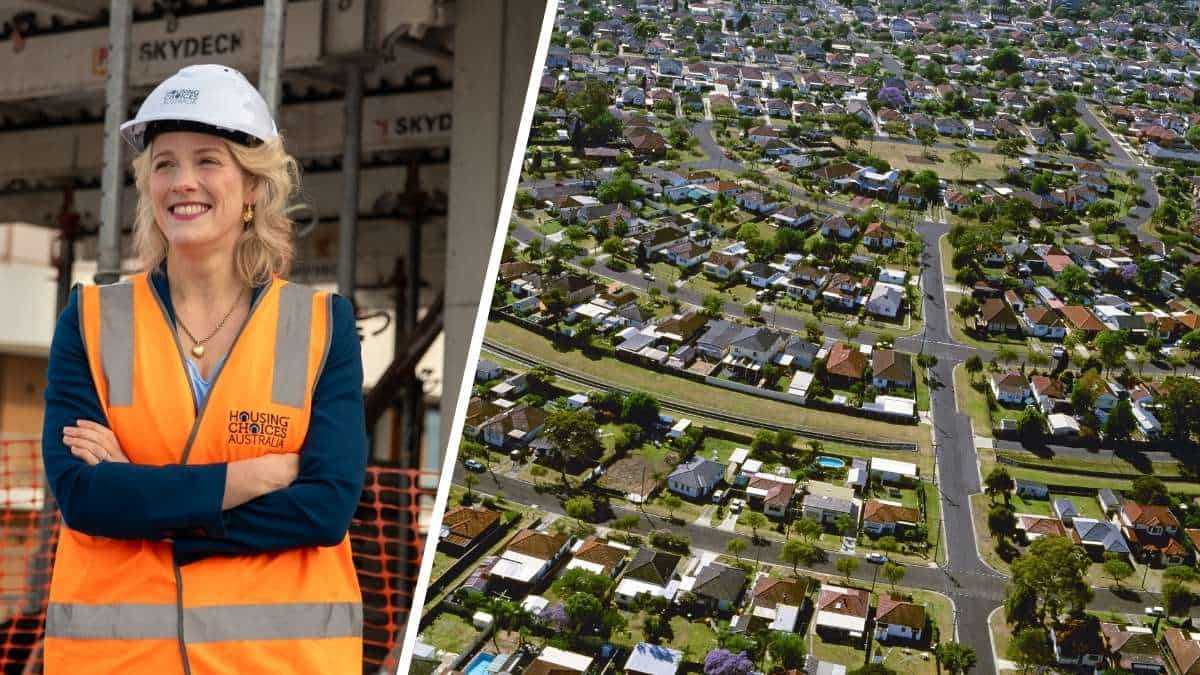
- The expanded first homebuyer scheme will officially kick off 1 October.
- There are now unlimited places and no income caps for first home buyers.
- Property price caps have also been significantly expanded.
Any first home buyer with a 5% or more deposit may be eligible to apply to have the federal government go as guarantor for up to 15% of their loan.
The First Home Guarantee currently is capped at 50,000 places each year, with maximum income thresholds, but both of these limits will be removed come October.
This expansion will replace the Regional Home Guarantee, although the Family Home Guarantee will still have 5,000 places for the 25/26 financial year.
There will still be a limit to how expensive a property first home buyers can purchase through the scheme, but significantly higher - in Sydney for example the price cap will go from $900,000 to $1.5 million.
The price caps are now more closely aligned to median dwelling values across each capital city.
Housing Minister Clare O'Neil (pictured) told the Savings Tip Jar podcast in November the Albanese Government has a "big, ambitious" agenda to address declining homeownership.
"The whole approach of the government is making sure we're helping first time buyers get into the market, and giving people flexibility as much as we can about how they use government support," she said.
How does the First Home Guarantee work?
The First Home Guarantee means the Government basically provides a guarantor to the lender for up to 15% of the loan.
It means first home buyers can purchase property with a deposit as small as 5% and still avoid paying Lenders Mortgage Insurance (LMI).
LMI can be a major expense - if you're borrowing 95% of a property worth $700,000, LMI could be over $36,000 according to our calculator.
Will this just push up prices?
While the Home Guarantee Scheme is backed by the Government and the opposition, objections have still been raised.
Independent economist Saul Eslake, former Chief Economist at ANZ, claimed earlier in the year the expanded First Home Guarantee would likely just push up prices.
"The Scheme allows someone who's saved up a deposit of say $50,000 - and can thus take out a mortgage of $200,000 without LMI, and so can by a $250,000 house - to instead be able to...service a mortgage of say, $400,000," he said.
"With borrowing power thus enhanced, prices will go up."
Research from Proptrack last year concluded that so far the guarantees have not had a large impact on selling prices, but that was when the First Home Guarantee was capped at 50,000 per year.
With many lenders capping debt-to-income ratios at six-times, someone borrowing 95% of $1.5 million would need to be earning at least $238,000 to qualify.
Borrowing at the top of the price caps in Sydney, for example, would push many borrowers into mortgage stress at average interest rates.
See Also: Borrowing Power Calculator
More 'diversity' to participating lenders
The government has also announced it intends to increase the panel of lenders that offer the Home Guarantee.
Currently there are 38 participating lenders including Commonwealth Bank, Westpac and NAB, but that's only a small portion of all the home loan providers in Australia.
The CEO of the Customer Owned Banking Association Michael Lawrence says more customer-owned banks on the HGS panel will create a "more dynamic, inclusive and competitive market."
"Ultimately, this increased competition and choice will benefit first-home buyers," he said.
"With their people-first ethos, customer owned banks are perfectly positioned to support first home buyers through the Home Guarantee Scheme and we hope to see many more working with the Government to help Australians buy their first home."
New Home Guarantee Scheme Property Price Caps
Here's how the HGS property price caps (the maximum value property first home buyers can buy and still participate) will change on October 1:
| Location | Current Property Price Cap | Property Price Cap effective 1 October 2025 |
|---|---|---|
| Sydney, Illawarra, Newcastle, Lake Macquarie | $900,000 | $1,500,000 |
| NSW – other | $750,000 | $800,000 |
| Melbourne, Geelong | $800,000 | $950,000 |
| VIC – other | $650,000 | $650,000 |
| Brisbane, Gold Coast, Sunshine Coast | $700,000 | $1,000,000 |
| QLD – other | $550,000 | $700,000 |
| Perth | $600,000 | $850,000 |
| WA – other | $450,000 | $600,000 |
| Adelaide | $600,000 | $900,000 |
| SA – other | $450,000 | $500,000 |
| Hobart | $600,000 | $700,000 |
| TAS – other | $450,000 | $550,000 |
| ACT | $750,000 | $1,000,000 |
| NT | $600,000 | $600,000 |
| Jervis Bay Territory and Norfolk Island | $550,000 | $550,000 |
| Christmas Island and Cocos (Keeling) Islands | $400,000 | $400,000 |
Source: Housing Australia