
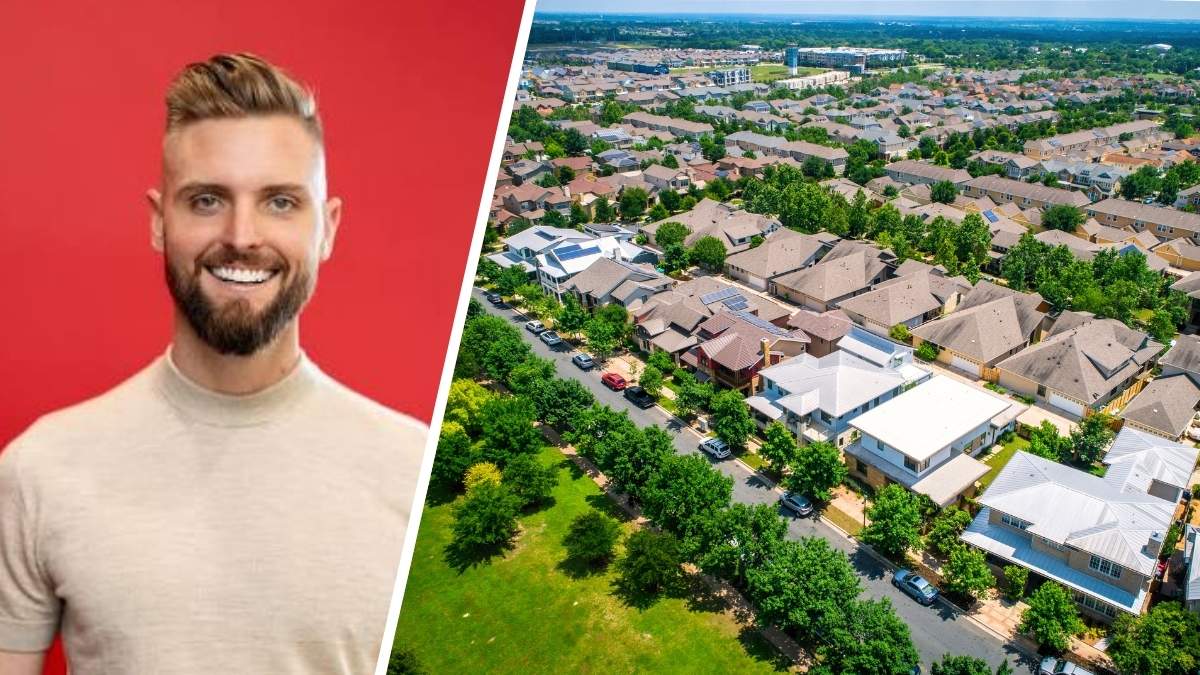
- Australia's housing downturn has created a disconnect, with falling property prices failing to bring buyers back into the market.
- Industry experts argue recent tax and investment policy changes have weakened confidence and contributed to the slowdown despite strong underlying demand.
- Many buyers remain on the sidelines due to fears prices could fall further, raising the risk of a slower-than-usual housing market recovery.
Australia’s housing slowdown is exposing a growing disconnect at the heart of the market: prices are easing, but buyers are not returning.
The shift is raising questions about whether policy efforts to curb price growth are having unintended consequences, with weaker sentiment offsetting any gains in affordability.
Speaking on the Savings Tip Jar Podcast, Jack Henderson, founder of buyer's agency Henderson Advocacy, said the current pullback reflected policy intervention rather than a deterioration in underlying demand.
“The price decrease at the moment has been manipulated. If there wasn’t policy change, then the marketplace would be in the same position it was prior to the policy change, which was obviously on the upward trajectory,” he said.
"I don't know how how far the market will come back. But what I do know is this has happened many, many, many times in the past and we can obviously learn from history.
"Real estate is going to be significantly more expensive in 10 years' time than it is right now. So, that's all I focus on and and that's what we focus on with our clients.
Policy weighs on sentiment
Recent property tax changes and new restrictions on property investment via self-managed super funds have added to uncertainty across the market, particularly for investors.
Mr Henderson said such change risks turning Australia into a nation where housing is owned by corporations.
“If you change policy that then makes all assets less appealing to invest in, then… you’re not going to build wealth,” he said.
At the same time, the downturn is broadening.
Figures from Cotality show its Home Value Index fell 0.7% in July, the steepest monthly decline since December 2022, with prices now falling across Sydney, Melbourne, Brisbane and Adelaide.
Buyers stay on the sidelines
Despite softer prices, buyer activity has yet to show a sustained recovery.
Housing finance data from the Australian Bureau of Statistics points to uneven loan commitments in recent months, while industry analysis suggests first-home buyer participation remains patchy despite targeted support.
Equifax data revealed that home loan applications in June were down 14% from 12 months ago, with first-home buyers leading the downturn with a 17.2% drop.
Mr Henderson said uncertainty about further price falls was keeping many out of the market because people only want to buy property that's going to grow in value.
“The reason first-time buyers are not buying or the reason lots of buyers are not buying is because they’re scared,” Mr Henderson said.
"The vast majority will not start buying again until the media starts reporting property prices are going to increase, and that probably won't happen until we start to see rates come down.
"Hopefully that's not too far into the future because of what the government's done to to the overall economy."
A slower recovery?
Previous housing downturns in Australia have typically been relatively shallow and short-lived, with demand recovering as prices stabilise.
This cycle, however, is showing signs of a more hesitant rebound, with price declines yet to trigger a broad-based lift in transactions.
“Everyone wants everything to be cheaper… but the reality is when we’re in it and opportunities start presenting themselves, people look at it very differently,” Henderson said.