
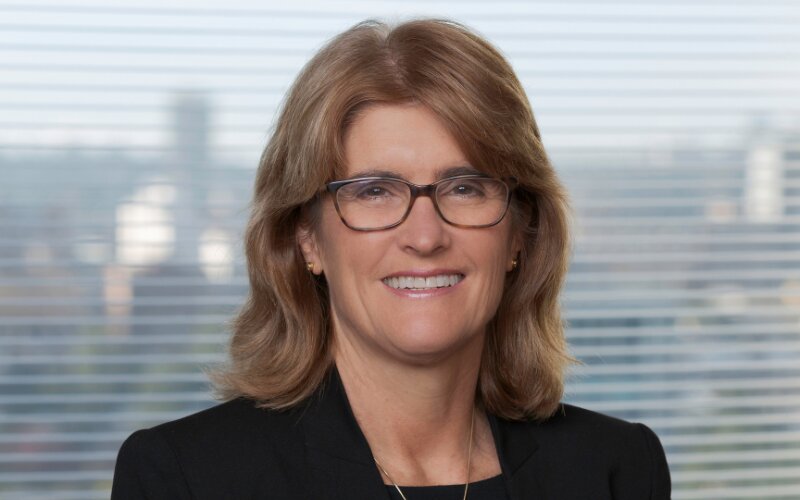
- RBA governor Michele Bullock said it was a good time to "take stock" of five interest rate increases in the system
- It follows the decision to raise the cash rate to 4.85% on Tuesday, Australia's highest cash rate in 18 years
- It was not a unanimous decision with the nine-member board split six-three in favour of an increase
While RBA governor Michele Bullock was quick to point out she did not provide forward guidance, she perhaps came close during Tuesday's post-meeting media conference.
Governor Bullock was speaking after the RBA's monetary policy board voted to raise the cash rate to 4.85% on Melbourne Cup Day, Australia's highest cash rate in 18 years.
The nine-member board voted six-to-three in favour of lifting the rate but there was a notable absence of the well-used RBA catchphrase around "needing to raise the cash rate further" in the statement accompanying the decision.
When quizzed whether the two factors were significant, Governor Bullock told journalists they shouldn't take them to mean anything in particular.
However, she did say this:
"There's now five interest rate increases in the system. Now, the last couple haven't even started to flow through yet.
"So it is probably a good point to just take stock for a minute and see what comes in, in terms of the data, to see if we're travelling more or less in line with the forecasts."
Hike cycle over for 2026?
While it may not mean a December cash rate increase is off the table, it is an indication there may be some appetite to gauge how the five cash rate increases of 2026 play out.
When asked about the split decision which saw three board members voting to hold the rate at 4.60%, Governor Bullock said those members had "put more weight" on downside risks to inflation.
"They felt that there were potential downside risks in these circumstances particularly since we'd already done four interest rate rises, and maybe we should wait a bit longer to get some more data to test that," she said.
The RBA's closely analysed statement accompanying the November decision was judged "dovish" by many economists.
Some have gone so far as to say they believe the latest cash rate increase will be the last in the current upcycle, but that would be to pre-empt the variable of the ongoing Middle East conflict and its effect on energy prices.
This key factor was heavily cited as creating uncertainty around the RBA's forecasts in documents released with the decision.
The quarterly Statement of Monetary Policy singled out the conflict as the basis of inflation risks skewing to the upside.
But Governor Bullock was quick to point out it wasn't the whole story.
Oil prices just one part of inflation
With the federal government pushing the narrative the Middle East conflict is responsible for Australia's current interest rate pain, Governor Bullock said she had a "slightly different perspective to that".
"There's two parts to it and certainly when you look at the headline... there is no doubt that headline inflation is being impacted by higher oil prices," she said.
She said she was also expecting the next headline inflation figure to be "pretty punchy too", yet it was not only related to the oil price rise but the base effect of excess demand in the economy.
"That's the bit we're trying to get at with interest rates," she said.
Feels like a recession
Governor Bullock acknowledged that people will feel like the economy is in recession but the RBA's forecasts do not foresee one.
Rather, she said growth is slowing quite markedly.
"I think that is going to make people feel like a recession because they feel poorer, their spending can't grow very quickly because their incomes aren't growing very quickly," she said.
She blamed the lack of productivity growth and said the RBA was not looking to push the economy into recession.
"We do have a dual mandate [maintaining price stability and full employment] although, at the moment, we are focusing on inflation [but] we haven't lost sight of the fact that we want to try and maintain gains in the labour market," she said.
That said, RBA documents forecast the unemployment rate to rise to more than 5% by December 2028.
The RBA also expects underlying inflation will not fall beneath 3% until the end of 2027, six months later than it previously forecast.
Its long-held inflation target is 2-3%.
The RBA also acknowledged housing prices and new lending had declined by more than expected, driven by both high interest rates and the federal government's overhaul of negative gearing and investor tax benefits in the May budget.
The final monetary policy board meeting for 2026 is scheduled for 7-8 December.