Australia’s housing market passes peak as home values fall 0.4% in June
Australia’s housing downturn accelerated in June, with national home values posting their sharpest monthly fall in more than three years.

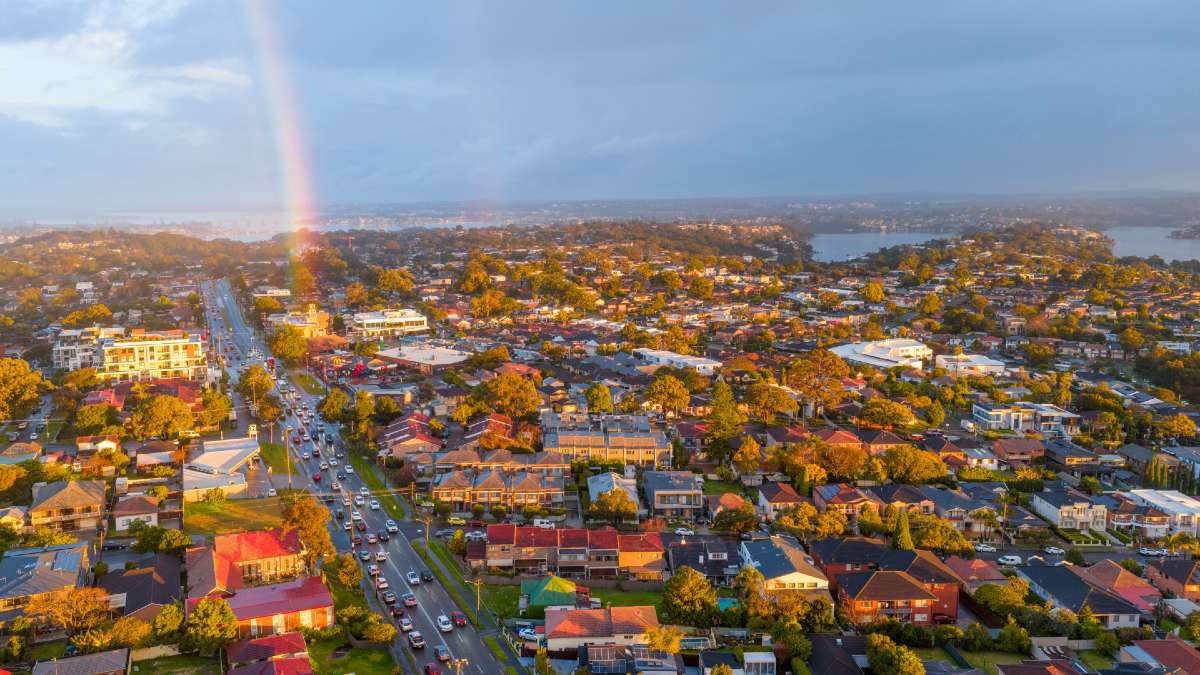
- National home values fell 0.4% in June, the biggest monthly drop since late 2022.
- Sydney (-1.2%) and Melbourne (-1.0%) led the national fall and dragged down the headline index.
- Weak demand is evident, with sales down 16% year-on-year and listings up 11%.
Cotality's latest Home Value Index (HVI) fell 0.4% over the month, the biggest decline since December 2022.
This follows May's flat growth (0.0%) and April’s slowdown (0.3%), bringing the values down 0.7% over the June quarter, indicating the market has turned after peaking in March.
The largest drag on the HVI was the continued decline in Sydney's home values, slipping 1.2% in June after three consecutive months of negative growth.
Sydney home values are now down 3.2% over the quarter.
Melbourne recorded the second-largest drop, down 1.0% in June.
Similar to Sydney, Melbourne home price growth has been negative in the previous indexes, resulting in a 2.6% quarterly decline.
Rounding out the June losses is the ACT, where home values fell 0.6% month-on-month and 1.3% over the quarter.
The falls in Australia’s two largest markets pulled the headline index lower, although the national results reflected a broad cooling across the country.
Previously high-performing markets lose steam
Mid-sized capitals Brisbane and Perth, which led gains earlier in the year, recorded modest monthly increases of 0.3% and 0.7%, respectively, in June.
"This represents a material slowdown relative to the pace of gains through the March quarter, when Brisbane values rose at an average monthly pace of 1.9% and Perth at 2.5%," Cotality’s research director Tim Lawless said.
Meanwhile, Adelaide home values flatlined over the month.
As the market rapidly decelerates, the HVI has seen recent months revised lower.
"Most regions have seen values revise lower over recent months, with the largest downgrades occurring in Perth and Brisbane, where the May index has been revised 88 and 53 basis points lower with the June update."
The weakening in home values across capital cities pushed combined capitals' price growth down 1.3% over the quarter.
Regional areas continue to record gains, albeit at a modest 0.3% monthly, no longer sufficient to offset the drag in the capitals.
Pullback in demand drives home values down
Weak demand rather than a surge in supply is driving home values down, according to Cotality.
"A weaker housing market can be seen across other metrics, including auction clearance rates, estimates of home sales and the number of properties listed for sale," Mr Lawless said.
Sales volumes over the three months to June were 16.2% lower than a year ago, and 14.5% below the five-year average.
At the same time, total listings across the capitals are almost 11% higher than a year earlier.
Combined capital cities auction clearance rates have held below 50% since the last week of May, dropping to the low-40% range from late June.
"Such low clearance rates indicate a mismatch between buyer and seller pricing expectations. Buyers now have more stock to choose from and less urgency in their decision-making," Mr Lawless said.
"Higher listings aren’t due to a pick-up in the flow of new listings; it's a symptom of less demand in the market, which has led to an accumulation of advertised stock."
See also: Australia's housing boom hits a wall as prices tip and profits peak
Which factors are weighing on home buyer demand?
Not just one but a range of macroeconomic and policy factors are feeding into the downturn.
Interest rates remain elevated, with the Reserve Bank holding the cash rate at 4.35% in June after three increases in 2026, while leaving open the possibility of further tightening.
"With underlying inflation still above target and the labour market remaining tight, the data flow over the next few months will be important in determining whether the current pause can be sustained," Mr Lawless said.
At the same time, the Westpac-Melbourne Institute of Consumer Sentiment fell 2.9% in June, with households reporting growing pressure on finances and deteriorating expectations for house prices.
Changes to negative gearing and capital gains tax announced in the federal budget are also expected to weigh on investor demand for established housing, according to Cotality.
"Even before interest rates rose by 75 basis points, we were seeing affordability hurdles weighing on buyer demand,” Mr Lawless said.
"Higher cost-of-living pressures, deeply pessimistic sentiment and a further dampening of demand via property taxation changes announced in the federal budget are all contributing to weaker housing conditions."
But supply-side constraints persist
Reflecting Cotality’s call that home values peaked in March, the latest HIA Housing Affordability Report reveals housing affordability fell by 4.5% in the March quarter, the "worst in more than 30 years".
The report shows it now takes more than 1.8 average incomes to service a typical mortgage nationwide, highlighting the growing strain on borrowers.
"Australia's housing affordability problem is caused by too few homes," HIA chief economist Tim Reardon said.
"The latest interest rate increases have reduced borrowing capacity, but the underlying driver of poor affordability remains that housing supply has failed to keep pace with population and economic growth," he added.
Mr Reardon said the Affordability Report also highlighted why recent changes to housing taxation and self-managed superannuation (SMSF) fund borrowing arrangements should be carefully reconsidered.
"The Australian Government has acknowledged, and made public, that the changes to negative gearing will reduce housing supply over the coming decade by around 35,000 homes," he said.
"It has now introduced another measure that restricts another source of private capital used to finance new housing, yet no assessment has been released showing what this will mean for future housing supply."
See also: SMSFs in race to finalise residential property purchases
Mr Reardon argued policy changes that reduce investment could further constrain supply and worsen affordability pressures even as home values begin to fall.
"SMSFs do not create additional demand for housing because they do not live in the homes they help finance. They provide another source of capital that allows new homes to be built."
"Policies that reduce the amount of capital available to build those homes risk making affordability worse."
Advertisement
Looking to take control of your retirement? The table below features SMSF loans with some of the most competitive interest rates on the market.
Lender Home Loan Interest Rate Comparison Rate* Monthly Repayment Repayment type Rate Type Offset Redraw Ongoing Fees Upfront Fees Max LVR Lump Sum Repayment Extra Repayments Split Loan Option Tags Features Link Compare Promoted Product Disclosure
Promoted
Disclosure
Disclosure
Disclosure