
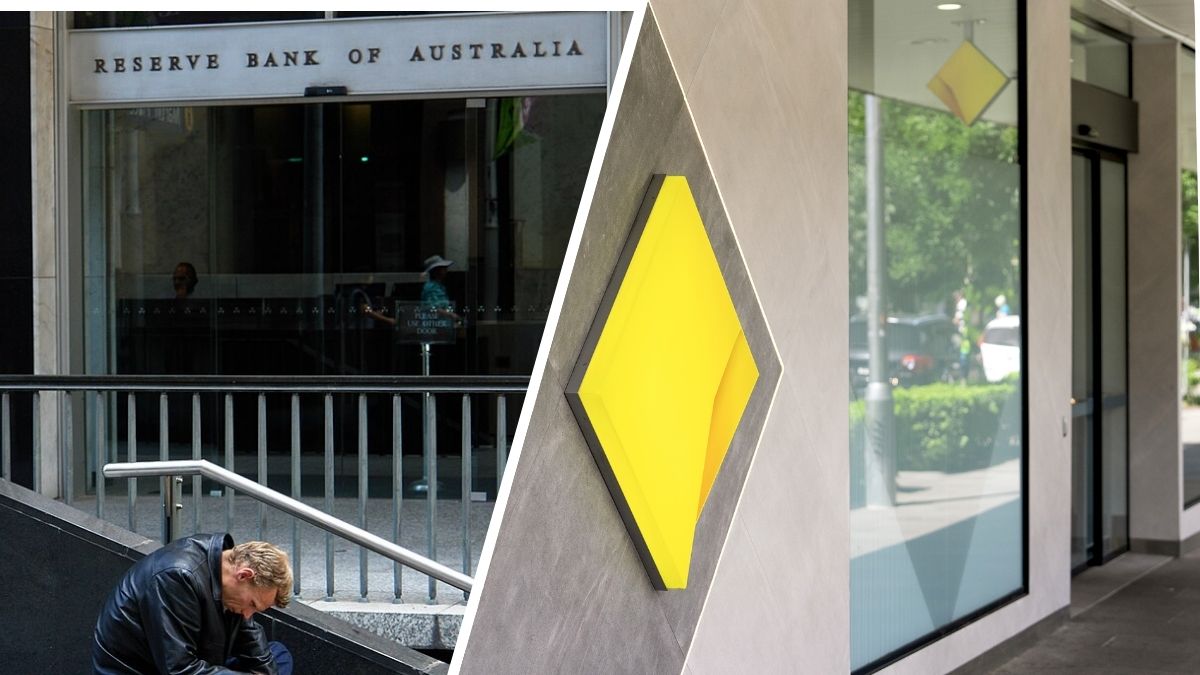
- Commonwealth Bank now officially expects the RBA will hike rates 0.25% in February.
- A "hawkish tilt" in rhetoric after the December meeting means CBA thinks the RBA now has a "lower threshold" for rate hikes.
- Multiple hikes may be necessary if inflation and economic growth increase above current forecasts.
A 0.25% hike in February would take the cash rate to 3.85%, where it sat before rates were cut for the third time this year in August.
Commonwealth Bank economists were previously forecasting an extended period with rates at 3.60%, but after a "strong hawkish leap" at the December RBA meeting now expects the inflation figures for the end of the year will be enough for the Board to hike.
"The RBA is on alert and flagged that risks to inflation have tilted to the upside, and further evidence of its persistence will be available over coming months," the CBA economics team wrote.
Last week RBA Governor Michele Bullock said the balance of risks to inflation "have tilted to the upside" and suggested that cash rate increases would be back on the table if inflation looks to be "more persistent".
"If inflation continues to be persistent and looks like it is not coming back down towards the Board's target...the Board might have to consider whether or not it's appropriate to keep interest rates where they are or in fact at some point raise them," she told media after the December decision.
Risk RBA "will not stop with one rate hike"
At the moment Commonwealth Bank is just predicting one hike in February, then for the cash rate to remain at 3.85% for the rest of 2026.
That's based on its forecast of 0.9% trimmed mean inflation from October to December which would mean an annual figure of 3.3%, slightly above the most recent RBA predictions.
If inflation through to December is softer than this though, CBA believes it would likely simply delay the cut until May rather than rule it out.
"Projections [are] showing inflation will struggle to move back to the 2.5% mid point without tighter monetary policy," the CBA economics team wrote.
"We expect the RBA to act."
Indeed, if growth has more momentum and inflation doesn't start to moderate next year, the CBA team believe a larger hiking cycle is a possibility.
"It could take an additional hike to bring the economy back into balance and inflation back to the mid-point."
Should mortgage holders give up on rate cuts?
Earlier in the year, many economists were expecting a terminal cash rate near or even below 3% once the RBA began cutting.
Inflation has proven much more difficult to shake off than expected, and after the shock jump in the Q3 CPI Ms Bullock said the Board "didn't consider the case for a rate cut at all" at the December meeting.
"Certainly there was no cut on the table, and no one suggested that there be a cut," she told media.
She suggested that as it stands, cuts in 2026 appear unlikely.
"At the moment that given what's happening with underlying momentum in the economy that it does look like additional cuts are not needed," she explained.
The most obvious impetus for that to change would be a dramatic decrease in the inflation rate over the next few months, but with the labour market still tight and resilient consumer spending the data at the moment is pointing in the opposite direction.
Another potential scenario that might see rates cut is a "stagflation" situation like that facing New Zealand - where economic growth is weak even though inflation is above target.
The Reserve Bank of New Zealand has cut its cash rate by more than 300 bps since July last year, despite inflation rising near the top of the target band, because of extremely weak economic growth - its GDP contracted 0.9% in the June quarter.
However, for now Australia's GDP is still positive (up 0.4% in the September quarter) with GDP per capita growth flat, underpinned by strong household spending, so for now the RBA can afford just to focus on the inflation target.