
- Australian households saved 6.5% of their income in the June quarter.
- Compensation of employees climbed 1.5%, boosting household disposable income.
- Australia’s economy grew 0.4% in the June quarter, above economists’ forecasts.
- The economy grew 2.1% over the year to June, also higher than the RBA forecast of 1.9%.
The household saving ratio edged up to 6.5% in the June quarter, from a revised 6.4% in the previous three months, according to the latest ABS National Accounts.
The saving ratio measures the proportion of disposable income that households save rather than spend, and is closely watched as an indicator of consumer confidence and financial resilience.
Despite the cost-of-living squeeze, the ratio has remained above 6% for the past three quarters, after falling in 2023 when inflation and higher interest rates eroded household budgets.
Higher wages boost household income
The June quarter increase came as growth in gross disposable income (up 1.1%) outpaced nominal household spending of 1.0%.
The rise in disposable income was largely driven by the 1.5% jump in the compensation of employees (COE), a key measure of wages and salaries paid to workers.
The ABS said continued competition for skilled labour, higher wages, bonuses and redundancy payments contributed to stronger household incomes.
Interest earnings and social assistance benefits were the other growth drivers.
See also:
Households hold back their spending, but not on EVs
Household consumption rose 0.4% during the quarter, with subdued spending across most categories.
This contributed 0.2 ppt to GDP growth.
According to the ABS, the Middle East conflict influenced Australians’ spending behaviour, with higher fuel prices weighing on consumption and travel activity.
“Operation of vehicles fell as households consumed less fuel in response to elevated fuel prices and various state governments' free public transport initiatives,” ABS head of National Accounts Grace Kim said.
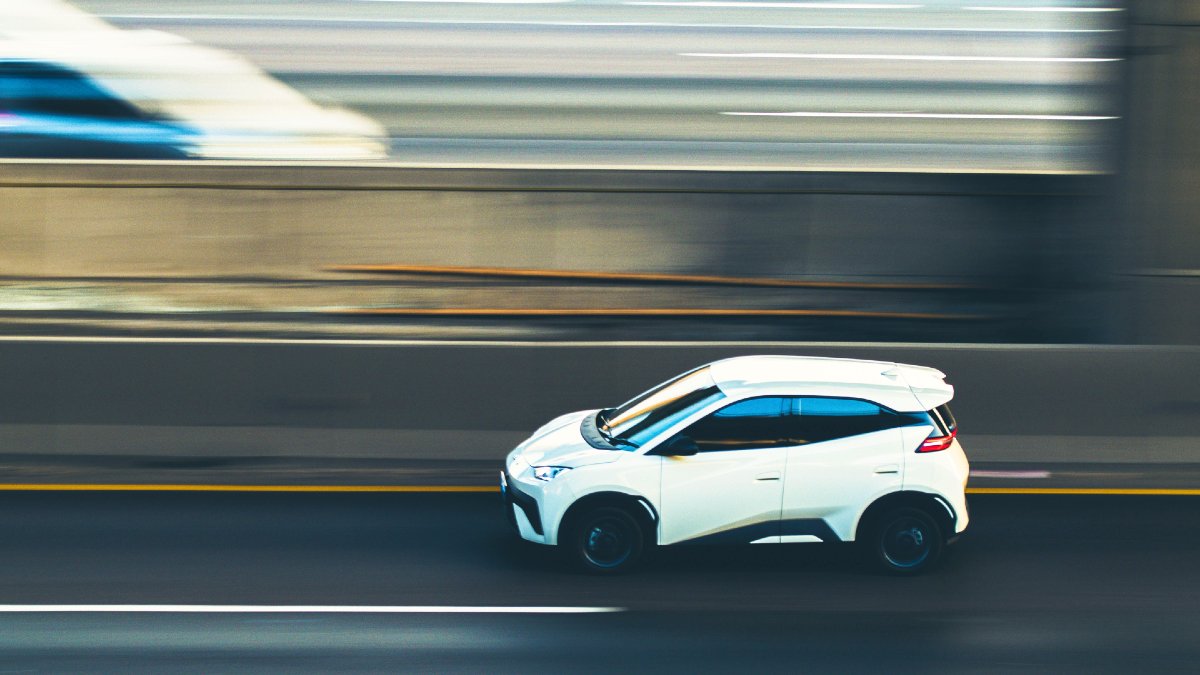
But as fuel consumption decreased, purchases of vehicles jumped 10.3% with Australians transitioning to electric and hybrid vehicles.
"The rise in electric vehicle purchases may have reflected households taking a longer-term approach to cost of living pressures, with some choosing EVs to help reduce ongoing expenses," Ms Kim said.
See also: What to know about 'green' cars in Australia
Increased vehicle purchases drove discretionary spending up 1.4%.
Meanwhile, essential or non-discretionary spending fell 0.3% due to seasonal reduction in electricity, gas and other fuels demand.
What stronger GDP means for the cash rate
Australia’s economy expanded by 0.4% in the June quarter and 2.1% over the year to June, in seasonally adjusted chain volume terms.
Both figures overshot economists’ forecasts of a 0.3% quarterly rise and annual economic growth of 1.8%.
In its August Statement on Monetary Policy (SoMP), the RBA forecast the economy to grow 1.9% year-on-year.
Three of the big four banks had earlier forecast an RBA rate hike later this year, with NAB expecting it to happen in September while CBA and ANZ tipped a November timing.
See also: ANZ economists now expect a November interest rate hlke
Westpac remains the outlier, holding its view of no further rate hike despite hotter-than-expected July inflation figures.
However, higher saving ratio and subdued spending may provide hopes for mortgage holders feeling the squeeze of elevated interest rates.
ABS said the figures in the Q2 National Accounts revealed that households continued to tighten the purse strings despite rising incomes.
"Economic growth remained subdued in the June quarter as households continued to behave cautiously," Ms Kim said.
In his statement following the data release, Treasurer Jim Chalmers said the National Accounts showed Australia’s economy grew despite uncertain global conditions.
"Annual growth in Australia was as strong or stronger than every major advanced economy – equal to the United States and much stronger than the rest," Dr Chalmers said.