
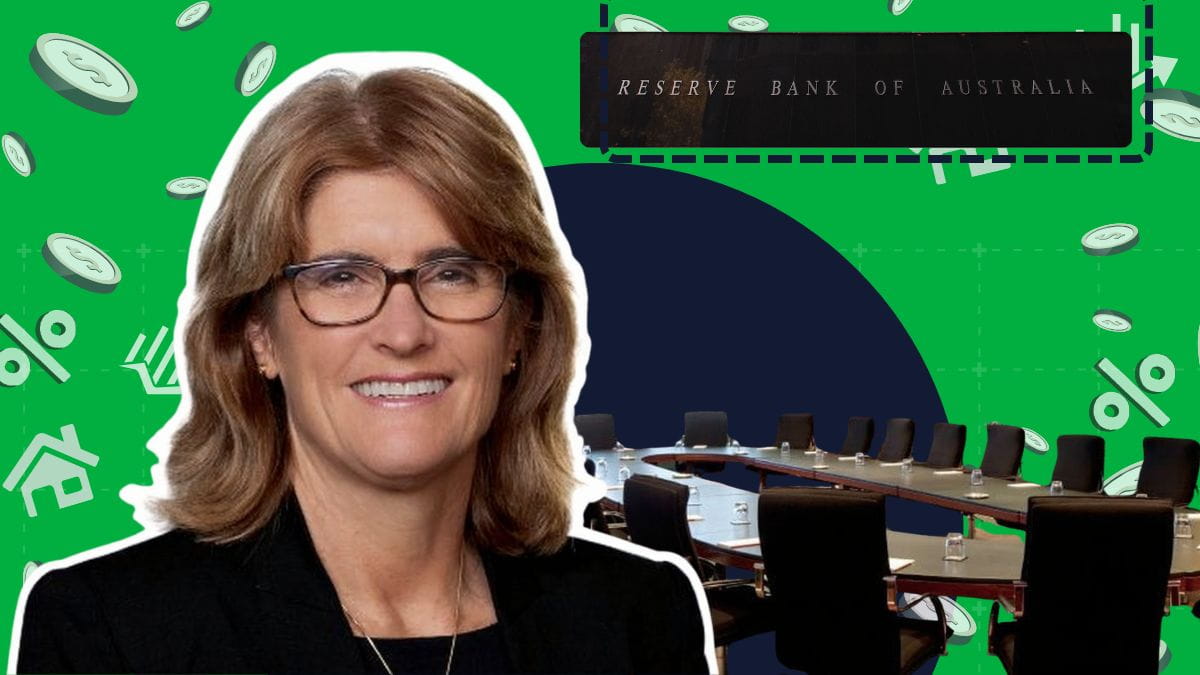
- The RBA Board lifted the cash rate by 25 basis points to 4.60%, its highest level since 2011.
- Tuesday's decision marks the fourth rate rise of 2026 following hikes in February, March and May.
- The Board says upside risks to inflation materialising, signals further rate hikes if necessary.
RBA’s monetary policy board wrapped up its September meeting on Tuesday voting unanimously to lift the cash rate for the fourth time this year.
In its post-meeting statement, the RBA said "some of the upside risks to inflation are materialising".
It points to higher global energy prices, AI-related demand driving higher prices for technology goods and ongoing domestic capacity constraints.
Australia’s cash rate is at its highest since October 2011 when it was sitting at 4.75%.
Financial markets and all four major banks widely expected the move after a string of stronger-than-expected economic data and growing concerns over higher oil prices fuelled another wave of price pressures.
Today’s cash rate hike means borrowers with variable-rate home loans could see their repayments rise in the coming months.
See also: RBA increases cash rate in September. Is your lender passing it on?
On the flip side though, Aussies looking to save may also shortly receive the news that their savings account provider has passed on the rate hike.
Persistent inflation prompts another rate rise
Despite three previous rate rises this year (Feb, Mar, May), inflation remains above the RBA’s target range and is proving more persistent than policymakers had hoped.
The Board handed down its decision a day before the August CPI data was released.
While headline inflation slowed to 3.5% in July, underlying pressures remain sticky with the trimmed mean measure unchanged at 3.6% in the month.
And as the impact of high oil prices flows through, headline inflation rate is forecast to come in at 4% or above in August and trimmed mean to hold at 3.6%, according to the big four.
The latest monthly household spending indicator released hours before the post-meeting announcement strengthens this forecast.
The ABS revealed households’ transport spending rose to 2.3% in August.
"Both fuel spending and new vehicle sales contributed to this rise, especially electric vehicles sales as households respond to rising fuel prices," ABS head of business statistics Tom Lay said.
Fuel spending rose 8.1% in August, following the full restoration of the fuel excise duty from 3 August.
Those figures materialising would bring the inflation well above the RBA’s 2-3% target band
Cameron Kusher, chief economist at Herron Todd White, said several indicators pointed to inflation remaining stronger than expected.
Mr Kusher noted that economic growth and inflation had both come in stronger than the RBA anticipated when it published updated forecasts in August.
"Inflation has slowed but remains higher than forecast, and with oil prices surging and fuel a key input to many goods and services, it is likely that inflationary pressures will persist and may even strengthen," he said.
The Board did, however, have access to the latest labour force data, which showed Australia's unemployment rate climbed to 4.6% in August.
The uptick was largely driven by more people entering the labour force, with new jobs surging to 39,500.
More rate rises remain possible
The RBA retained an explicit tightening bias, saying it would continue to do what it considers necessary to bring inflation back to target, "including increasing the cash rate target further if needed".
Mr Kusher said the latest rate hike was "necessary" to address ongoing inflation pressures and may not be the last.
"Monthly data on household spending shows that spending continues to grow at an annual rate well above inflation, and discretionary spending is growing faster than non-discretionary spending," he said.
"[This] indicates that households still aren't reigning in their spending enough to slow inflation."
"Whilst the RBA has a dual mandate to maintain full employment and stable prices, it is clear that the stable prices (inflation) part of their mandate needs to start taking a much higher priority."
Mr Kusher said the odds of additional rate rises in the future remain high.
ANZ is currently the only major pricing in another rate hike in November.
"The market currently expects that it is more likely than not there will be another rate increase before the end of the year and then another interest rate increase in 2027," Mr Kusher said.