How One Investment Property Can Generate $2,000 a Week: The Co Living Strategy


Dominic Beattie
- Group Editor
- Experienced finance editor
- Writer
- Commentator and researcher
Do you like & trust our expert, human-written content?
Simply click this button to tell Google you want to see more of us in your Google Search Results, AI Overviews and AI Mode answers.
- Co-living can boost cash flow from a single property, though investors need to weigh the extra income against higher complexity and risk.
- High advertised yields can quickly shrink once vacancies, expenses and management costs are factored in.
- Location, compliance and realistic demand are just as important as rental income when assessing a co-living investment.
I've been investing in property for over 20 years, and if there's one thing I've learnt, it's that making money from property isn't just about watching its value go up.
Capital growth is important, of course. But so is the income a property generates while you're holding it.
I've spoken with plenty of investors over the years who own properties worth considerably more than what they originally paid, yet they're still having to contribute money from their own pockets every month to cover the mortgage and other expenses.
That's not necessarily a bad investment. But it does make it harder to keep building a portfolio, particularly with today's property prices and borrowing costs.
It's one of the reasons I've become increasingly interested in co living properties.
Why co living is attracting investors
Rather than receiving $600 or $700 a week from a traditional rental property, we're seeing established houses that have been converted into individual accommodation suites with the potential to generate $1,800, $2,000 and, in some cases, even more per week.
And I'm not talking about buying five separate investment properties. I'm talking about one house.
How does co living actually work? The idea is pretty simple.
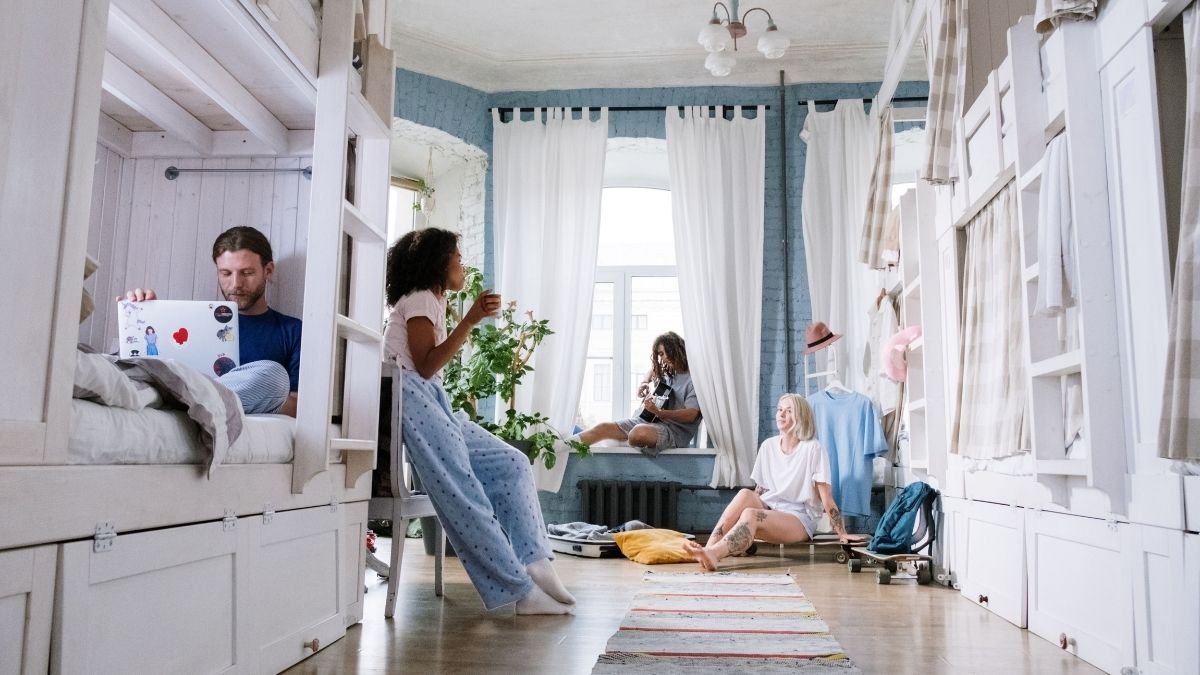
Instead of leasing an entire property to one family, you have several tenants renting individual rooms or suites within the same house.
Depending on the configuration, each tenant might have their own bathroom, kitchenette, air conditioning and private living area, with certain facilities shared between occupants.
The people renting these rooms aren't necessarily students, either. We're seeing demand from hospital workers, professionals, tradespeople and people relocating for employment who want somewhere comfortable to live without paying for an entire house.
Some tenants also prefer having their electricity, water and internet included in the weekly rent because they know exactly what their accommodation is going to cost.
For an investor, the difference is that you're collecting rent from several tenants rather than relying on one household.
But there's an important distinction here. A proper co living property isn't simply an ordinary five bedroom house where you decide to rent each bedroom separately.
You need to understand what the property is legally approved for, how it's configured and whether it meets the relevant building and safety requirements.
That's something I look at very carefully before recommending these types of investments.
How one property can support multiple rental streams
A five bedroom property in Ipswich generating $2,000 a week To put some actual numbers around this, let's look at a property I've been reviewing recently at 46 Warwick Road in Ipswich, Queensland.
It's an established house that has been renovated and configured into five private accommodation suites, each with its own bathroom, kitchenette and air conditioning.
The rooms have been advertised at approximately $400 per week, including utilities.
At full occupancy, the numbers would look like this:
Rental income | Weekly amount |
Room 1 | $400 |
Room 2 | $400 |
Room 3 | $400 |
Room 4 | $400 |
Room 5 | $400 |
Total weekly rental income | $2,000 |
Potential annual rental income | $104,000 |
Figures are based on advertised room rents in October 2026 and assume all five rooms are occupied for 52 weeks. They represent potential gross rental income rather than verified actual earnings.
Now compare that with a traditional investment property renting for $650 per week, which would generate $33,800 annually.
That's a substantial difference in rental income from a single property.
Of course, the two properties aren't directly comparable. A renovated house with five bathrooms and individual accommodation suites will generally cost more to buy or establish than an ordinary family home.
But it shows what can be achieved when the layout of a property is used differently.
Another advantage is that if one tenant moves out, you're not necessarily losing your entire rental income. The other four rooms can continue producing rent.
The trade-off is that you're dealing with more tenants, potentially more turnover and additional property management responsibilities.
The rental yield
What about the actual rental yield? This is where things start getting interesting, but it's also where investors need to be careful.
Let's assume a suitable five room property costs $1,050,000 to purchase.
If it's generating $2,000 per week, that's $104,000 annually, or a gross rental yield of approximately 9.9%.
When you consider that many traditional residential investment properties generate gross yields of around 3% to 5%, you can understand the attraction.
But here's something I explain to clients regularly.
Just because a property has a 10% gross rental yield doesn't mean you're making 10% profit.
You've still got property management fees, council rates, insurance, electricity, water, internet, cleaning, maintenance and vacancies to account for.
Using that same five room example, let's look at what a hypothetical year's operating expenses might involve.
Annual income and expenses | Amount |
Potential gross rental income | $104,000 |
Allowance for eight vacant room weeks | -$3,200 |
Property management at 9% of collected rent | -$9,072 |
Electricity, water and internet | -$8,320 |
Common area cleaning | -$3,120 |
Maintenance allowance | -$3,900 |
Council rates and insurance | -$8,500 |
Estimated income after these expenses | $67,888 |
These are illustrative figures, not the actual operating expenses of 46 Warwick Road. They exclude finance costs, tax, applicable land tax, major capital expenditure, acquisition costs and other possible expenses.
So instead of looking at $104,000 in rental income, you're now looking at approximately $67,900 before mortgage repayments and tax.
That's still a considerable amount of income from one property, but whether it's a good investment depends on what you've paid, how you've financed it and what your actual costs turn out to be.
Buying, converting, and choosing the right location
I've always placed a lot of importance on buying at the right price. Even a property producing excellent rent can become a poor investment if you overpay for it.
The asking price has been around $1.1 million.
On those advertised figures, that's $118,560 a year in gross rental income, or approximately 10.8% gross yield.
That's certainly enough to get an investor's attention.
But before getting too excited, I'd want to see the actual leases, rental statements, building approvals and operating expenses.
The advertised room configuration and any proposed additional accommodation would also need to be independently checked.
There's a big difference between what an agent advertises as potential rental income and what a property is actually producing.
If someone tells me a property can generate $2,280 a week, my next question is whether it's currently achieving that figure, and if not, what's needed to get there.
The answer might be perfectly reasonable. But I want to see the evidence before treating that income as part of an investment decision.
Would I buy an existing co living property or convert one? Both approaches can work, although I generally prefer looking at established houses where there's already a sensible underlying property investment.
Buying something that's already been renovated and configured for multiple tenants can save a considerable amount of time and potentially reduce the work involved in getting it ready to rent.
But I wouldn't assume that just because it's operating as co living accommodation, everything has been approved correctly.
I'd still want to check its building classification, council requirements, fire safety provisions and any registrations or approvals that apply.
The other option is buying an ordinary established house and converting it.
For example, you might find a four bedroom property with a large second living area that could potentially be converted into another bedroom. Depending on its layout, there may also be opportunities to add bathrooms or improve the accommodation.
That's where understanding the property before you buy becomes extremely important.
You need to know what council will allow, what the building requirements are and how much the conversion will actually cost.
I've seen renovation ideas that look great on paper until you start pricing the plumbing, electrical work, bathrooms and fire safety upgrades.
Spending $150,000 on a conversion doesn't make sense if the additional rental income won't justify the cost.
And there's another consideration. If you spend heavily modifying a property, will you get that money back when you eventually sell?
That's why I prefer properties where the land, location and underlying house still make sense as an investment, regardless of how many rooms you're renting.
Not every suburb is suitable. This is probably one of the most important parts of the strategy.
Just because you can create five or six rooms doesn't mean you're going to find five or six tenants willing to pay the rent you want.
You really need to understand who is going to live there and why.
I tend to look closely at areas with established employment, hospitals, universities, transport and other services that attract people looking for individual accommodation.
Ipswich is an interesting example because it has a hospital precinct, employment opportunities and access to Brisbane.
But even within Ipswich, I wouldn't treat every location the same.
A property close to employment, transport and shops may attract a very different level of demand from one that's isolated or difficult to access without a car.
I'd also want to know what comparable rooms are renting for, how long they're staying vacant and what local property managers are seeing.
It's easy enough to advertise a room for $400 a week. Finding someone prepared to pay it consistently is what matters.
And while the income looks attractive, you also have to remember that tenants can move out at different times throughout the year.
That means vacancy and tenant turnover need to be factored into the numbers from the beginning.
The risks that don't always get mentioned When people hear about a house earning $2,000 a week, the first reaction is usually to ask where they can buy one.
I understand why. But the rental return is only one part of the investment.
Compliance is a major consideration.
In Queensland, rooming accommodation can involve different planning, building, fire safety and tenancy requirements from those applying to a traditional rental house. Registration and accreditation obligations may also apply, depending on the circumstances.
It's important to have those matters properly checked because being able to rent rooms individually doesn't automatically mean every proposed use or configuration is permitted.
Finance is another consideration.
Not every lender will assess a co living property the same way it assesses a traditional four bedroom house. The building configuration, valuation and type of accommodation can all influence how a lender approaches the application.
And then there's the day-to-day management.
With five tenants, you could have five different sets of circumstances, different tenancy agreements and more frequent changes in occupancy.
You'll want an experienced property manager who understands this type of accommodation.
Utilities and maintenance can also be higher, particularly where the rent includes electricity, water and internet.
For those reasons, I prefer to assess the income conservatively rather than assuming every room will be occupied throughout the year.
If an investor needs full occupancy just to cover the costs, I'd be questioning whether there's enough room for things to go wrong.
What happens to capital growth? One question I often get is whether co living properties experience the same capital growth as ordinary houses.
The answer is that it depends on the property.
A strong rental return doesn't automatically translate into stronger capital growth.
In some cases, a heavily modified house might actually appeal to fewer buyers when it's time to sell, particularly if the internal layout no longer suits a traditional family.
That's something I think investors should consider before buying.
Personally, I still want a good piece of real estate underneath the rental strategy.
That means a decent location, a sensible land component, solid construction and a property that has appeal beyond its current use.
If demand for rooming accommodation changes in ten years, I'd want to know what else I could legally do with the property without spending another fortune converting it back.
I've always been more interested in investments that give you options rather than properties that only work under one particular set of circumstances.
Is co living worth considering in 2027?
I think we'll continue seeing more investors explore co living, particularly those who want to improve cash flow without having to purchase several properties.
With borrowing costs and living expenses putting pressure on household budgets, rental income has become an increasingly important part of the investment conversation.
And when you look at the difference between collecting $650 a week from one house and potentially $2,000 a week from a properly configured property, it's not difficult to understand why.
But I wouldn't buy a property simply because somebody tells me it has a 10% rental yield.
I'd want to know what it's actually worth, whether the rental income is achievable, how much it costs to run, whether the accommodation is compliant and how the property fits into the investor's broader financial position.
I'd also want to see what happens to the numbers if a couple of rooms become vacant or unexpected maintenance comes up.
For me, that's what separates a promising property from a genuinely sound investment.
After more than 20 years investing in property, I've learnt that you don't necessarily need to own more properties to improve your rental income. Sometimes it's about finding a better way to use the property you're buying.
Co living can certainly provide that opportunity.
But as with any investment, the property, the purchase price and the numbers still have to stack up.