Australians keep the suburb but lose the house, Domain finds

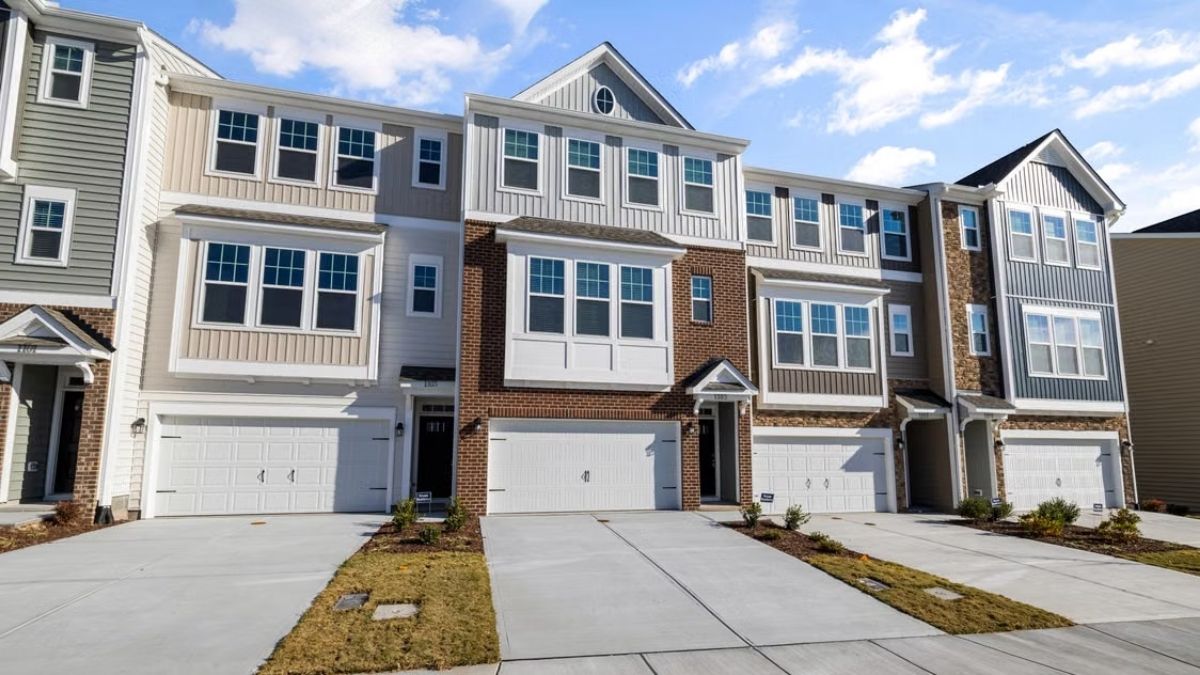
- Australians are increasingly giving up on detached houses and choosing townhouses or apartments instead, allowing them to stay closer to jobs, transport and lifestyle amenities.
- A cooling housing market has failed to restore affordability, with house buyers still falling hundreds of thousands of dollars short of seller expectations in most capital-city markets.
- The affordability gap between houses and townhouses is now larger than the gap between many inner and outer suburbs, according to Domain.
Australians are no longer solving housing affordability problems by moving to the urban fringe. Instead, many are giving up on owning a detached house altogether.
New research from Domain suggests a growing number of buyers are choosing townhouses and apartments to stay closer to jobs, transport and lifestyle amenities, as houses remain financially out of reach even in a cooling property market.
The shift marks a significant change in how buyers are responding to affordability pressures.
For decades, aspiring homeowners stretched their budgets by moving further from the CBD. Now, the bigger saving often comes from changing the type of property they buy rather than the suburb they buy it in.
"The biggest divide in Australia's housing market is no longer simply between inner and outer suburbs," Domain chief residential economist Dr Nicola Powell said.
"It's increasingly between detached houses and medium-density housing."
The findings come from Domain's latest Matching Demand Report, which compares millions of buyer price searches with listing prices across Australia's capital cities.
Cooling market, same affordability problem
The report found the recent slowdown in housing price growth has done little to close the gap between what buyers can afford and what sellers are asking, particularly for detached houses.
In every capital city, buyers searching for houses were generally budgeting less than available listings.
Canberra recorded the largest mismatch, with buyers searching around the $1.2 million mark for inner-city houses while listings averaged $1.74 million, leaving a shortfall of more than half a million dollars.
In Melbourne's inner suburbs, buyers were about $440,000 below asking prices, while Sydney recorded a gap of $400,000.
That disconnect persists despite softer market conditions and expectations that affordability pressures would ease as price growth moderated.
"The housing market has cooled, but affordability hasn't improved enough to bring detached housing back within reach for many Australians," Dr Powell said.
"Historically, a market slowdown helps improve affordability, but that relief simply has yet to materialise for house buyers."
The new affordability trade-off
Rather than abandoning expensive inner and middle-ring suburbs, many buyers appear to be adjusting their expectations about what kind of home they can realistically afford.
In several capital cities, the gap between houses and townhouses is now larger than the gap between inner and outer suburbs.
In practical terms, a buyer may be able to save more by swapping a detached house for a townhouse than by moving 20 kilometres further from the CBD.
The shift is evident when comparing buyer budgets and listing prices across different dwelling types.
Buyer-seller affordability gap by dwelling type (inner-city markets)
City | Houses | Townhouses | Units |
Canberra | -$538,000 | -$400,000 | +$30,000 |
Melbourne | -$440,000 | -$150,000 | -$3,000 |
Sydney | -$400,000 | +$100,000 | -$50,000 |
Brisbane | -$350,000 | -$45,000 | $0 |
Adelaide | -$205,000 | +$30,000 | +$50,000 |
Perth | -$190,000 | -$75,000 | +$6,000 |
Hobart | -$35,000 | -$90,000 | +$128,000 |
Source: Domain Matching Demand Report. Negative figures indicate buyer budgets are below listing prices, while positive figures show buyers are searching above listing prices.
In Canberra, house hunters are typically more than half a million dollars below seller expectations for detached homes, but are searching above listing prices for units.
In Adelaide, buyers fall more than $200,000 short of house listings, yet are budgeting above asking prices for both townhouses and apartments.
Sydney tells a similar story. Buyers searching for inner-city houses remain $400,000 below listing prices, but townhouse buyers are already searching $100,000 above available stock.
The figures suggest Australia's affordability problem is increasingly defined by property type rather than postcode.
Detached houses remain beyond reach for many buyers, while townhouses and units are emerging as the point where demand and affordability begin to align.
"Today, many are making a different trade-off, changing the type of home they buy rather than where they buy," Dr Powell said.
"In many cities, choosing a townhouse or unit can unlock greater affordability than moving to the urban fringe, allowing buyers to remain closer to jobs, transport and lifestyle amenities."
Townhouses emerge as the compromise
If detached houses represent the dream and apartments the budget option, townhouses increasingly sit in the middle.
Domain found townhouse markets generally showed much closer alignment between buyer budgets and seller expectations than houses.
In Sydney's inner ring, buyers were actually searching above listing prices for townhouses, suggesting the segment remains within reach for a larger share of the market than detached homes.
Several townhouse markets also shifted from seller-dominated conditions to buyer-led conditions over the past year, making them one of the few housing segments where affordability pressures appear to be easing.
The findings help explain why medium-density housing has become a growing focus in planning debates as governments grapple with Australia's housing shortage.
Apartments provide the closest match
Units showed the strongest alignment between buyer demand and available supply.
Across much of Melbourne, Brisbane, Adelaide and Perth, the gap between buyer searches and listing prices for units was either negligible or favoured buyers.
In Melbourne's middle ring, buyers searching for units were almost perfectly aligned with asking prices, while buyers in Adelaide, Perth and Canberra were often searching above listing values.
The data suggests apartments remain one of the few areas of the market where buyers' expectations still broadly match market reality.