How do land valuations affect rates charges?


Dominic Beattie
- Group Editor
- Experienced finance editor
- Writer
- Commentator and researcher
Do you like & trust our expert, human-written content?
Simply click this button to tell Google you want to see more of us in your Google Search Results, AI Overviews and AI Mode answers.
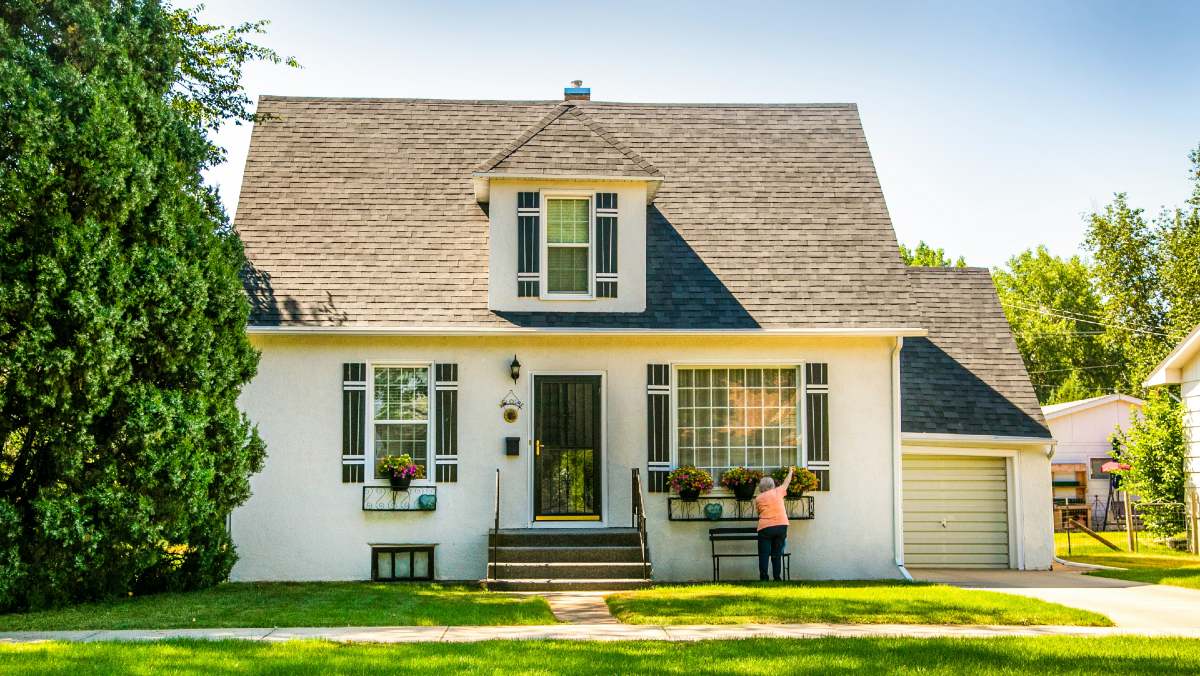
Many homeowners will know the routine. An envelope comes in the post every few years that tells you how much your property is worth.
The figure may bear no resemblance to what you might get on the market for it because most land valuations assume your land is vacant. Some can also reflect its highest and best permitted use, even if it’s a muddy wasteland where someone’s dumped a brown vinyl couch.
Let's explore the ins and outs of Australia’s land valuation systems.
Who decides what your land value is?
Land values are the domain of Australia’s states and territories. Each jurisdiction has a valuer general, a person who is ultimately responsible for determining land values. But valuers general can hardly get around each block by themselves so they use the services of licensed property valuers to cover all the regions of each state and territory.
Land values are usually applied annually in most jurisdictions although landowners may not receive new valuations every year - they’re generally issued every three years.
Where to find your current land valuation?
Some states provide online tools for landowners to see current land valuations while others provide information on how to access the information through other means. Here is a list that may help:
- New South Wales
- Victoria
- Queensland
- Western Australia
- South Australia
- Tasmania
- Australian Capital Territory
- Northern Territory
How are land values determined?
If you’ve thought your land value was some arbitrary figure, rest assured there are several systems used to determine land values. These can vary across jurisdictions and sometimes for different zonings within them. It is up to each valuer general to determine which system is fairest and delivers consistency in land valuations.
Some methods involve grouping similar properties together and using them to set a benchmark to evaluate other properties against. As such, some land valuations can be quite generic and may not reflect the specifics of individual sites.
Generally, land values are based on unimproved values of rateable land, meaning they exclude things like buildings although some states may also use capital improved values for other taxation purposes.
Valuers may consider:
recent property sales, including vacant and improved properties where the price of the improvements is removed
the land’s most valuable use
its zoning, heritage restrictions, or other constraints to use
location and views
size, shape, and features
nearby development and infrastructure
Land valuations vs property valuations
It’s worth noting here property valuations required for home loan applications and conducted by licensed property valuers are quite different to valuer general land valuations. Property valuations involve inspection of an individual property and take into account many more specifics.
What are land valuations used for?
Valuers general like to make it very clear they do not set council rates, land taxes , or government leasehold rents. Rather the land valuations they supply are used by local and state governments to calculate those fees and charges. Land valuations are intended to provide independent data.
Given that valuations can have a direct impact on the charges you pay for owning your home, land, or other property asset, land valuations can sometimes stir up considerable backlash.
What makes land valuations rise so much?
Sharply rising land valuations can reflect many things, including:
- heightened market demand
- high population growth or migration
- investor demand outpacing available land
- infrastructure improvements in the region
- economic development
- lag in valuation cycles
Do land valuations ever go down?
Land valuations generally go up – after all, land is a finite resource – but there have been times that official land valuations have fallen and these have generally been market driven.
Curiously, in 2023, the New South Wales valuer general determined land values decreased by 1.6% statewide in the 12 months to July. This was despite market data that showed property values had increased considerably over that period, especially in Sydney.
At the time, the NSW valuer general referred to market conditions, attributing the decline in land valuations to interest rate rises, inflation, and increasing construction costs.
Land valuations can also go down according to:
- natural disasters
- new zonings
- contamination
- environmental constraints (prone to flooding, bushfires, etc.)
- population decline
- changing profile of an area (e.g. construction of a busy road or increase in crime rates)
Do council rates go down when land value drops?
Falling land values don't necessarily mean local government rates and charges will automatically drop.
Council rates in many jurisdictions are generally calculated on rolling three-year averages so there would need to be consistent drops for there to be a chance of rates decreasing.
What if you don’t agree with your land valuation?
Each state and territory has its own objection process if a home or landowner disagrees with a valuer general’s valuation. In all Australian jurisdictions, formal objections to a land valuation must be made within 60 days of receiving your valuation and there must be some grounds for the objection in line with relevant state and territory laws.
When an objection to a land valuation is lodged, a valuer general will usually appoint an independent valuer to assess the original valuation and the grounds for objection before reviewing the independent assessment to make a determination. This process generally takes around 90 days.

What the expert says
"It's never enough to say you think your valuation is too high - or too low. If you are going to object, the most important factor is to have a relevant argument for objection.
The majority of objections are generally rejected by valuers general although some property owners can have their objections upheld if they can present a relevant argument and provide strong supporting evidence.
A lot of people complain about the land next door and give various other reasons and it gives the valuer general a bit of a head start right away because they're not really going back to them with a compliant objection under the act.
I think when you object that mass valuation, there can be outliers be because not all properties are homogenous.
The whole point of being able to object is so that a valuer looks at your property on an individual basis to see if it doesn't comply with the mass valuation calculations or algorithm process."
Case studies
Here are a number of recent cases where objections to residential land valuations have been successful.
A landowner in New South Wales purchased a former tip site on the advice it could be developed. However, the local council refused the development application on environmental grounds, impacting the value of the site. The purchaser was able to have the land valuation revised.
Again, in New South Wales, a residential block was continuously valued higher than neighbouring blocks as the valuer general stated it had the benefit of being on a corner. The owner of the block argued the block was located near a busy give way sign, impacted by traffic noise, while corner lots also required greater setbacks under local planning laws compared to non-corner lots. The owner was able to produce sales evidence to support the argument and had his valuation revised downwards.
A block of land in a large development site was home to a powerful owl nesting tree, making the block the subject of a conservation order and substantially reducing development prospects of the site. The owner of the block produced evidence of recent sales in the area, arguing his block could not achieve the same results. The valuer general agreed to revise its values for the site.
What if my land valuation objection is unsuccessful?
There is a further appeals process if a property owner is still not satisfied with the valuer general’s ruling. In Victoria, the dispute is directed to the Victorian Civil and Administrative Tribunal (VCAT). In other states and territories, the matters may end up before land courts.
However, this can be a costly process, generally requiring legal advice and representation and should be carefully considered. In some cases, property owners often stand to pay considerably more in legal fees than any additional charges or taxes based on their disputed land valuations.
Many owner occupiers tend to be less concerned with rising land valuations (apart from rising council rates) than investors who stand to pay significantly more in land taxes, depending on the state or territory where the property is located. (As at March 2026, the Northern Territory is the only jurisdiction without any land tax.)