How to sell a car


Dominic Beattie
- Group Editor
- Experienced finance editor
- Writer
- Commentator and researcher
Do you like & trust our expert, human-written content?
Simply click this button to tell Google you want to see more of us in your Google Search Results, AI Overviews and AI Mode answers.
- Selling a used car starts with preparation, having your documents in order and understanding the process makes everything smoother.
- Knowing your car’s value through research, comparisons, and small improvements helps you set a fair price and attract buyers.
- Choosing the right selling method, whether private sale, trade‑in, or car‑buying service, ensures you get the best outcome for your situation.
Selling your current car is the least exciting part about upgrading your vehicle. It can be frustrating having to sort out title transfers and safety certificates when you’d rather be checking out your next set of wheels. If you are organised early though, it can be a relatively painless process.
Here’s a closer look at the key actions that can help you sell your car quickly, safely, and for the best price.
1. Prepare necessary documents and pre-sale items
There are a few things to sort out before you start looking for someone to buy your old car.
The first thing any responsible buyer will ask to see is a roadworthy certificate. The rules differ slightly from state to state, but in most cases, certification that the car is safe to drive is a legal requirement of a sale. The cost of inspection and a safety certificate varies between states, but is usually around the $100 mark.
Provided it’s roadworthy and doesn’t require any urgent attention, you can take your car to market.
A roadworthy cert is not a comprehensive mechanical inspection, so if you were feeling generous, you could also get a mechanic to take a closer look.
This isn’t just altruistic: a full inspection might also help you get a better price, as it saves the buyer from paying for one once the sale goes through.
You’ll also need to check your car's registration. If the car is registered, the registration can be transferred to the new owner, which we’ll get to in more detail later on.
If it is unregistered, you’ll need to have a look at the rules around unregistered vehicles in your state. It’s likely that you’ll require an unregistered vehicle permit and CTP insurance in order to move the vehicle anywhere.
For unregistered cars, some states allow a sale without a roadworthy certificate, but you’ll need to make this very clear to the buyer beforehand. If you have a direct debit set up to pay your rego, make sure to cancel this before your next payment is due.
If you are selling a car before the end of your existing insurance policy, you might be able to transfer this over to your new vehicle.
Now might also be a good time to cancel any toll road accounts or transfer them to the new vehicle. If you have personalised plates on the vehicle, now is also a good time to exchange them at your state’s transport department for regular ones.
Quick checklist of documents you’ll need:
Roadworthy certificate – proof that the car is safe to drive.
Vehicle registration papers – to transfer ownership or clarify unregistered status.
Proof of ownership – usually the title or transfer papers.
Insurance documents – for cancellation, transfer, or proof of coverage.
Toll account details – to close or move accounts linked to the vehicle.
Personalised plates paperwork – if applicable, for swapping plates at your transport department.
2. Know how much it’s worth
As with any sale, it’s important to get a strong sense of exactly how much your car is worth prior to any sale.
You don’t want to sell yourself short, but there’s no point listing it for $20k more than the going rate and not finding a buyer for ages.
There are plenty of online calculators, like Redbook, that can give you a rough estimate of your car’s value. However, keep in mind that for certain vehicles, especially enthusiast cars, these tools can be less reliable.
It could also be helpful to have a look at existing listings for the same model. There are professionals who offer valuation services, but this will generally mean a fee.
The state your car is in will have a massive impact, and there are a few things you can do before the sale to improve its condition. Getting the car professionally detailed and cleaned, as well as fixing any dents or scratches, will make it look its best. Prospective buyers will note any imperfection when you’re negotiating a price so sorting this beforehand should boost the sale price.
Detailed records of the car's service history, as well as any mechanical inspections you’ve undertaken, can also boost the value. If you haven’t been keeping records, it’s a good idea to get a comprehensive assessment from a mechanic that you can show the buyer.
3. Discharge outstanding finance
Lenders will generally be okay with you selling your car if there is an outstanding loan on it, but you will need to tell them.
You will also need to tell the prospective buyer that there is finance owing. If you are relying on the sale of the vehicle to pay off the loan amount, the buyer will likely need to pay that amount directly to the lender.
In the event you owe more than what the vehicle is worth, you’ll need to make up the difference, unless you have what’s called ‘gap insurance’, which covers you in case of negative equity. Car loan contracts also often have fees for terminating the loan early, which will likely apply.
4. Take the car to the market and find a buyer
Finding a suitable buyer tends to be the part of the sale process where the most can go wrong. Some people decide it isn’t worth the hassle, and simply use their car as a trade-in at the dealership where they are buying their new ride.
However, trading in will generally mean you get shortchanged on the price. Dealers need to make a healthy profit on the resale price after all, so they will inevitably give you an offer well below what the car is worth.
If you’d rather get the best possible price for your car then you’ll need to find a private buyer. There are some companies that buy used cars that might give a better price than dealers, but again they are still out to profit, so there will likely be a discount.
Your strongest chance at a fair price is to find someone who is in the market for a new (old) car themselves.
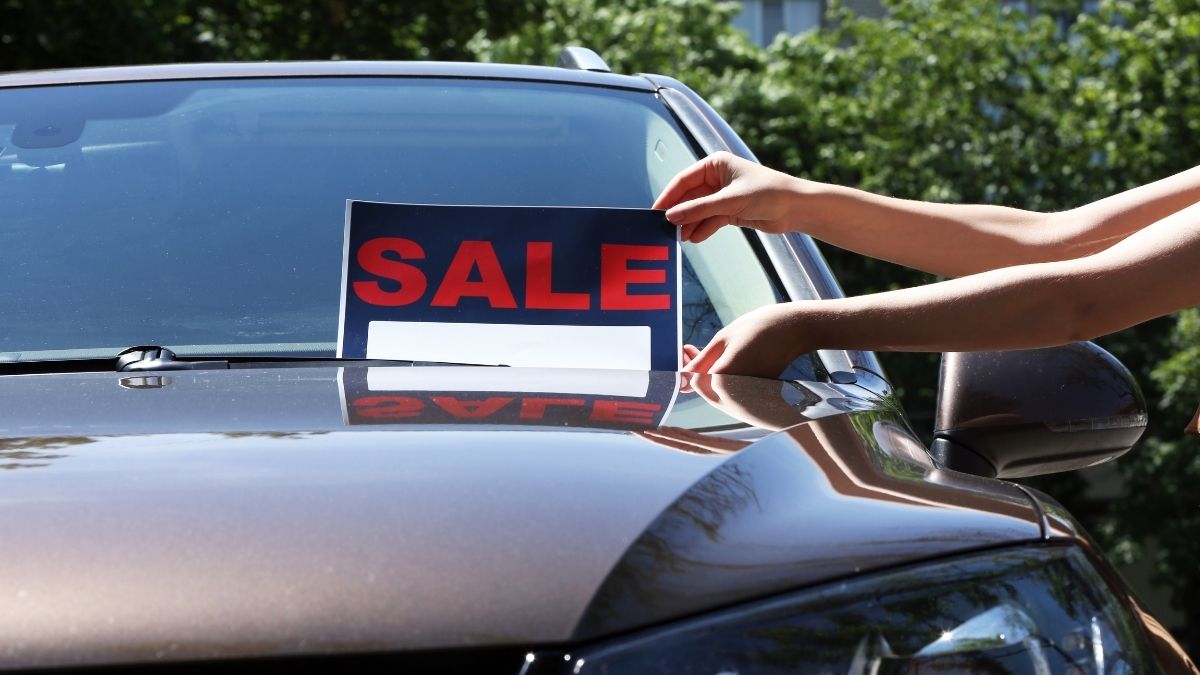
Carsales.com.au, Gumtree and Facebook Marketplace are the most popular spots to put a listing. If you’re feeling lucky, you could even put a handmade sign up, perhaps on the vehicle, listing the price and your contact details for passers by.
When you’ve found a buyer
If the buyer needs a car loan to finance the vehicle, you will generally arrange the sale with the lender directly. If they are paying themselves, there are generally two options - cash, or bank transfer.
With the latter option, you will need to make sure the buyer can actually transfer the amount. A good way to ease friction is if they send a deposit a few days prior to the full sale - this signals to the bank the payment is all above board.
A less popular option is for the buyer to issue a personal cheque.
A buyer might also want to conduct their own pre-purchase inspection from a trusted mechanic. You will generally need to find time in your day for this to happen, whether that’s a mobile mechanic or taking it to a place of business.
Watch out for scams
Once you’ve had an interested buyer bite, you need to make sure you aren’t about to get scammed. Online marketplaces are increasingly popular for scammers looking for victims, so vigilance is important.
Peter Gaal, 25, told Savings.com.au about his experience being scammed selling his old car on marketplace.
“The Facebook account [that contacted me] was for an elderly lady, which had been active for several years, and she also asked me several relevant questions about the car so I was convinced it was a legitimate buyer,” the Brisbane resident explained.
The ‘old lady’ offered him $5,500 for the car, but said she needed to pay instantly through PayID. Mr Gaal was sent a fraudulent screenshot that seemingly confirmed the transfer had been processed, but then received a second communication.
“I got an email from PayID that looked completely legitimate that said the minimum transaction amount from a business account was $6,000.”
It was agreed that the buyer would pay $6,000 on the condition that Mr Gaal would immediately transfer back the excess $500. After receiving another fake screenshot of this transfer, he sent the money through.
“As soon as the $500 left my account, I was blocked instantly,” he said ruefully.
Any kind of request for a transfer prior to the sale should be treated with extreme suspicion. If you agree that the payment can happen digitally, it’s a good idea to have the buyer do this in person so you can make sure it happens.
Generally, it’s worth treading cautiously when dealing with someone you haven’t met before. If you’re getting a funny feeling about the potential buyer, trust your gut.
5. Transfer registration
If your car is registered, you’ll need to transfer it to the new owner. This usually means submitting a disposal notice to your state or territory’s transport department within a set timeframe.
These days, the process is simple. Both parties can complete an online form together at the time of sale, no more trips to the transport office or relying on trust.
Transfer fees and duty are generally paid by the buyer, though late fees may apply if paperwork isn’t lodged on time. If the buyer is in another state, registration can’t be transferred, and they’ll need to re‑register the vehicle locally.
Once the transfer is complete and payment received, the car is officially out of your hands, sale done!
