NSW First Home Owner Grants: A guide



Dominic Beattie
- Group Editor
- Experienced finance editor
- Writer
- Commentator and researcher
Do you like & trust our expert, human-written content?
Simply click this button to tell Google you want to see more of us in your Google Search Results, AI Overviews and AI Mode answers.
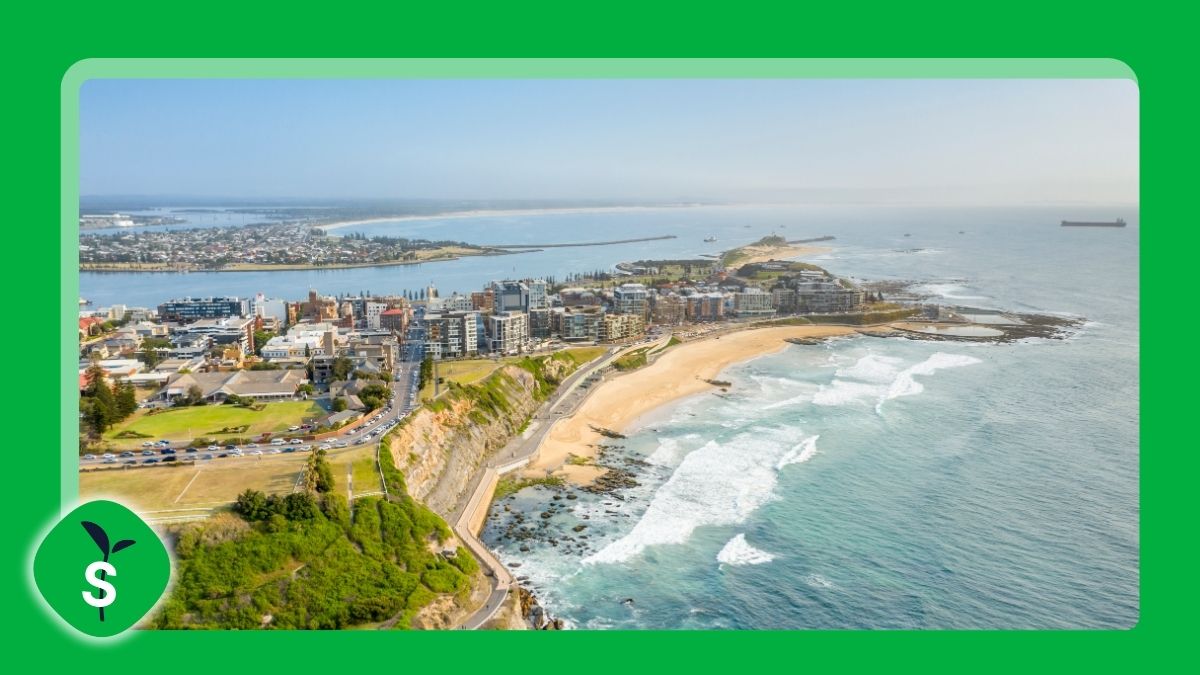
- Buying a first home in NSW is challenging due to high property costs.
- Government grants and schemes aim to ease the financial burden for first‑time buyers.
- Support programs can reduce upfront expenses like deposits and stamp duty.
Saving up for a first home in New South Wales is not without its challenges, with the state widely considered the most expensive for property in Australia. But to ease some of the financial burden, there are a number of helping hands in the form of government grants and schemes to help you achieve the great Australian dream sooner.
The New South Wales government provides a number of support schemes for first home buyers looking to enter the property market, including its First Home Owner Grant and First Home Buyer Assistance schemes. Let's check the details.
How the First Home Owner Grant works in NSW
The NSW First Home Owner Grant (FHOG) provides $10,000 for a newly built house, townhouse, or apartment valued up to $600,000.
This price cap also applies to homes that have been substantially renovated by the seller.
If you purchase vacant land and sign a contract with a builder, the total combined value of the land plus the contract (including the value of any variations) must not exceed $750,000.
To be eligible, the home must not have been previously sold or occupied. This means the scheme automatically excludes established properties.
The FHOG can be used towards your deposit, but given it's only $10,000, it likely won't be enough to cover a full deposit, and you'll have to come up with the rest out of your savings. To avoid Lenders Mortgage Insurance (LMI), you'll have to come up with a 20% deposit, and lenders will still want to see that you've genuinely saved most of the deposit.
Calculate your costs with our First Home Buyers & Owners Grant Calculator
NSW Stamp Duty Exemptions & Concessions
Stamp duty, or transfer duty, is a state-based tax and can be a major barrier to first-time buyers across Australia - NSW is no exception. However, first home buyers in NSW can qualify for stamp duty relief - or a complete exemption - through the First Home Buyer Assistance scheme.
The scheme provides a total exemption from stamp duty for properties valued up to $800,000, while a concessional rate may apply to homes valued over $800,000 to less than $1 million. This applies to existing homes as well as new homes and vacant land.
If you are purchasing vacant land on which you intend to build a home, you may receive an exemption for land valued up to $350,000 and a concessional rate for values over $350,000 and less than $450,000.
Here is a guide to the exemptions or concessions that apply on or after 1 July 2023:
Property value | Exemption | |
|---|---|---|
New and existing homes | Value is equal to or less than $800,000 | Exempt You can apply for a full exemption from transfer duty. |
Value is above $800,000 and less than $1 million | Concessional rate You can apply for a concessional transfer duty rate. | |
Vacant land | Value is equal to or less than $350,000 | Exempt You can apply for a full exemption from transfer duty. |
Value is above $350,000 and less than $450,000 | Concessional rate You can apply for a concessional transfer duty rate. |
*As of September 2025
The NSW Department of Revenue's First Home Buyers Assistance calculator will give you a guide as to the concessional rate you may be entitled to. Also, see the NSW Department of Revenue for more information on the scheme, and exemptions and concessions that apply to homes purchased in earlier time periods.
What homes can be purchased using the FHOG?
To take advantage of the FHOG in NSW, eligible homes can be:
- a house
- a townhouse
- an apartment
- a unit
- anything similar that is newly built, purchased off the plan, or substantially renovated
The grant is not available for those looking to buy an investment property or holiday home.
First Home Owner Grant eligibility
There are a number of conditions first home buyers in NSW must meet before they can be deemed eligible to receive the NSW FHOG of $10,000.
These include:
- You must be an individual, not a company or trust
- You must be at least 18 years of age
- You, or at least one person you're buying with, must be an Australian citizen or permanent resident
- You and your spouse must not previously have owned a home in Australia or received an Australian First Home Owner Grant
- You'll need to move into the home within 12 months after settlement and live in the property as your principal place of residence for at least 12 continuous months (applies to all contracts exchanged on or after 1 July 2023)
If your situation changes and you're unable to meet the residence requirement, you will no longer be eligible for the scheme.
Special consideration is given to members of the Australian Defence Force and some special cases.
The online Home Buyer Assistance Finder can help you assess your eligibility.
How to apply for the First Home Owner Grant
If you require the grant for settlement or first drawn down/progress payment, you must lodge your application with the approved agent who is providing you with finance.
If you've already completed the purchase or construction process, an application can be lodge via the FHOG customer portal.
Applying through NSW Department of Revenue
Other applicants must lodge within 12 months of settlement or the completed construction date of their new home. If you leave it longer than that, you will need to provide additional documents.
Applying through an Agent
If you're applying through an approved agent, you'll need to complete the First Home Owner Grant (New Homes) Application form. (This applies to all contracts exchanged on or after 1 July 2023.) The agent will lodge your application form on your behalf after you have ticked the declaration box, printed your name clearly, and dated the form.
To apply for the First Home Owner Grant through your bank or financial institution when you're arranging your finance, you'll need to supply some supporting documents with your application form. These include:
A copy of your land sale contract (dated and signed by the vendor)
A title search that shows you as the registered proprietor of the land
A statement from the vendor or their legal representative as evidence that the house hasn't been occupied since the completion of construction
If choosing to construct your home on vacant land, you will need to provide evidence of the total value of the property
Competitive home loan rates
If you're a first home buyer looking for a competitive home loan, the table below features some of the lowest interest rates on the market for owner occupiers.
| Lender | Home Loan | Interest Rate | Comparison Rate* | Monthly Repayment | Repayment type | Rate Type | Offset | Redraw | Ongoing Fees | Upfront Fees | Max LVR | Lump Sum Repayment | Extra Repayments | Split Loan Option | Tags | Features | Link | Compare | Promoted Product | Disclosure |
|---|---|---|---|---|---|---|---|---|---|---|---|---|---|---|---|---|---|---|---|---|
6.19% p.a. | 6.23% p.a. | $3,059 | Principal & Interest | Variable | $0 | $530 | 90% |
| Promoted | Disclosure | ||||||||||
5.89% p.a. | 5.80% p.a. | $2,962 | Principal & Interest | Variable | $0 | $0 | 80% |
| Promoted | Disclosure | ||||||||||
5.99% p.a. | 5.95% p.a. | $2,995 | Principal & Interest | Fixed | $0 | $0 | 60% |
| ||||||||||||
6.23% p.a. | 6.23% p.a. | $3,072 | Principal & Interest | Variable | $0 | $395 | 70% | Disclosure |



Federal Schemes NSW Buyers Should Know
On top of the state schemes, there are a number of federal programs that can also be accessed by eligible home buyers. These include:
Australian Government 5% Deposit Scheme
The Australian Government 5% Deposit Scheme, formerly the Home Guarantee Scheme, is a federal government initiative designed to help prospective buyers purchase their own homes sooner.
Essentially, the scheme offers first home buyers the opportunity to purchase a home with a deposit as low as 5% without the need to pay Lenders' Mortgage Insurance (LMI). This means you can borrow up to 95% of the property value, with the federal government effectively providing the lender with a guarantee of up to 15% of the property's value.
The scheme also takes in the former Regional First Home Guarantee and the Family Home Guarantee, which allows eligible single parents to access home loans with a deposit as low as 2%. It can be used in conjunction with New South Wales government grants and concessions.
The First Home Super Saver Scheme
The First Home Super Saver Scheme (FHSSS) is a federal government initiative that provides the opportunity to save money for your first home via your superannuation fund. Essentially, the scheme allows you to make voluntary contributions (both before-tax concessional and after-tax non-concessional). In practical terms, it can help you save for a deposit faster by allowing you to benefit from the tax discounts that superannuation can offer.
Under the scheme, you can salary sacrifice up to $15,000 of your wages per year towards the FHSSS, taking advantage of a discounted tax rate of 15% for super contributions. You are limited to contributing a total of $50,000 across all years and can have these contributions released, along with their associated earnings, to fund a first home purchase. The earnings are at a deemed rate of return, not the actual earnings made by your super fund.
Read more about state First Home Owner/Buyer Grants in other Australian states:
- Victoria first home buyer grants
- Queensland first home buyer grants
- SA first home buyer grants
- WA first home buyer grants
- Tasmania first home buyer grants
- Northern Territory first home owner grants
Frequently Asked Questions
You generally can’t use the FHOG on established properties as it’s designed to support purchases of new builds, off‑the‑plan homes, or major renovations.
The FHOG can reduce how much you need to save upfront, but it doesn’t replace the requirement for a genuine deposit. Lenders are still expecting that you'll contribute most of it yourself, and you’ll need a minimum of 20% to avoid paying LMI.
Yes, if you fail to meet the residency or eligibility conditions after settlement, the FHOG can be revoked, and you may be required to repay the grant. Revenue offices regularly conduct audits to check if conditions are being met.