
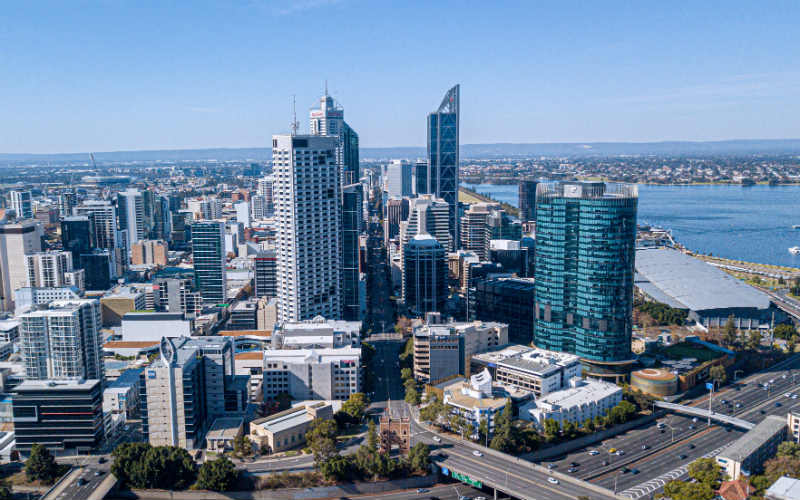
Photo by Nathan Hurst on Unsplash
However, according to RiskWise Property Research Risks & Opportunities Report, buyer confidence is on the increase in the state, particularly Perth with housing finance increasing 15.1% since February 2019.
The table below displays some of the lowest-interest variable rate home loans currently available in Australia for owner-occupiers making principal and interest repayments.
| Lender | Home Loan | Interest Rate | Comparison Rate* | Monthly Repayment | Repayment type | Rate Type | Offset | Redraw | Ongoing Fees | Upfront Fees | Max LVR | Lump Sum Repayment | Extra Repayments | Split Loan Option | Tags | Features | Link | Compare | Promoted Product | Disclosure |
|---|---|---|---|---|---|---|---|---|---|---|---|---|---|---|---|---|---|---|---|---|
6.19% p.a. | 6.23% p.a. | $3,059 | Principal & Interest | Variable | $0 | $530 | 90% |
| Promoted | Disclosure | ||||||||||
5.89% p.a. | 5.80% p.a. | $2,962 | Principal & Interest | Variable | $0 | $0 | 80% |
| Promoted | Disclosure | ||||||||||
6.38% p.a. | 6.66% p.a. | $3,121 | Principal & Interest | Variable | $299 | $0 | 85% | |||||||||||||
6.23% p.a. | 6.23% p.a. | $3,072 | Principal & Interest | Variable | $0 | $395 | 70% | Disclosure |





RiskWise CEO Doron Pelg said with low economic activity and high unemployment, Western Australia's annual population growth of 1% was the third lowest in the country.
“As a result, the housing market, particularly units, has experienced continued weakness in recent years," Mr Peleg said.
"According to CoreLogic, house and unit prices in Perth have declined by 8.6% and 9% in the past year, respectively.
“Western Australia is still in a long transition process from a mining-oriented economy and while unemployment has slightly improved from 6.1% in April to 5.7% in October, it is still projected to deliver low economic growth, a soft job market and low population growth."
Perth continues to buck the national trend of rising house prices, with median dwelling values in the WA capital falling 0.1% over the December quarter, according to CoreLogic.
In comparison, the national median dwelling price recorded its strongest quarterly growth in a decade, up 4.0% for the quarter, largely driven by Sydney and Melbourne, where prices increased 6.2% and 6.1% respectively.
In further worrying figures, Mr Peleg said that mortgage arrears in Perth are at an alarming level, with the delinquency rate sitting at 2.75%.
"While this has improved from 3.05 per cent as reported in August, this number has grown over the course of several years and is now well above the Australian average.
"The relatively high unemployment rate also increases the risk of credit defaults.
“Negative equity also remains a major risk especially for lenders who have a concentration of loans in this market. These risks are compounded by this high rate of arrears."
Limited number of suburbs delivering growth
Mr Peleg said while Perth was "very affordable", there were a small number of suburbs where houses delivered reasonable capital growth in recent years, but these were exceptions only.
Even with record low interest rates, an expected February cash rate cut and relaxed lending restrictions, houses still carried a medium level of risk due to Western Australia's economic conditions.
Some of the worst performing areas for houses in the past year include Perth - North East (-8.8% capital growth), Perth - Inner (-8.4%) and Perth - South West (-7.3%).
However, Mr Peleg said units were considered worse than houses, due to a massive oversupply, low demand and state government taxes.
“Also, units in some suburbs are subject to voluntary lending restrictions by the major lenders, such as lower loan-to-value ratio (i.e. higher deposit).
"In addition, the state government tax on overseas investors further decreases the demand for new units as investment properties.”
Mr Peleg said despite there being no unit construction defects reported in Perth, media coverage of incidents like Sydney's Opal Tower have caused consumer confidence in them to take a hit.
“The issues with construction defects in NSW and Victoria and the publicity they have received in the media mean this situation is unlikely to materially improve in the short term."
“While there have been no major construction defects reported in relation to high-rise buildings in Perth, the events in Sydney and Melbourne increase the risk of reputational damage and, consequently, lower demand for both existing and off-the-plan high-rise units.”