
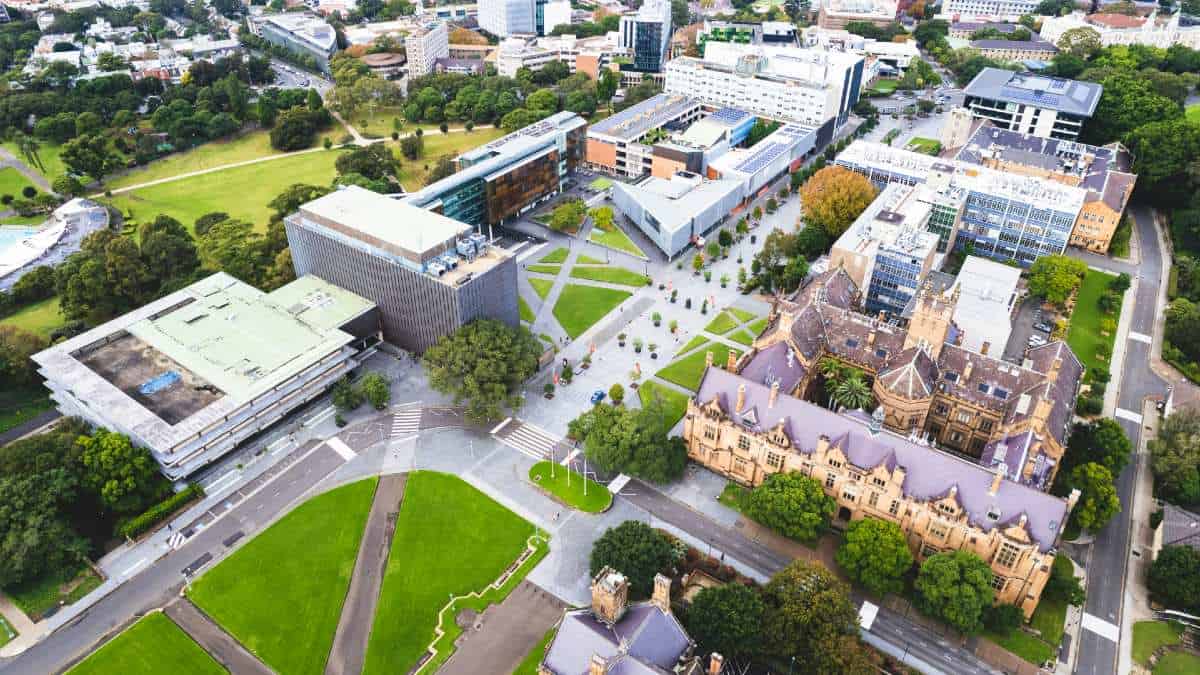
- School catchment zones can influence local house prices due to strong buyer demand.
- Families often pay a premium to secure access to high-performing public schools.
- Many catchment zones outperform their surrounding suburbs in annual price growth.
- Buyers should always check current catchment boundaries as rezoning can affect eligibility and value.
School catchment zones continue to shape Australia's property market, with many suburbs recording stronger price growth simply because they fall within in-demand school boundaries.
As families compete for access to top public schools, homes inside these zones often attract higher prices - and the data shows just how significant the impact can be.
What are school catchment zones?
Across Australian states and territories, public (government) schools use catchment zones (also called "local enrolment areas," "intake zones," or "priority enrolment areas") to guarantee a place for children whose families live within a defined geographic boundary.
Living in the zone means your child has priority access.
Each state maintains official, interactive catchment maps:
- NSW via the government's School Finder tool
- VIC via the Find My School website
- QLD using the EdMap catchment map tool by QGSO/Treasury
- ACT via the government's website
- Take note: Catchment boundaries do change, sometimes to reflect new school openings, enrolment demand, or population shifts.
Every Australian state and territory uses school catchment or enrolment zones for public schools. These zones cover all metropolitan areas and almost all regional population centres.
In practice, most Australians live within a defined catchment area for a local public primary and secondary school. However, very remote and sparsely populated regions where children may attend a school of distance education or the nearest physical school may be far away, technically do not have a "local catchment" in the same sense as metropolitan suburbs.
Private and Catholic schools generally do not use formal catchments.
Top School Rankings in Australia (2025): Where high-performing schools are located
The most recent data (2024) from the Australian Bureau of Statistics (ABS) reveals there are 9,653 schools across Australia. Of these, the majority, or 6,727, are government (public) schools, and the rest are composed of Catholic and other independent (private) schools.
In order to gain a broader understanding of the schooling system in Australia, and how high-achieving schools might be more likely to fall in 'wealthier' areas, let's discuss the top-ranking secondary schools based on their national overall scores.
According to Better Education, the top 10 secondary schools nationally in 2025 are:
Rank | School | Sector |
1 | James Ruse Agricultural High School, Carlingford, NSW | Government |
2 | North Sydney Girls High School, Crows Nest, NSW | Government |
3 | Baulkham Hills High School, Baulkham Hills, NSW | Government |
4 | Hornsby Girls High School, Hornsby, NSW | Government |
5 | North Sydney Boys High School, Crows Nest, NSW | Government |
6 | Sydney Boys High School, Surry Hills, NSW | Government |
7 | Normanhurst Boys High School, Normanhurst, NSW | Government |
8 | Perth Modern School, Perth, WA | Government |
9 | Sydney Girls High School, Surry Hills, NSW | Government |
10 | Sydney Grammar School, Darlinghurst, NSW | Non-government |
A majority of high-performing schools in Australia are based in or near Greater Sydney, which is the largest and one of the most expensive cities in the country for housing. Additionally, most of these schools are government-funded.
School zones with the strongest house price growth in Australia
Domain's latest School Zones Report (2023) found that nearly half of primary and secondary school catchment zones nationwide outperformed the house price growth of their broader suburb by up to around 10%.
Further, the top-performing catchment zones nationwide for annual house price growth were heavily concentrated in Queensland across both primary and secondary schools.
Top primary school catchments for house price growth
Rank | School | State | Median house price | Annual house price growth |
1 | Walloon State School | QLD | $626,000 | +43.9% |
2 | Artarmon Public School | NSW | $3,545,000 | +43.5% |
3 | Canungra State School | QLD | $950,000 | +42.9% |
4 | Cambridge Primary School | TAS | $1,122,500 | +37.3% |
5 | Coorara Primary School | SA | $517,500 | +35.8% |
6 | Carole Park State School | QLD | $507,000 | +35.2% |
7 | Blair State School | QLD | $535,000 | +35% |
8 | Acacia Ridge State School | QLD | $650,000 | +34.7% |
9 | Wooloowin State School | QLD | $1,385,000 | +34.5% |
10 | Park Ridge State School | QLD | $932,000 | +34.1% |
Source: Domain School Zones Report 2023
Top secondary school catchments for house price growth
Rank | School | State | Median house price | Annual house price growth |
1 | Tamborine Mountain State High School | QLD | $910,000 | +37.9% |
2 | Beaudesert State High School | QLD | $570,000 | +32.6% |
3 | Woodridge State High School | QLD | $450,000 | +32.4% |
4 | Oberon High School | NSW | $550,000 | +31% |
5 | Beenleigh State High School | QLD | $495,962 | +28.8% |
6 | Marsden State High School | QLD | $550,000 | +27.9% |
7 | Browns Plains State High School | QLD | $620,000 | +27.8% |
8 | Morayfield State High School | QLD | $580,000 | +27.8% |
9 | Burpengary State Secondary College | QLD | $740,000 | +27.6% |
10 | Springfield Central State High School | QLD | $670,000 | +27.6% |
Source: Domain School Zones Report 2023
Benefits of buying a home in a school catchment zone
Guaranteed access to a public school
Residing inside a catchment ensures your child's place in a public (government) school, as long as the catchment is still current. This is a key draw for families, especially as private school fees rise.
According to Angela Duncan, a multi-award-winning real estate agent from Ray White Aspley Group, access to schools has been one of the considerations for many prospective home owners.
"We get asked by most buyers at inspections what catchment the property falls in, or they only attend inspections for properties with close access or guaranteed acceptance to certain schools," Ms Duncan told Savings.com.au.
Property price growth
Because many families want to live in desirable school zones, the demand pushes up property prices - especially where housing supply is constrained or where zones cover established, well-located suburbs.
Scott Aggett, property negotiator at Hello Haus, told Savings.com.au there is a "direct correlation between increased house prices and exclusive or in-demand school zones, both for public and private schooling".
Sam Davenport, Prop Culture property expert, said that school catchments "definitely" have an effect on house prices.
"Properties located within the zone for popular public primary and secondary schools have the potential to secure sale prices of up to 20% to 30% more than properties outside the zone," she told Savings.com.au.
Lifestyle benefits
Beyond schooling, living in a catchment zone often signals stable, family-oriented neighbourhoods with long-term resident investment. Buyers may accept paying more for these intangible benefits.
What to check before buying a home in a school catchment zone
- Use official catchment-map tools (e.g. NSW School Finder, VIC Find My School, QLD EdMap) to check the latest zoning boundaries for your address before purchasing.
- Compare property prices inside vs outside the catchment - but also consider other factors (transport, lifestyle, long-term growth prospects).
- Factor in potential rezoning risk, especially in growing areas where new schools may be built, or catchments reshaped.
- Recognise that catchment is one of many influences on house prices. Proximity to infrastructure, lifestyle amenities, and general supply-demand dynamics also matter.
Savings.com.au's two cents
It's clear there is some relationship between school catchments and the house prices in surrounding areas. While some experts believe it is a small factor at play, others argue that it is a massive driving force behind the increases in property value around certain school catchment zones.
As always, the key for buyers is to do thorough due diligence: check the latest catchment maps, compare properties both inside and outside zones, and consider broader housing-market dynamics.