
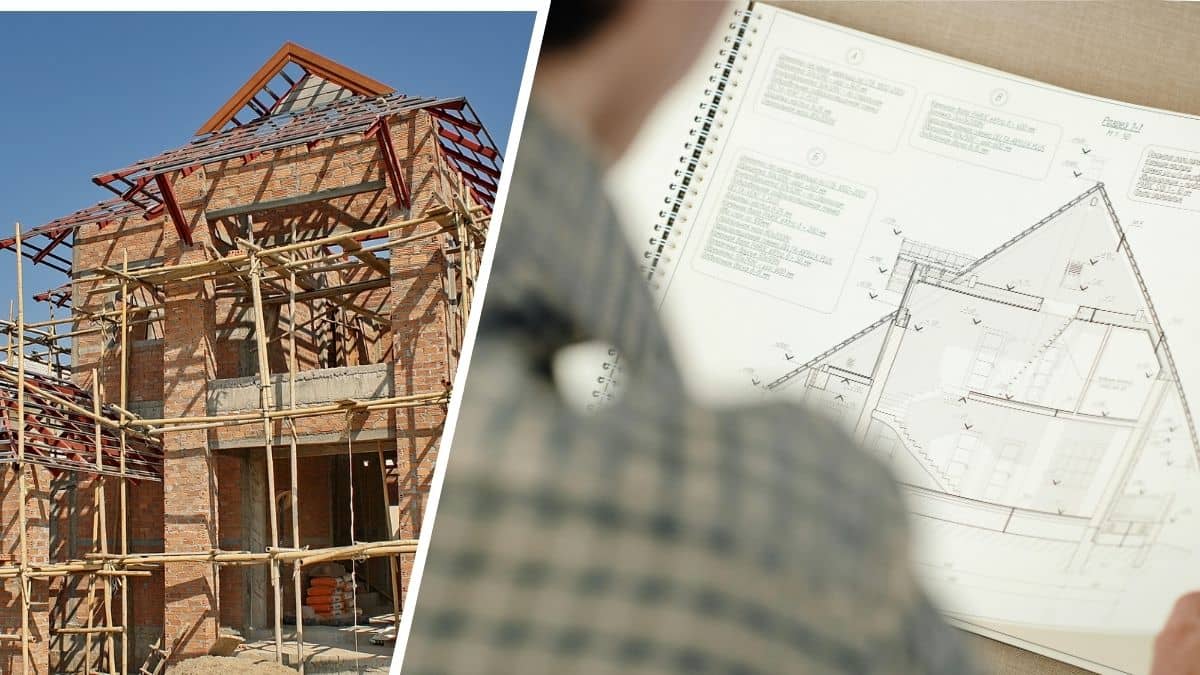
- Buying off the plan is inherently risky because buyers commit to a property that doesn’t yet exist and may face design changes, delays, defects or major repair costs.
- Financing an off-the-plan purchase can be difficult, as valuations may fall short and lenders can refuse loans at settlement if market conditions or personal circumstances change.
- Even with thorough research, buyers remain exposed to developer failures, oversupply and shifting market conditions.
Buying off the plan can be tempting, but in an uncertain housing market marked by delays, cost blowouts and shifting prices, it carries serious risks. We asked experts whether buying off the plan ever makes sense - and what buyers need to watch out for.
What does it mean to ‘buy off the plan’?
Buying off the plan refers to paying a deposit and committing to buy a property which has not yet been built.
A developer will usually have design and floor plans, which will give you a good idea of what the property will look like, as well as a display home or a scale model of an apartment block. It’s important to keep in mind that these plans aren’t likely to be a carbon copy of the final product, as you may want to change things or the builder may run into problems.
What’s the process for buying off the plan?
Buying off the plan can be a long and arduous process, taking anywhere from 12 to 18 months from start to finish. Here’s one you can follow, although keep in mind that different developers and builders can have varying procedures:
1. Research
Research is arguably one of the most important steps when it comes to buying off the plan. Whether you’re investing or buying a place to live, you need to research the area to ensure it has access to amenities and consider its capital growth opportunities.
You should also be doing your research on the developer and builder, by double-checking their qualifications, thoroughly perusing their plans for the property, and reviewing completed and current projects. You can check their qualifications via the relevant state government website.
2. Check for government grants
There are numerous government grants available to a range of people, differing between states. There are also a number of grants and schemes available to first-home buyers, including the Australian Government 5% Deposit Scheme.
3. Contract reviewing and signing
Once you’ve settled on your off-the-plan purchase, the developer will prepare a contract for you to sign. You’ll need a legal professional to check over this contract prior to signing to ensure it has the following:
- Cooling-off period: Generally, a cooling-off period in Australia is 3 to 5 business days, and allows you to change your mind about the purchase, given the amount of money you’re committing to handing over. Withdrawing from the contract may still sting you a termination fee, however, typically around 0.25% of the purchase price.
- Deposit: Developers will differ in what deposit is required to secure your property. The contract should state either the minimum required deposit, typically 10%, or what you’ve agreed to pay.
- Plans: The contract should include a comprehensive record of the plans for the property, as well as a schedule for the build. It’ll also feature the quality of the materials being used, like the type of brick and flooring, which you should have signed off on. Any inclusions you requested should also be there, like solar or certain fittings, as well as a dispute resolution process if you’re not happy with any of the aforementioned.
- Defect policy: The contract should state that the developers will rectify any defects, should there be any, prior to you signing off on the build. In most cases, you only have 90 days to make the developers aware of any defects after moving in, so double-check to see what the contract says.
- Finance policy: Some lenders have time limits on getting finance after you’ve signed the contract, like 30 or 45 days. Check the contract to see whether it's subject to you getting finance and in what time frame.
4. Obtain finance
Some lenders will grant you pre-approval prior to finding an off-the-plan property. But in most cases, you’ll have to present them with plans or the contract before they grant you any sort of approval or finance.
Lenders are also often wary of off-the-plan purchases, as the value of the property may have dropped by the time it's built. For this reason, they’ll often require a 20% deposit, so you may need to have that ready to go before applying for a loan.
5. Build begins
Once you’ve got your finance and signed on for the contract, you’ll be ready to go. However, if you’re buying an apartment building, the build may not commence until a certain number of units have been sold in the block. Check in with your developer on the process of the build to ensure everything is going as planned.
What to consider before buying off the plan
Michael Sloan of Better Homes and Gardens Real Estate told Savings.com.au people need to understand the plans laid out before them may not translate to the finished product.
“I see a lot of marketing floor plans, particularly with apartments, that on paper look like a reasonable design, but I can see how many square meters it is, and I will just know straight away that is not going to work. It's going to be unliveable,” Mr Sloan said.
“They've got to make sure they get a floor plan or get the plans with the room sizes on them, so they can measure it out in their own home, compare the bedroom on the floor plan to the bedroom size where they're living in and figure out if this is practical? Is this a big enough space for us to live in?”
Should you buy off the plan?
Buying off the plan isn’t automatically a bad idea, but it is a high-risk strategy that suits a narrow group of buyers and requires careful due diligence.
Mr Sloan said if people were to buy off the plan, they needed to fully understand the risk of doing so.
“Make sure the design's right and the property's right. Check the history of the builder and the developer. Understand the risks that you're taking,” he said.
“People with two solid incomes have much less risk than a family where there's only one income, so understand the risk.”
“If it's an investment property, understand the cash flow before you buy the property instead of after.”
Looking to compare low-rate, variable home loans? Below are a handful of low-rate loans in the market.
| Lender | Home Loan | Interest Rate | Comparison Rate* | Monthly Repayment | Repayment type | Rate Type | Offset | Redraw | Ongoing Fees | Upfront Fees | Max LVR | Lump Sum Repayment | Extra Repayments | Split Loan Option | Tags | Features | Link | Compare | Promoted Product | Disclosure |
|---|---|---|---|---|---|---|---|---|---|---|---|---|---|---|---|---|---|---|---|---|
6.19% p.a. | 6.23% p.a. | $3,059 | Principal & Interest | Variable | $0 | $530 | 90% |
| Promoted | Disclosure | ||||||||||
5.89% p.a. | 5.80% p.a. | $2,962 | Principal & Interest | Variable | $0 | $0 | 80% |
| Promoted | Disclosure | ||||||||||
5.99% p.a. | 5.95% p.a. | $2,995 | Principal & Interest | Fixed | $0 | $0 | 60% |
| ||||||||||||
6.23% p.a. | 6.23% p.a. | $3,072 | Principal & Interest | Variable | $0 | $395 | 70% | Disclosure |





The biggest risks of buying off the plan
Mr Pressley said issues around quality control and shortcuts the construction industry had taken over the past 20 years meant people buying off-the-plan apartments can’t be confident they won’t have to fork out for a massive repair bill at some point.
“A member of the public might go and buy an off-the-plan property, and they're wowed by how nice it looks and what street it's on and what the view looks like and all that sort of stuff,” he said.
“But a couple of years later, they get a letter in the mail from the body corporate saying we've got a major problem which might cost the collective owners of this building $10 million. There's no recourse for that. You’ve just got to cough it up.”
Cons of buying off the plan
Buying off the plan exposes buyers to a range of financial, construction and market risks. Here are some more downsides that may come with doing so:
The final valuation may come in below the contract price, forcing you to cover the gap
Construction delays can extend timelines by months or years
Finished apartments can differ in size, layout or quality from marketing material
Market conditions and lending rules can change before settlement
New apartment supply can suppress resale values and rental returns
Are there any advantages to buying off the plan?
Mr Sloan said some people had made significant amounts of money by buying the right property in the right area, but this was unlikely to happen in the current economic climate.
“When the property market's really moved, the prices in a good estate block go up almost at every stage. That's not happening right now, but it was only 18 months ago that it was happening.
“By the time that property is built in 18 months, some people would make $60,000-$100,000 before they even start building on the land.”
Pros of buying off the plan
Lower upfront costs, with a deposit paid well before settlement
Access to new properties with modern designs and lower maintenance
In some cases, price growth during construction, though this is not guaranteed
Off-the-plan buying shifts much of the risk onto the buyer while locking in today’s price for tomorrow’s property. Unless the location, scarcity and contract terms are exceptional, established homes generally offer more certainty and better capital growth.
Savings.com.au’s two cents
Buying off the plan is a much-maligned practice for many in the real estate industry and for good reason. Buying a property before it even exists comes with big risks, such as it not looking like how you wanted it to, or worse, it has defects which could cost thousands.
It’s also hard to get finance for off-the-plan places, and the lender may not even grant you the loan when settlement rolls around. You should decide whether whatever advantages you see in buying off the plan outweigh the massive risks it comes with.