Pay off debt, save, or invest first? How to decide?


Dominic Beattie
- Group Editor
- Experienced finance editor
- Writer
- Commentator and researcher
Do you like & trust our expert, human-written content?
Simply click this button to tell Google you want to see more of us in your Google Search Results, AI Overviews and AI Mode answers.
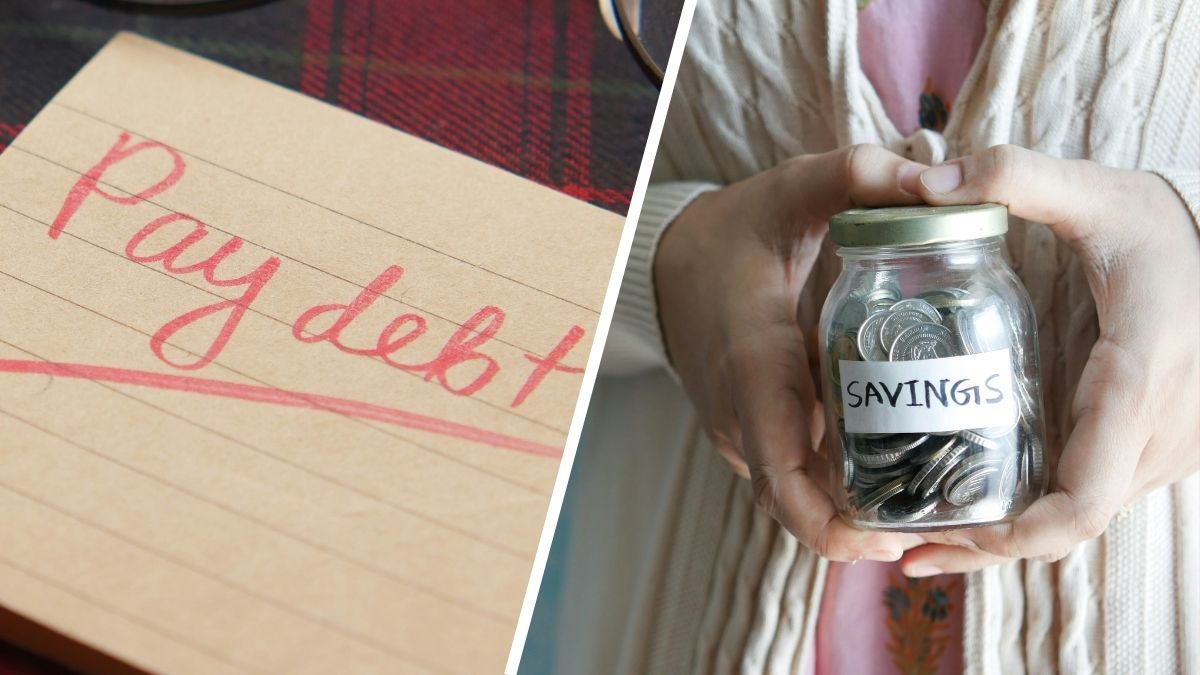
What should you do first?
- Deciding whether to save, invest, or pay off debt first depends largely on personal circumstances.
- Building an emergency fund of around three months' essential expenses is generally recommended.
- Experts suggest tackling high-interest debts first, which typically include credit cards, personal loans, and car loans.
- Investing generally makes more sense after high-interest debt is cleared and savings are established.
If you're trying to get on top of your finances, you might not know what to do first. Should you build up your savings, start investing, or focus on paying down debt?
Unfortunately, there's no one-size-fits-all answer to this question. The right approach depends on your personal circumstances, goals, and financial habits.
Maybe you've just started earning more money, or you've decided it's time to finally time to take the wheel on your financial situation. No matter where you're starting from, saving, investing, and paying off debt are all positive steps. The tricky part is figuring out which one should come first.
What should you do first: Save money, invest, or pay down debt?
According to money coach and author Max Phelps, the answer often starts with understanding your money habits.
He asks people to rate themselves (and their partners) based on their money personality:
- Saver (or tight-arse),
- Balanced, or
- Spender/shopaholic
From there, the priority comes down to what's on the horizon and personal goals.
Step 1: Save money
Experts believe taking control of your money often starts with saving. Whether that means adding to an existing everyday account or setting up a dedicated emergency savings fund, having some cash aside can give you breathing room.
"Spenders and shopaholics tend to build up personal debt, such as credit cards, personal loans and car loans," Mr Phelps told Savings.com.au.
"The first goal for this group is to control their spending by giving themselves a weekly and separate monthly allowance, with bills automated through an account they have no card access to."
The idea is to only spend what's in the allowance. Over time, this can free up money to start paying down debt or saving for bigger goals.
Mr Phelps argues that for individuals falling under the category of spenders and shopaholics, paying off credit card and personal debts first "generally makes sense", but only if those cards are cut up, closed, and not reapplied for later.
Financial educator and money author Vanessa Stoykov said it's crucial to save money first, but the exact amount depends on your situation.
"As a rule of thumb, I'd say it's important to have an emergency buffer in your savings account," Ms Stoykov told Savings.com.au.
A commonly cited benchmark in Australia is around three months of essential expenses, with more set aside if your income is irregular or you support others.
- Quick note: Attempting to control a partner's spending or money habits can cross into financial abuse.
How to start saving money
Creating a budget is one of the simplest ways to take control of your finances and build savings.
Here's a straightforward way to get started:
- Calculate your monthly take-home pay (after tax)
- List all of your expenses for the month
- Categorise expenses (groceries, bills, subscriptions, rent or mortgage, debt repayments)
- Choose a budgeting tool (spreadsheet or a budgeting app)
- Pick a budgeting method (buckets, percentages, or one that suits you)
- Review and adjust your budget regularly
- Create a savings plan
- Keep savings separate from spending money
- Automate transfers where possible
- Stay consistent, but don't be too harsh on yourself
To get more ideas on how to budget, read our Ultimate guide to budgeting and saving.
Mr Phelps said separating savings by goal can help people stay on track.
Say, you're saving for a holiday as well as just saving in general, it's best to keep these funds apart. This way, you can clearly see how you're tracking towards each savings goal and won't be tempted to dip into long-term savings for short-term wants.
He also suggests saving with your timeframe in mind.
"For goals under five years, such as a house deposit, keeping savings separate from your everyday bank can reduce temptation," Mr Phelps said.
How can you save more money?
There are plenty of small changes that can help boost your savings.
While savings rates move over time, some high-interest savings accounts still offer competitive returns (often with conditions attached), so it's worth shopping around.
Compare your options in the table below, which features some of the high-interest savings accounts on the market.
| Bank | Savings Account | Base Interest Rate | Max Interest Rate | Total Interest Earned | Introductory Term | Minimum Amount | Maximum Amount | Linked Account Required | Minimum Monthly Deposit | Minimum Opening Deposit | Account Keeping Fee | ATM Access | Joint Application | Tags | Features | Link | Compare | Promoted Product | Disclosure |
|---|---|---|---|---|---|---|---|---|---|---|---|---|---|---|---|---|---|---|---|
3.00% p.a. | 6.25% p.a. Intro rate for 3 months then 3.00% p.a. | $769 | 3 months | $0 | $49,999 | $0 | $0 | $0 |
| Promoted | Disclosure | ||||||||
0.05% p.a. Bonus rate of 5.30% Rate varies on savings amount. | 5.35% p.a. | $1,097 | – | $0 | $249,999 | $0 | $0 | $0 |
| Promoted | Disclosure | ||||||||
5.05% p.a. | 5.05% p.a. | $1,034 | – | $0 | $99,999,999 | $0 | $0 | $0 |
| Promoted | Disclosure | ||||||||
4.00% p.a. | 5.90% p.a. Intro rate for 4 months then 4.00% p.a. | $936 | 4 months | $0 | $249,999 | $0 | $1 | $0 | Disclosure |




You could also consider using round-up features or apps that automatically save the spare change from everyday purchases. For example, a $4.50 coffee could be rounded up to $5, with the extra 50 cents going straight into savings.
Cutting back on unused subscriptions can help, too. Streaming services, memberships, or deliveries you barely use can quietly drain your budget.
If you're looking for other small changes that can help you save money, we've got 60 more savings tips here.
Additionally, check out expert-approved savings tips from guests who joined us on the Savings Tip Jar.
Step 2: Pay off high-interest debt
When it comes to paying off debt and choosing which to prioritise, the interest rate matters.
Mr Phelps said that clearing high-interest personal debts - like credit cards, car loans, and personal loans - generally comes first. These debts are generally recommended to be paid off first as they, albeit smaller, often attract much higher interest rates than savings accounts or low-risk investments.
He said this approach ties into the debt snowball method, where you pay off debts from smallest to largest.
"Clearing the small debts gives a dopamine hit," Mr Phelps said.
What about home loans?
Once high-interest personal debt is under control, and you've built a basic savings buffer, Mr Phelps said paying down your mortgage can be a strong next step for many households.
For people in their long-term home, reducing mortgage debt may bring peace of mind and improve cash flow over time.
That said, Mr Phelps recommends that mortgage repayment strategies should still be balanced against savings needs, interest rates, and personal risk tolerance.
Should you pay off HECS-HELP debt early?
What if you have another debt lingering over you that you often forget to think about: your HECS-HELP debt? Do you also prioritise paying this off, or should saving and/or investing take priority?
"HECS-HELP is usually the cheapest and last debt to clear," Mr Phelps said, "and generally, we'd only suggest paying it off early if it helped with borrowing capacity towards the next property purchase."
- Take note: HELP debts are indexed on 1 June each year, with indexation capped to the lower of CPI or WPI. Making voluntary repayments ahead of the 1 June indexation event can reduce the loan balance that indexation applies to, potentially lowering how much your debt grows that year.
Step 3: Investing - how, what, and when?
Mr Phelps said once high-interest debt is cleared and a savings buffer is in place, investing may come into the picture.
He said some people like investing because it can "hide money from yourself" and potentially deliver higher long-term returns than savings accounts. However, investing always involves risk.
Your approach should reflect your money personality, goals, and timeframe.
- Spenders/shopaholics - May benefit from structured, long-term investments once behaviour is under control
- Balanced personalities - Might consider shares or diversified investments, depending on market conditions
- Savers/tight-arses - Often focus on building equity and long-term assets
Note that return on any investment isn't guaranteed, and past performance is not a reliable indicator of future performance.
Meanwhile, Ms Stoykov said that if you think you'll need to tap into your investments at some stage, investing in something that pays dividends - like some shares - is a "good option".
"However, if you are confident in a more long-term option, purchasing a property is a go-to for many Australians," Ms Stoykov said. "And if you have the opportunity to pay off your mortgage faster, I'd encourage this as you don't want to have it over your head forever."
Investing through superannuation
According to Ms Stoykov, contributing to your superannuation could be a good option if you don't want to invest in property, shares, or another asset, and you don't have any other debts to clear.
"Contributing to your super fund is a great (and tax-effective) way to improve your financial future," she said.
In accumulation, investment earnings in super are generally taxed at 15%, with capital gains on assets held longer than 12 months often taxed at an effective 10%. Investment earnings supporting a retirement-phase pension may be tax-free, though access is typically restricted until preservation age.
"No matter what your preferred approach is, diversification is key. You never want to put all of your eggs in one basket, so having a few assets across different sectors lowers your risk significantly."