How to build a granny flat and what they cost


Bernadette Lunas
- Finance Writer
- Property Editor
Do you like & trust our expert, human-written content?
Simply click this button to tell Google you want to see more of us in your Google Search Results, AI Overviews and AI Mode answers.
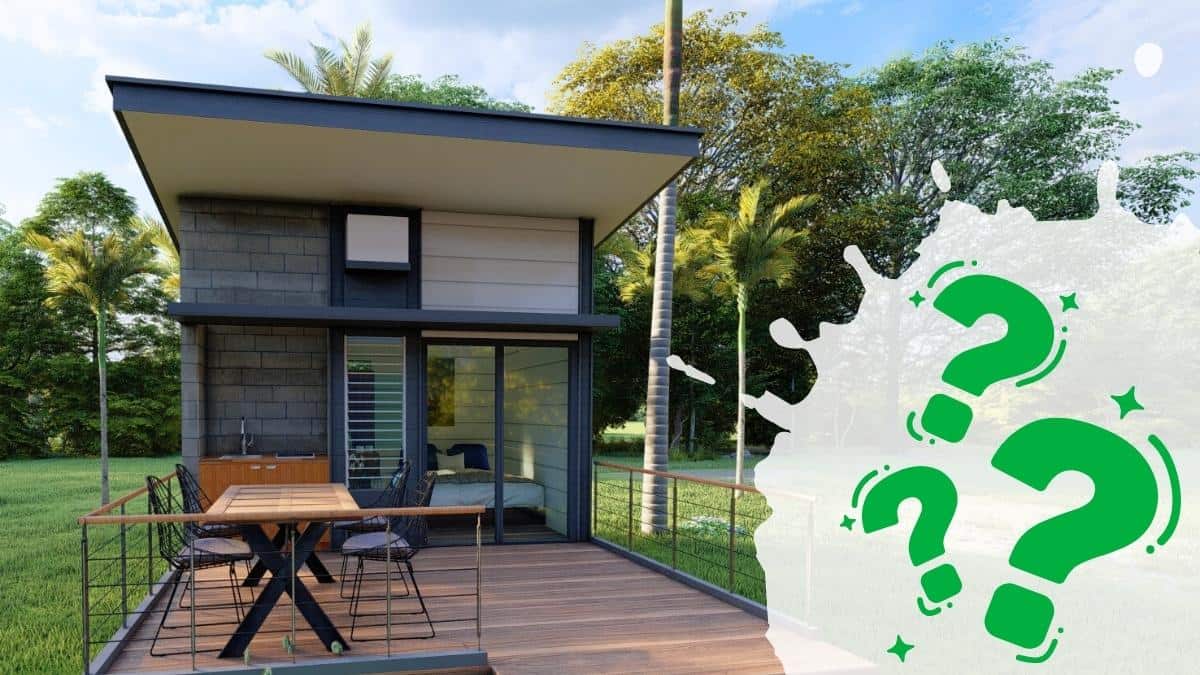
- Granny flats can add income, flexibility and sometimes value, but whether they stack up depends heavily on location, land size, and build costs.
- Rules and regulations vary widely, so it’s crucial to check council regulations and zoning before committing to a build.
- Building a granny flat isn’t cheap, and financing it usually means tapping home equity or taking on additional debt.
Granny flats are a popular investment in Australia. In addition to adding to the value of your property, a good granny flat could provide space for a loved one to live, such as an elderly relative or child who has moved back home, while still allowing everyone to maintain their privacy.
What is a granny flat?
A granny flat is generally considered a self-contained unit located on the same block as a larger house. They can operate as a dwelling for a teenager, ageing parent (hence the name), or a single-family. These days they're also commonly rented out to provide extra income, whether to long-term tenants or on short-stay platforms.
Granny flats can be custom-built or built as a part of a granny flat kit. They range from modest to luxurious, with modern, sometimes portable granny flats also marketed as 'tiny homes'.
Savings.com.au’s two cents
A granny flat can be an ideal extension to your property, providing rental income or somewhere for family to live while maintaining their own space. It can also add to the value of the property, although this depends on the land. You should check with a property valuer beforehand as to whether adding a granny flat will increase its value. It might not be worth the cost.
A good granny flat can cost upwards of $100,000 to build, though you can construct a DIY flat pack granny flat for much less.
Why would you want to add a granny flat to your property?
There are three main benefits to having a granny flat on your property:
- It can increase the value of your property (although the opposite can also be true)
- You can earn a rental income by tenanting a granny flat
- You can essentially create extra bedrooms and bathrooms, providing a place for a loved one to live while still maintaining your space
Cotality head of research Tim Lawless said granny flats are becoming an increasingly compelling option for homeowners.
“Not only can it help to manufacture new capital gains, but it has the potential to generate rental income while meeting demand for more affordable housing,” Mr Lawless said.
“Many properties identified as suitable for a granny flat are in densely populated and traditionally expensive areas, such as Sydney’s Northern Beaches or Hornsby.
"Homeowners could capitalise on the popularity of AirBnB and look at offering short-term accommodation to holidaymakers, or they could meet the demand for affordable housing by offering a long-term rental.”
Of course, there are potential downsides to having a granny flat too. They can be too expensive, might not add value to the property, and can mean navigating tricky regulations. Although, many local and state governments have made building and owning granny flats easier in recent years.
How to build a granny flat: Rules and regulations
Although the design of your granny flat can be flexible, you probably can’t simply do everything you want.
For starters, you'll likely need council approval. Depending on where the property is located, you might not be able to build a granny flat if:
- The lot is smaller than local regulations allow (less than 300 to 500 square meters, depending on the state)
- The granny flat will be larger than local regulations allow (often more than 50 to 90 square meters, depending on the area)
- The property isn't located in a residential zone
- The granny flat won't have independent street access
- The property is subject to flooding or other environmental risks
Some states and territories have stricter requirements when it comes to granny flats or secondary dwellings built on an existing residential property. Beyond state and territory regulations, local councils also have a say in which properties can house granny flats and the specifications these granny flats must meet to be compliant. Granny flats must also abide by Australian building standards more generally.
If you're unsure, it's best to seek out more information from both your state or territory and local council or reach out to a building certifier.
How much does it cost to build a granny flat?
When building a granny flat, you’re essentially building a mini-house, which requires a pretty significant outlay. According to trade booking service, Hi Pages, the average granny flat sets a homeowner back between $80,000 and $160,000, with luxurious, hi-spec builds coming in at over $200,000.
For those on less-hefty budgets, MCG Quantity Surveyors director Marty Sadlier pointed out that forgoing the ability to customise the space can help save thousands.
“We have all heard stories and case studies about being able to build a granny flat out the back for $20,000, he said.
"The reality is that yes, you can build a DIY kit home granny flat for a cheaper cost than a custom-built granny flat."
Can a granny flat add value to your property?
According to Augmen Consulting property valuer Gareth Woodham, granny flats are likely to increase your cash flow through rental income, but whether a granny flat can add value to your property is a little more nuanced.
“As a general rule, the higher the underlying land value, the better the chance of increasing the overall value by adding an additional dwelling,” Mr Woodham said.
“In a location with lower land values, adding an additional tenant to the rear of a block could either make an otherwise financially comfortable tenant more likely to look elsewhere to rent where the property could offer the amenity of a backyard, whereas a more financially precarious tenant would have fewer options.
“Pair this with an equally challenged tenant in the granny flat up the back, and the combination magnifies risks.
“In areas of higher land value, however, tenants of more social and economic stability, along with an acceptance of higher densities as a compromise for proximity to high-quality amenities closer to a city centre, will tend to be reflected in a greater proportion of the additional costs of construction being reflected in the overall valuation.”
Mr Woodham warns that, if the overall cost of improvements is high relative to the underlying land value, money poured into the improvement is less likely to flow into the value of the property.
How to finance your granny flat construction
So a granny flat can be very expensive, easily upwards of $100,000, and many homeowners simply don't have that cash on hand. If you don’t have the cash, you can finance a granny flat construction in a number of ways:
- Refinance to tap your home equity
Tapping into your home equity could help you pay for a granny flat. You can refinance your home loan to add the cost of the renovation to the loan balance. This is generally the simplest and most affordable way to borrow to build a granny flat. A construction loan
Major renovations can often be funded with a construction loan. A construction loan typically allows you to borrow money to meet builders' invoices, paying interest only on the funds until the build is complete, after which the mortgage will transform into a typical home loan.A redraw facility
If your mortgage has a redraw facility and you’ve made extra repayments, you may consider redrawing those funds to pay for your renovations.A personal loan
A personal loan can allow you to borrow funds, typically at a higher interest rate than a standard home loan. Personal loans may be secured against the property, another asset, or unsecured.An overdraft or line of credit loan
A line of credit home loan is kind of like a credit card that's tied to your home equity. Generally, lines of credit are better used when you don’t have a specific value of money you need to borrow and might need a little bit of lee-way.
Considering refinancing your home loan? Here are some of the most competitive mortgage options available now:
Lender Home Loan Interest Rate Comparison Rate* Monthly Repayment Repayment type Rate Type Offset Redraw Ongoing Fees Upfront Fees Max LVR Lump Sum Repayment Extra Repayments Split Loan Option Tags Features Link Compare Promoted Product Disclosure
Promoted
Disclosure
Promoted
Disclosure
Promoted
Disclosure
Disclosure





Pros and cons of building a granny flat
Building a granny flat can be a practical way to add space, flexibility or income to a property, but it comes with both financial and regulatory trade-offs worth considering.
Pros of building a granny flat
Can add value to your property, particularly if it increases rental appeal or flexibility for future buyers.
Potential to generate rental income if you choose to lease it out, helping offset mortgage costs.
Generally more affordable than buying an additional property, making it a lower-cost way to invest or expand living space.
Provides flexible accommodation for family members, such as ageing parents, adult children, or guests.
Can double as a home office or work-from-home space.
Cons of building a granny flat
Can be expensive to build, with construction costs varying depending on size, design, and site conditions.
Risk of overcapitalising, where the cost of building outweighs any increase in property value.
Not permitted everywhere, as some councils restrict or prohibit granny flats altogether.
Planning rules and approvals can be complex, varying by state, council, and zoning.
May limit resale appeal, as not all buyers want a secondary dwelling on the property.
Landlord responsibilities apply if rented out, including managing tenants who live on the same block as you.