How to sell your home


Dominic Beattie
- Group Editor
- Experienced finance editor
- Writer
- Commentator and researcher
Do you like & trust our expert, human-written content?
Simply click this button to tell Google you want to see more of us in your Google Search Results, AI Overviews and AI Mode answers.
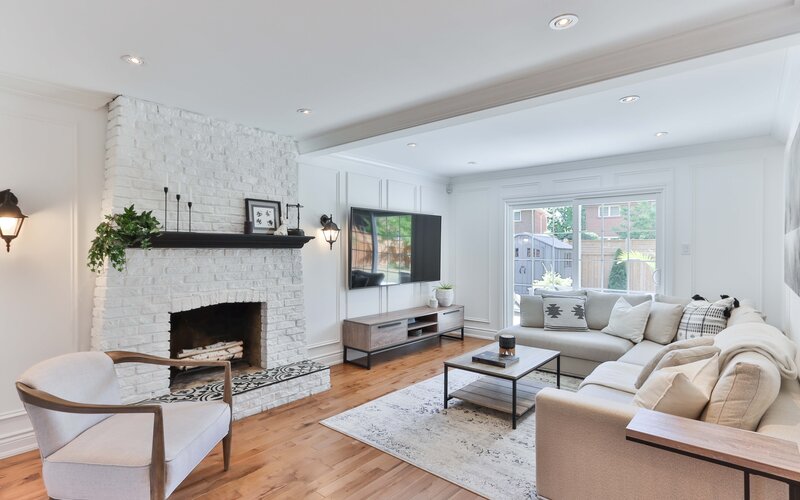
- Selling a home involves more than just accepting the highest offer, with timing, conditions and buyer certainty all playing a big role.
- Choosing the right real estate agent and sales method can significantly influence both the sale price and how smoothly the process runs.
- Preparation matters, from getting the property ready and pricing it correctly to understanding when it makes sense to accept an offer.
Selling a property can be more complicated than at first glance. We spoke to industry-leading property experts to get their advice on how to find the right agent, when to accept an offer, and their top tips when selling your home.
Step-by-step process of selling a property in Australia
If you’ve never sold a home before or simply need a refresher, these are the general steps involved when selling a property.
1. Get it ready
The first thing you’ll want to do is make sure the property is ready to sell. This means finishing any odd-jobs around the house and de-cluttering your space. You probably want to set your home up show potential new owners all that it has to offer. Hopefully, they give you an offer you can’t refuse in turn.
2. Find an agent
While you can go at it alone, most people choose to appoint a real estate agent to sell the property for them. When finding the right agent, it can be helpful to do some research. Organise for a few agents to come through for an appraisal and be sure to ask about their commission rates.
3. Decide how to sell
There are three main ways you can choose to sell your home: by auction, private treaty, or expression of interest. We’ll touch on how to pick the right way to sell your home in a moment.
4. Hire a solicitor or conveyancer
You’ll need to hire a conveyancer or solicitor before you sell your house. A conveyancer is a licensed professional who assists in actually transferring ownership of a house.
Also read: What does a conveyancer do and do you need one?
5. Advertise your home
Once you’ve appointed your agent and had professional photos taken of the property, your real estate agency will likely advertise your home for sale online. They may even distribute flyers or brochures and put something up on their social media platforms - and yes, place a big bright signboard out the front.
6. Accept an offer
Once you’ve had interested parties through your home, or maybe even beforehand, the offers should start rolling in. This is where a good agent can be worth their weight in gold - they will separate the wheat from the chaff for you.
7. Sign your contract
If you're happy with the offer you’ve accepted, the last step will be to sign your contract. Once you’ve signed the contract and all (if any) conditions have been met, your solicitor or conveyancer will handle the legal and financial processes that come next such as transferring the land title, and discharging your current mortgage if you have one.
Once settlement has passed, you’ve done it. You’ve sold your home.
How to find the right real estate agent
There’s no shortage of real estate agents in Australia. With so many options to choose from, it can be difficult to know who to pick.
Property Investment Professionals of Australia (PIPA) chair and buyer's agent Cate Bakos said the right agent should have a combination of skills, expertise, and personality, but they should also be someone you feel you can speak openly and honestly with.
“An out-of-town agent may possess some impressive skills and expertise, but if they aren’t familiar with the area, the other competing local agents and the current local buyers, the vendor will already be placing themselves at a disadvantage,” Ms Bakos told Savings.com.au.
“An older, experienced agent isn’t necessarily always the best agent for the task though.”
Ms Bakos said if an agent can’t relate to the sellers, potential buyers, or even worse, they confidently list the property but assign the campaign management to an ‘inexperienced’ junior agent, you could be at an immediate disadvantage.
“The best agent for a property sale is the agent who is prepared to speak the truth when it comes to vendor expectations, house presentation and whether a vendor needs to pivot at any stage throughout the campaign,” she said.
“The right agent may be the person with the best track record for high prices in the area, or the agent who spends the most time with their vendors, patiently answering their questions along the way.
“Honesty, humility, approachability, patience and firm strategy make for a great agent in my opinion.”
Lloyd Edge, director of Aus Property Professionals Buyers' Agents, said the agent with a good market share usually has it for a reason.
“This doesn’t mean that you need to engage this agent, however it is a great place to start,” Mr Edge told Savings.com.au.
“Word of mouth is a fantastic tool to find out who has a great reputation but it’s always advisable to meet with more than one agent to find out what they each have to offer, compare the fees being charged. A cheap agent will often provide a cheaper service.”
Mr Edge said the right agent will often be different for each vendor, but there are some questions you may like to ask yourself when enlisting an agent.
Which agent is understanding how you want to sell the property, what you want to achieve, and how best to do this?
Are you confident and want a confident agent to run an auction campaign, or are you nervous and need hand-holding? The two agents to suit these two types of vendors will often be different.
Are you selling an exclusive property, and does the agent have experience selling this type of property? Or who do you feel comfortable with?
In the end, your agent might need more than a sharp suit and snazzy drone shots of your property to win you over.
Should you sell without an agent?
Though less common, you could choose to sell your property without a real estate agent. Agent commission rates can vary but will generally be around 2.5% of the value of your home. With Australia’s median house price now over $1 million, this could end up saving you roughly $25,000.
But is it worth missing a real estate agent’s knowledge and expertise? Ms Bakos strongly advises against the proposition.
“I wouldn’t do my own dentistry, hairdressing or tax accounting,” she said.
“I don’t think it makes sense at all to assume that an inexperienced, emotionally attached vendor could rival an agent who has dealt with hundreds, if not thousands of property transactions. It’s a recipe for disaster and disappointment, let alone high stress.”
Mr Edge agrees, saying selling privately may not serve you best.
“You may not be able to access the same list of potential buyers. You likely don’t have the same negotiation skills that an agent has, and you may lose some potential buyers who are put off by a private sale,” Mr Edge said.
“It is my opinion that the expense of an agent will serve you far better in additional profits being achieved by the sale, therefore a fee covering itself.”
Auction, private treaty, or expression of interest?
There are three main ways to sell your home: By auction, private treaty, or expression of interest. We asked Mr Edge to explain the differences between these three types of sales.
What is a sale by expression of interest?
“Expression of interest is usually a sales method used for the sale of higher-end homes, where the vendor and agent do not want to market the home with a price; rather, they open it to the market and await offers,” Mr Edge said.
“This can also be used when a property is particularly unique and may not be easy to place a dollar figure on, and properties can be worth different amounts to different buyers. They are always ultimately worth what the market is willing to pay.”
What does it mean to sell by auction?
Mr Edge said that a property auction has a clear timeline for buyers to inspect, do their due diligence, organise their finances and so on. Generally the marketing timeline for auctions is four weeks. This type of selling creates a ‘very visual’ competition for buyers on auction day.
“Auctions usually have great outcomes where the sellers expectations are aligned with the market,” he said.
“If you see current auction clearance rates, very few properties are passed in - where the bidding doesn’t reach the vendor's reserve price on auction day.
“Some purchasers don’t like auctions, and some vendors don’t like auctions; it is usually very fast paced and can be quite stressful.”
Another important note about selling by auction is that auction contracts are unconditional. This means that the contract can’t be subject to finance, building and pest, or any other special conditions. Buyers can arrange their own building and pest prior to auction, and a growing number of agencies will foot the bill for the inspection beforehand. As a result, the sale will be quick and easy; another attractive auction perk for sellers (and buyers).
What does it mean to sell via private treaty?
Mr Edge said a private treaty sale is suitable for all types of homes. On the listing, the agent may disclose the price, or choose to say ‘Make an offer’, ‘Offers over X’ and so on.
“Usually, a property is listed with a price range and buyers can make an offer within, below or above this range,” Mr Edge said. “It is a comfortable sales method for both vendors and buyers alike as there is a clear guide of what the property will sell for.”
He said that when there are multiple offers on the property, they will often become increased to beat out the competition. Agents may request a ‘best offers in writing’ scenario, which involves all interested parties submitting their best and final offer in writing by a certain date. Essentially, the scenario is like a drawn-out auction, in a less stressful environment and no mandatory unconditional contract.
Picking the right sales method for you
Ms Bakos said the main differences between these methods are related to two elements: time and fear.
“Both auctions and expressions of interest involve a hard deadline and a call to action,” Ms Bakos said. “Buyers will partake in either when they are fearful of missing out for a price that they’d be willing to pay.”
On the other hand, she said private treaties don’t have a hard deadline, but they don’t have a guaranteed purchase window either.
“If another buyer offered a price that the vendor was prepared to accept, the buyer who didn’t move promptly with their offer may also miss out on the property for a price that they’d have been willing to pay,” Ms Bakos said.
“Unlike auctions, expressions of interest and private sales aren’t governed by strict agency rules like auctions are.
“An agent can determine how they wish to deal with competing buyers and competitive offer scenarios when multiple offers are received.”
When should you accept an offer?
Knowing when to accept an offer in front of you can actually be more challenging than you’d think.
You might end up with multiple offers in front of you - some unconditional with lower prices, others with iffy conditions but a higher dollar figure. Or maybe you got a really good offer within the first week of selling and you’re not sure whether to accept it while you can or wait for more data.
Ms Bakos said choosing the right offer relies on trusting the agent, and assessing your motivation and the timing of the sale.
“It’s akin to a buyer finding a home that ticks all of the boxes in their first weekend out. When the price is right, the terms are right, and the agent is certain that it’s the best offer; a vendor really needs to consider the offer carefully,” she said.
“I’ve seen many situations where are vendor has rejected a good offer, pushed ahead with the sales campaign, lost the former buyer to another property and then sold for an inferior price and/or terms. “
Mr Edge said you should lean on your agent for advice on when to accept an offer as they know how much attention your property is getting and how many genuinely-interested parties there are.
“If there are few [interested parties], they may recommend accepting an offer that is within or above your asking range; if there are many they may suggest a ‘best offers in writing’ scenario and, if you agree to that, that you will need to accept the highest offer presented at this time,” Mr Edge said.
“Prior to auction, it would probably be advisable [to accept] if you have received an excellent offer in order to avoid the auction altogether.”
Unconditional vs higher price: Which should you pick?
Mr Edge said opting for an unconditional offer or a higher price can depend on the differences between the offers, your property, and a few other conditions, such as:
Is the buyer offering a very high amount that they may not be able to proceed beyond cooling-off as they are relying heavily upon finance?
Are there likely to be things found during a cooling-off period that will deter a buyer?
“Your solicitor and agent will collectively be able to give you the best advice on this,” Mr Edge said.
Ms Bakos also said it depends on the conditions, the differences between prices, and the degree of confidence that the agent has in the buyer's ability to satisfy their conditions.
“If the vendor’s situation is precarious and a swift sale is required, the unconditional offer should be taken seriously,” she said.
Experts' top tips to successfully sell your home
Selling can be stressful. From choosing the right offer to packing up your life into boxes; it can be a lot of work and there’s probably going to be a bump or two along the way. To help things go smoothly, we asked our experts for their top tips for a successful sale.
Here are Ms Bakos' top tips:
Move quickly on their contract preparation so that the campaign starts with a contract available to prospective buyers
Declutter your home
Fix the obvious detractors
For example, patch and paint cracks professionally, clean up a messy yard and so on.Hire a good furniture stylist
Ask for an unbiased person to advise on any odours
Pay for a building and pest inspection report
In some states, it removes a barrier to entry for buyers who are concerned that they may be priced outPut a ‘things we love about living here’ letter on your fridge or bench
As cheesy as it sounds, buyers do take note
Mr Edge agreed with many of Ms Bakos' points and provided us with a few additional tips:
Have the gardens tidied
If your property is vacant, have it furnished or styled
If a tenant has just vacated and carpet or paint is tired, these could be replaced
Buying a home or looking to refinance? The table below features home loans with some of the lowest interest rates on the market for owner occupiers.
| Lender | Home Loan | Interest Rate | Comparison Rate* | Monthly Repayment | Repayment type | Rate Type | Offset | Redraw | Ongoing Fees | Upfront Fees | Max LVR | Lump Sum Repayment | Extra Repayments | Split Loan Option | Tags | Features | Link | Compare | Promoted Product | Disclosure |
|---|---|---|---|---|---|---|---|---|---|---|---|---|---|---|---|---|---|---|---|---|
6.19% p.a. | 6.23% p.a. | $3,059 | Principal & Interest | Variable | $0 | $530 | 90% |
| Promoted | Disclosure | ||||||||||
5.89% p.a. | 5.80% p.a. | $2,962 | Principal & Interest | Variable | $0 | $0 | 80% |
| Promoted | Disclosure | ||||||||||
5.99% p.a. | 5.95% p.a. | $2,995 | Principal & Interest | Fixed | $0 | $0 | 60% |
| ||||||||||||
6.23% p.a. | 6.23% p.a. | $3,072 | Principal & Interest | Variable | $0 | $395 | 70% | Disclosure |